Analyzing the Role of Vegetation in Urban Heat Islands
This project investigates how vegetation influences temperature in urban heat islands. By comparing areas with varying plant cover, students can assess the cooling effects of vegetation.
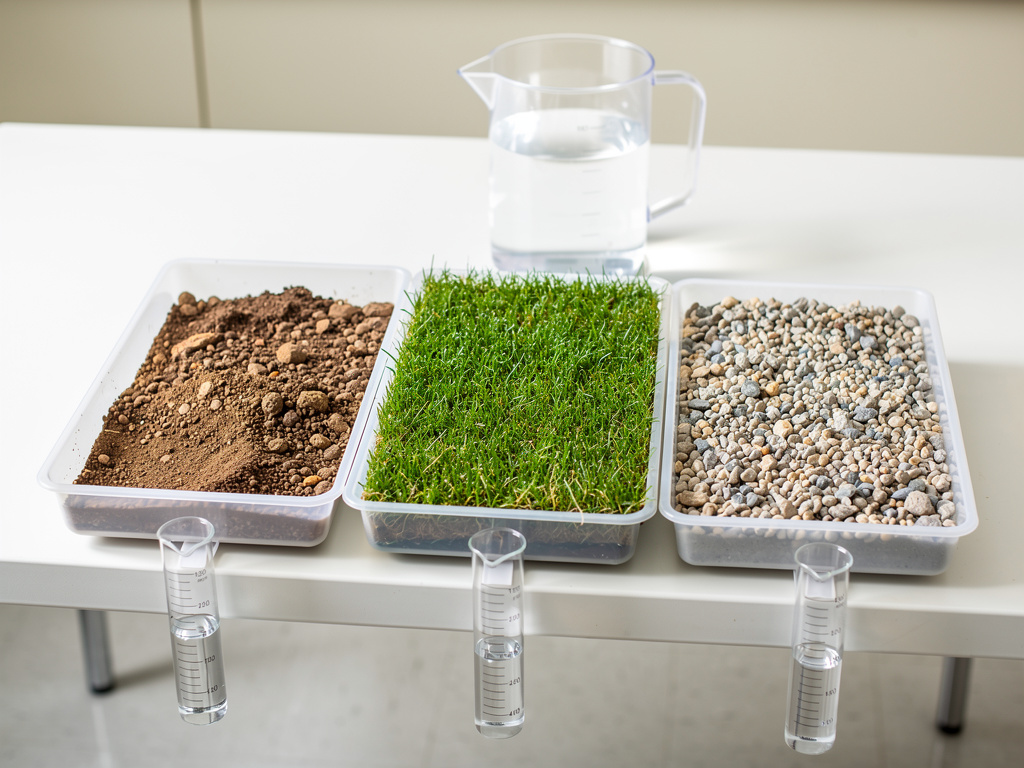
This project investigates how different types of ground cover can reduce rainwater runoff. By pouring water onto trays with various covers, you'll measure runoff to determine which is most effective.

If different ground covers are used, then the grass cover will reduce rainwater runoff the most.
As an Amazon Associate, this site earns from qualifying purchases.
Fill one tray with grass sod, one with gravel, and one with bare soil.
Place each tray at a slight incline to simulate a slope.
Pour a measured amount of water onto the grass-covered tray.
Collect the runoff in a container at the bottom of the tray.
Measure the amount of water collected and record it.
Repeat steps 3-5 for the gravel and bare soil trays.
Compare the runoff amounts for each ground cover.
Analyze which ground cover reduced runoff the most.
You will likely find that the grass-covered tray has the least runoff, indicating that grass is effective in reducing rainwater runoff compared to gravel and bare soil.
Type of ground cover
Amount of runoff water collected
Amount of water poured, Slope of the trays, Size of the trays
Ensure trays are stable to prevent spills.
Use clear charts to show the runoff results.
Include photos of the setup and each ground cover.
Discuss the environmental impact of runoff.
Grass absorbs water through its roots, reducing the amount of runoff.
Yes, other plants with dense root systems can also reduce runoff.
You can use potted plants or other ground covers available to you.