Analyzing the Role of Vegetation in Urban Heat Islands
This project investigates how vegetation influences temperature in urban heat islands. By comparing areas with varying plant cover, students can assess the cooling effects of vegetation.
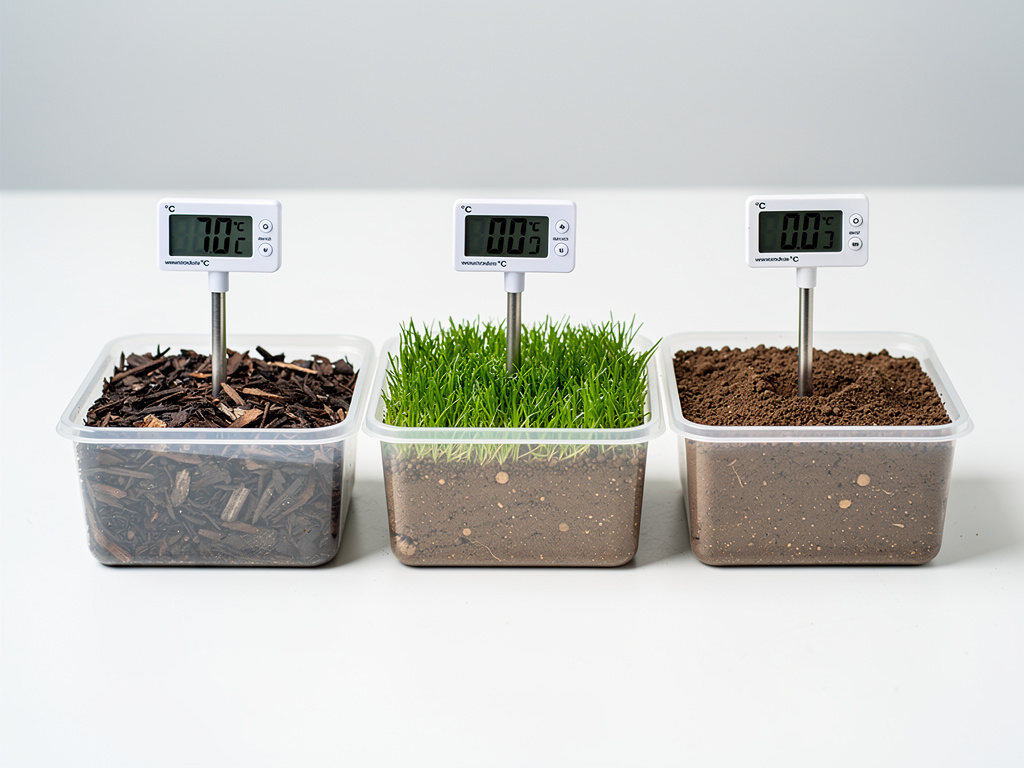
This project examines how different ground coverings affect soil temperature. By measuring temperatures under mulch, grass, and bare soil, students can learn about insulation properties.

If mulch is used to cover soil, then the soil temperature will be more stable compared to bare ground.
As an Amazon Associate, this site earns from qualifying purchases.
Select three test sites: one with mulch, one with grass, and one bare ground.
Insert a thermometer into each site at the same depth.
Record the initial soil temperature at each site.
Measure and record the soil temperature at the same time daily for a week.
Compare the temperature fluctuations at each site.
Analyze which ground cover stabilizes soil temperature best.
Draw conclusions based on your observations and data.
Mulch is expected to stabilize soil temperature more effectively than grass or bare ground, showing smaller temperature fluctuations.
Type of ground cover
Soil temperature
Depth of thermometer placement, Time of temperature measurement, Environmental conditions
Be careful when using a shovel and ensure the thermometer is inserted gently to avoid breakage.
Create a graph comparing temperature changes over the week.
Include photos of the different test sites.
Explain why soil temperature is important for plant growth.
Discuss how mulch can benefit gardens.
Mulch acts as an insulator, reducing heat loss and gain, thus stabilizing soil temperatures.
Yes, conducting the project in different seasons can show how mulch affects temperature year-round.
Different mulches may have varying effects; organic mulches like wood chips are commonly used for temperature control.