Science Fair Projects
earth sciencemedium high 3 days

Radiometric Dating Simulation Experiment

In this project, you will simulate radiometric dating using different colored candies to represent isotopes. By measuring half-lives and decay rates, you'll estimate the age of a geological sample. This experiment demonstrates how scientists date rocks and fossils, helping us understand Earth's history.

Radiometric Dating Simulation Experiment

Hypothesis

If we simulate the decay of isotopes, then we can accurately estimate the age of a sample based on the remaining quantity of the isotopes.

Materials Needed

colored candies1 bagBuy
large paper plate1Buy
timer1Buy
graph paper1Buy
pencil1Buy

As an Amazon Associate, this site earns from qualifying purchases.

Step-by-Step Procedure

  1. 1

    Separate the colored candies into two distinct colors.

  2. 2

    Count the total number of candies and record the data.

  3. 3

    Set a timer for a predetermined time to represent a half-life.

  4. 4

    After time is up, remove one color of candies to simulate decay.

  5. 5

    Record the remaining candies.

  6. 6

    Repeat the process for several half-lives.

  7. 7

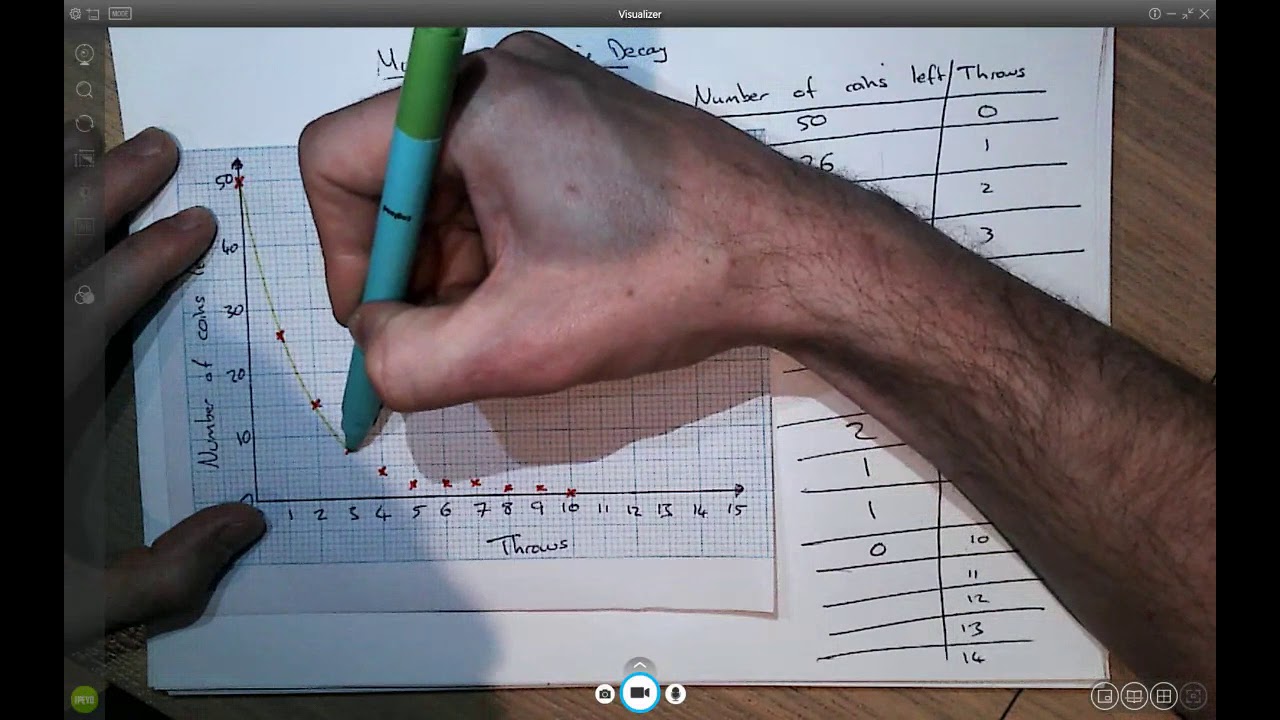
    Plot the data on graph paper to visualize decay.

  8. 8

    Use the graph to estimate the age of the sample.

Expected Results

The data will show an exponential decay curve, allowing you to estimate the age of your sample based on the remaining isotopes.

Variables

Independent Variable

time (half-lives)

Dependent Variable

quantity of remaining isotopes

Controlled Variables

type of candy, initial quantity of isotopes, environmental conditions

Safety Notes

Ensure candies are safe to eat, and supervise younger students while they handle food items.

Presentation Tips

  • Use visual aids like graphs to show results.

  • Incorporate a model that explains the concept of half-lives.

  • Include a timeline of Earth's geological history.

  • Prepare to answer questions on real-world applications.

Frequently Asked Questions

Like this project? Get more ideas!