
Analyzing the Role of Vegetation in Urban Heat Islands
This project investigates how vegetation influences temperature in urban heat islands. By comparing areas with varying plant cover, students can assess the cooling effects of vegetation.
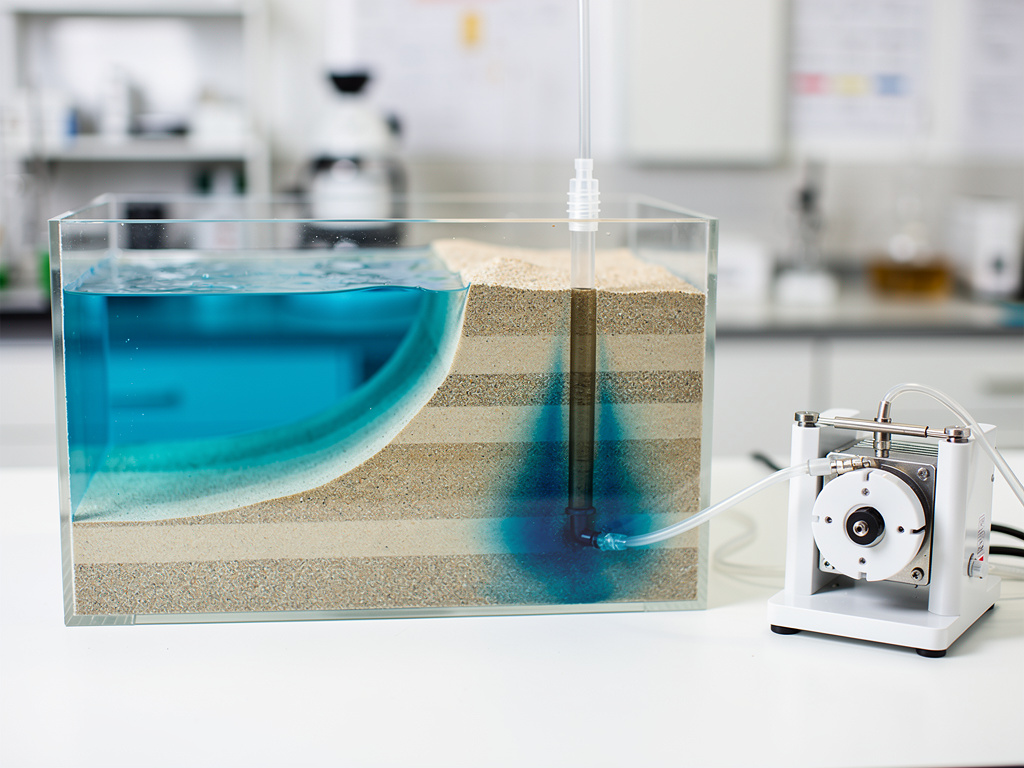
Create a sand-tank model to simulate an aquifer and investigate how pumping can lead to saltwater intrusion into freshwater wells.

If water is pumped from a coastal well, then saltwater will intrude further inland.
As an Amazon Associate, this site earns from qualifying purchases.
Fill the tank with sand to simulate an aquifer.
Add freshwater to one side and saltwater to the other.
Use a ruler to measure water levels.
Install a pump to simulate water extraction from a well.
Begin pumping and measure changes in water levels.
Use the conductivity meter to detect saltwater intrusion.
Record data on how far saltwater moves inland.
Adjust pumping rates and repeat measurements.
Analyze the relationship between pumping rates and saltwater intrusion.
Document observations with sketches and notes.
Increased pumping should result in greater saltwater intrusion into the freshwater zone. This demonstrates the impact of over-extraction in coastal areas.
Pumping rate
Extent of saltwater intrusion
Tank size, Sand type, Initial water levels
Handle water carefully to avoid spills and ensure proper cleaning of equipment.
Use clear visuals to show intrusion patterns.
Discuss real-world implications for coastal communities.
Include a video demonstration of your model.
It's caused by excessive groundwater pumping near coastal areas, allowing saltwater to move inland.
Reducing groundwater extraction and using barriers can help prevent intrusion.
Saltwater intrusion can contaminate freshwater supplies, impacting agriculture and drinking water.