Analyzing the Role of Vegetation in Urban Heat Islands
This project investigates how vegetation influences temperature in urban heat islands. By comparing areas with varying plant cover, students can assess the cooling effects of vegetation.
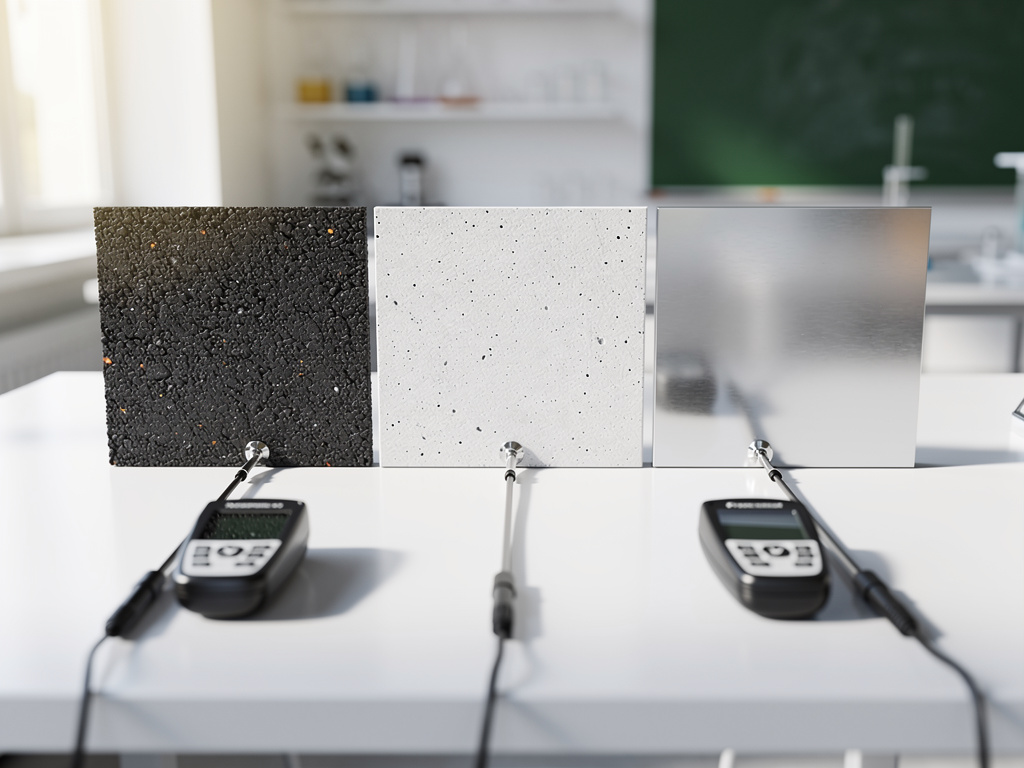
In this project, you'll measure the albedo, or reflectivity, of various surfaces to understand how they reflect sunlight. Using thermometers and light meters, you'll compare the heat and light reflected by each surface.

If a surface is lighter in color, then it will have a higher albedo and reflect more sunlight.
As an Amazon Associate, this site earns from qualifying purchases.
Place a thermometer on each of the test surfaces: white paper, black paper, and grass.
Measure the initial temperature of each surface.
Use the light meter to measure the initial light reflection from each surface.
Allow the surfaces to sit in direct sunlight for a fixed period, such as 30 minutes.
Record the final temperature of each surface.
Use the light meter to measure the final light reflection from each surface.
Calculate the change in temperature and light reflection for each surface.
Analyze the data to determine the albedo of each surface.
Lighter surfaces like white paper will likely reflect more sunlight, showing a higher albedo, compared to darker surfaces like black paper.
Surface material
Amount of sunlight reflected
Exposure time, Intensity of sunlight, Measurement distance
Avoid looking directly at the sun when using the light meter.
Create a table comparing surface temperatures and albedo.
Explain the concept of albedo and its environmental impact.
Include photos of your experimental setup.
Albedo is the measure of how much light a surface reflects.
Different surfaces have different albedos, affecting how they absorb or reflect sunlight.
Yes, you can test additional surfaces like sand, water, or concrete.