Analyzing the Role of Vegetation in Urban Heat Islands
This project investigates how vegetation influences temperature in urban heat islands. By comparing areas with varying plant cover, students can assess the cooling effects of vegetation.
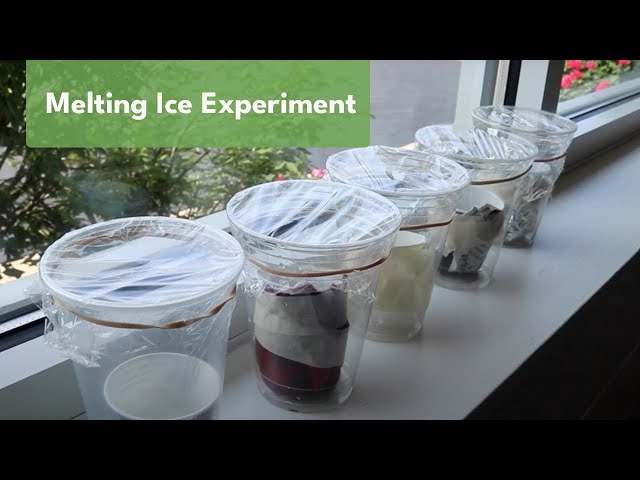
This project explores the relationship between the color of a container and the rate at which ice melts. By placing equal amounts of ice in variously colored containers, students will learn about heat absorption and the effects of color on temperature. This experiment highlights the principles of thermodynamics.

Ice in dark-colored containers will melt faster than in light-colored containers due to better heat absorption.
As an Amazon Associate, this site earns from qualifying purchases.
Fill each container with the same number of ice cubes.
Place the containers in the same room with similar conditions.
Use the thermometer to record the room temperature.
Start the timer as soon as the ice is placed.
Check the ice every 10 minutes and record the amount melted.
Note the time it takes for the ice to completely melt.
Repeat the experiment 2-3 times for accuracy.
Analyze the data to see how color affected melting speed.
Prepare a report on your findings.
Create a presentation with visuals.
Practice discussing the science behind the results.
Engage the audience with questions.
It is expected that the dark container will have the fastest melting time due to its ability to absorb more heat.
Color of the container
Melting time of ice
Amount of ice, Room temperature, Container size
Handle the containers carefully to avoid spills, and ensure the area is safe for observing melting ice.
Display the containers with melted ice.
Use graphs to show melting times.
Explain the science of heat absorption.
Engage the audience with a demonstration.
Prepare for a Q&A session.
Yes, using the same size helps ensure accurate results.
Yes, but keep it consistent for each trial.
You can weigh the container before and after melting.