Science Fair Projects
earth scienceeasy elementary 7 days

The Great Water Evaporation Race

In this project, students will investigate how temperature, wind, and surface area affect the rate of water evaporation. By observing and measuring water levels over time, they learn about the water cycle and environmental factors that influence evaporation.

The Great Water Evaporation Race

Hypothesis

If the temperature is higher, then the water will evaporate faster compared to cooler temperatures.

Materials Needed

Clear plastic cups5Buy
Water1Buy
Marker1Buy
Ruler1Buy
Fan1Buy
Thermometer1Buy
Notebook1Buy
Clock or Timer1Buy

As an Amazon Associate, this site earns from qualifying purchases.

Step-by-Step Procedure

  1. 1

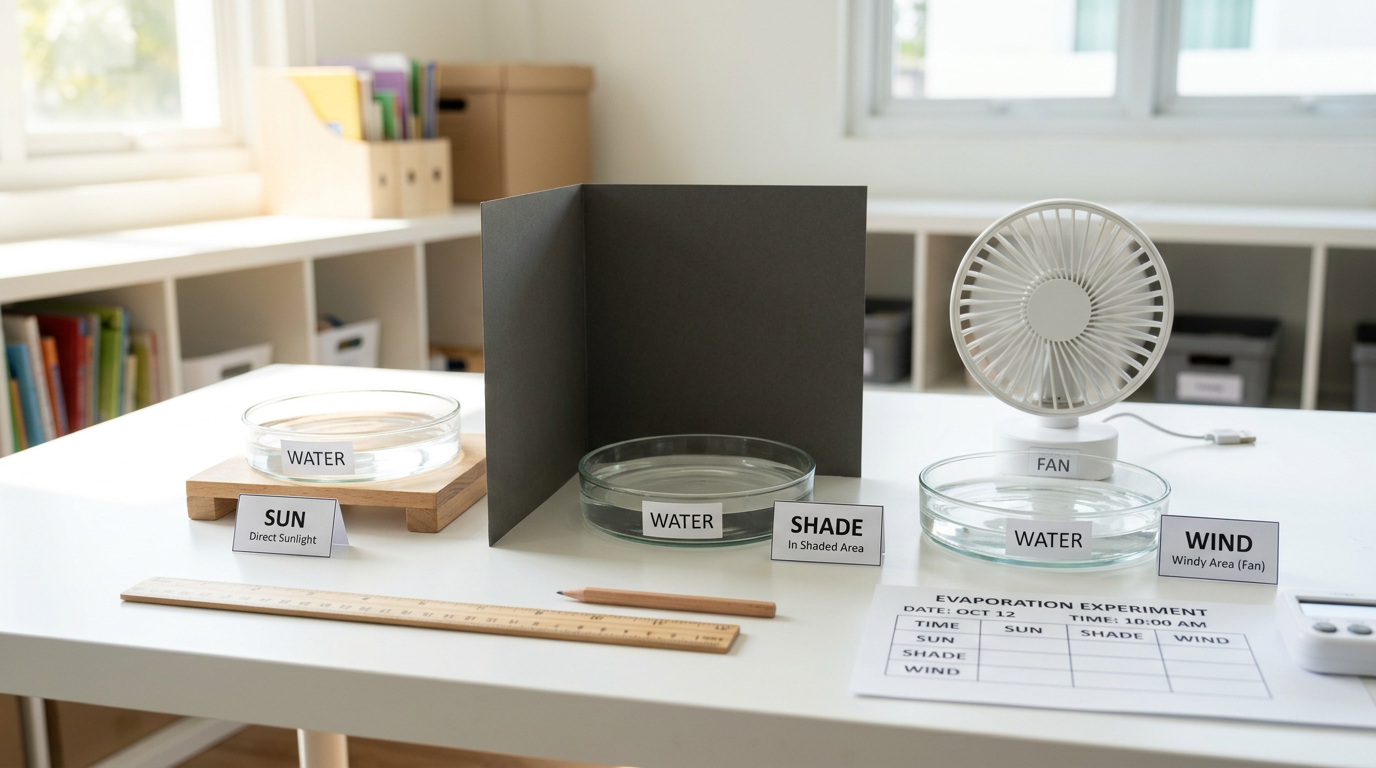
    Fill each cup with the same amount of water and mark the initial water level.

  2. 2

    Place one cup in a sunny spot, another in the shade, one with a fan, and one at room temperature.

  3. 3

    Measure and record the initial water temperatures.

  4. 4

    Leave the cups undisturbed for 24 hours.

  5. 5

    Measure and record the water levels at the same time each day.

  6. 6

    Note the change in water levels in relation to each environment's condition.

  7. 7

    Repeat for a week to observe trends.

  8. 8

    Graph the change in water level against each condition to analyze results.

Expected Results

Water placed in warmer areas or under a fan should evaporate faster than those in cooler conditions. This demonstrates how environmental factors affect evaporation rates.

Variables

Independent Variable

Environmental condition (temperature, airflow)

Dependent Variable

Rate of water evaporation

Controlled Variables

Amount of water, Type of container, Initial temperature

Safety Notes

Ensure cups are secure to prevent spills. Handle all equipment with care, especially thermometers.

Presentation Tips

  • Create a chart or graph to display evaporation rates visually.

  • Include photos of the setup and experiments over time.

  • Discuss real-life implications of evaporation on climate and water resources.

Frequently Asked Questions

Like this project? Get more ideas!