Science Fair Projects
earth sciencemedium middle 10 days

Erosive Forces: Simulating Wind Erosion

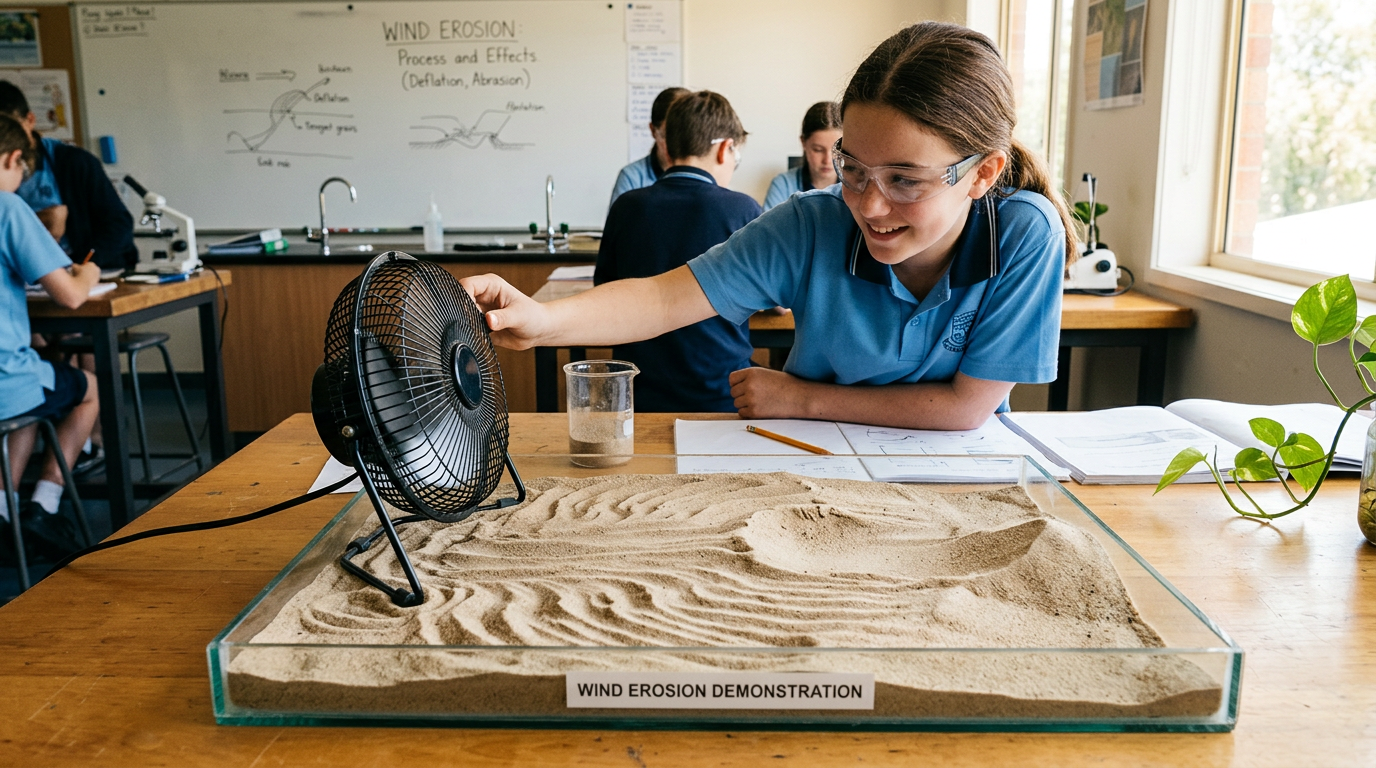
Students will create a small wind tunnel to observe how wind erosion impacts various soil types. By simulating wind conditions, they will identify which soil types are most susceptible to erosion.

Erosive Forces: Simulating Wind Erosion

Hypothesis

If wind is applied to different soil types, then sandy soil will experience the most erosion compared to clay and loam soils.

Materials Needed

Cardboard box1Buy
Hair dryer1Buy
Sand500Buy
Clay soil500Buy
Loam soil500Buy
Measuring cup1Buy
Ruler1Buy
Plastic wrap1Buy

As an Amazon Associate, this site earns from qualifying purchases.

Step-by-Step Procedure

  1. 1

    Cut one side of the cardboard box to create an open end.

  2. 2

    Line the bottom of the box with plastic wrap.

  3. 3

    Fill one-third of the box with sand.

  4. 4

    Use the ruler to level the sand.

  5. 5

    Position the hair dryer at one end of the box and turn it on to simulate wind.

  6. 6

    Observe the sand movement and document the changes.

  7. 7

    Repeat steps 3-6 using clay soil and loam soil.

  8. 8

    Analyze which soil type showed the most movement.

  9. 9

    Record findings and compare results.

  10. 10

    Discuss how these results relate to real-world erosion.

Expected Results

Sandy soil is expected to show the greatest amount of erosion due to its loose particles. Clay and loam soils should show less movement due to their cohesive nature.

Variables

Independent Variable

Type of soil

Dependent Variable

Amount of erosion

Controlled Variables

Wind speed, Box size, Initial soil level

Safety Notes

Ensure the hair dryer is used away from water and the cord is not frayed.

Presentation Tips

  • Use clear before and after photos of each soil type.

  • Create a chart comparing erosion levels across soil types.

  • Explain the implications of wind erosion on agriculture.

Frequently Asked Questions

Like this project? Get more ideas!