Analyzing the Role of Vegetation in Urban Heat Islands
This project investigates how vegetation influences temperature in urban heat islands. By comparing areas with varying plant cover, students can assess the cooling effects of vegetation.
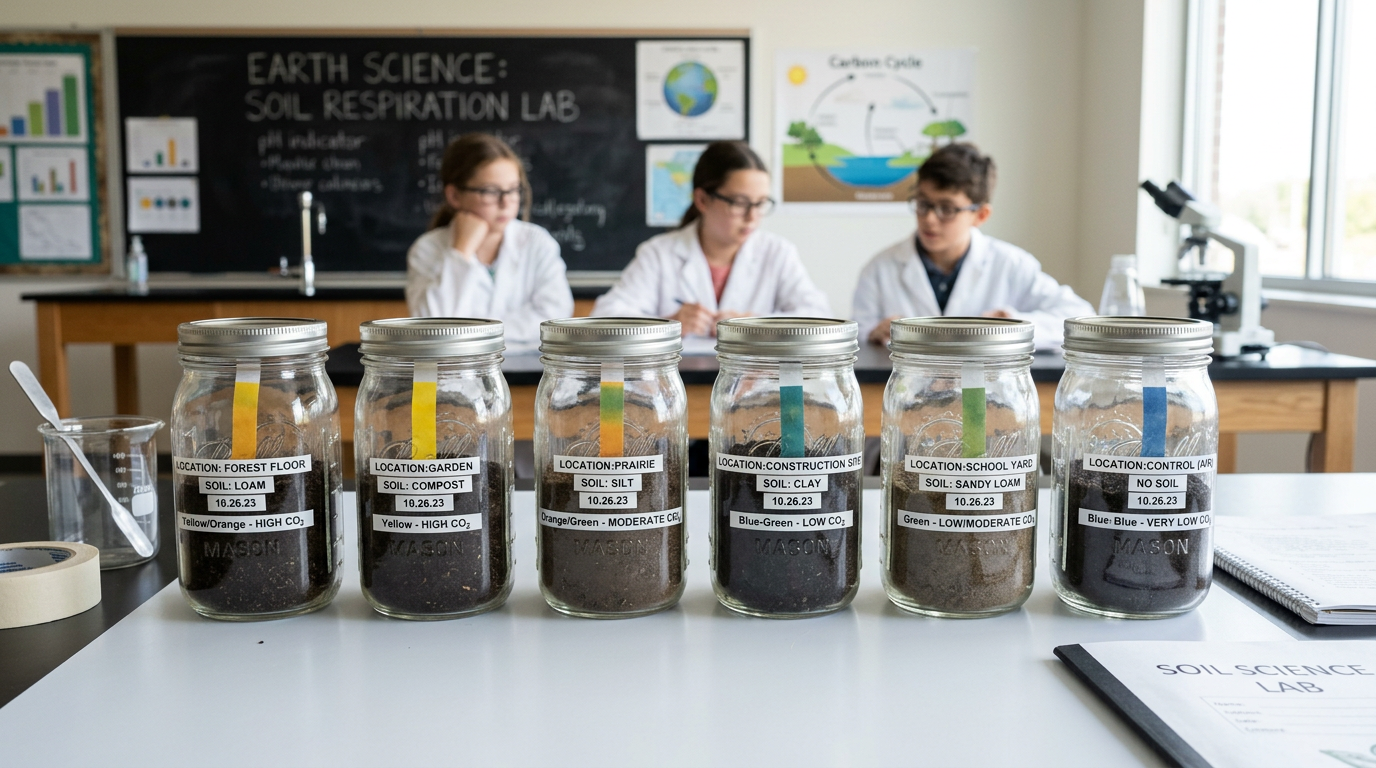
This project explores how temperature affects the rate of soil respiration. By monitoring carbon dioxide emissions from soil samples at different temperatures, students will learn about the biological processes occurring within soil.

If the temperature increases, then the rate of soil respiration will increase, resulting in higher CO2 emissions.
As an Amazon Associate, this site earns from qualifying purchases.
Collect soil samples from three different locations.
Place each soil sample in a separate plastic container.
Insert the CO2 sensor into each container to establish a baseline CO2 reading.
Record the baseline CO2 levels.
Place the containers in the incubator at a set temperature.
Measure and record the CO2 levels every hour for 6 hours.
Repeat steps 5-6 at different temperatures.
Analyze the data to see how temperature affected CO2 release.
Plot your data on a graph for comparison.
Discuss the implications of soil respiration in the context of global carbon cycles.
Higher temperatures are expected to increase soil respiration rates, leading to greater CO2 emissions. This is due to increased microbial activity in warmer conditions.
Temperature
CO2 emission
Soil type, Container size, Measurement duration
Handle the CO2 sensor carefully and ensure proper calibration before use.
Create a graph showing CO2 levels at different temperatures.
Discuss the role of soil respiration in climate change.
Use visuals to explain biological processes in soil.
Temperature influences microbial activity, which in turn affects CO2 production.
It's the process by which soil organisms break down organic matter, releasing CO2.
Yes, you could test different soil types or moisture levels.