Allelopathy: Do Some Plants Inhibit Growth of Others Science Project
Investigate the allelopathic effects of certain plants on the growth of others. Conduct experiments to observe the relationships between different species!
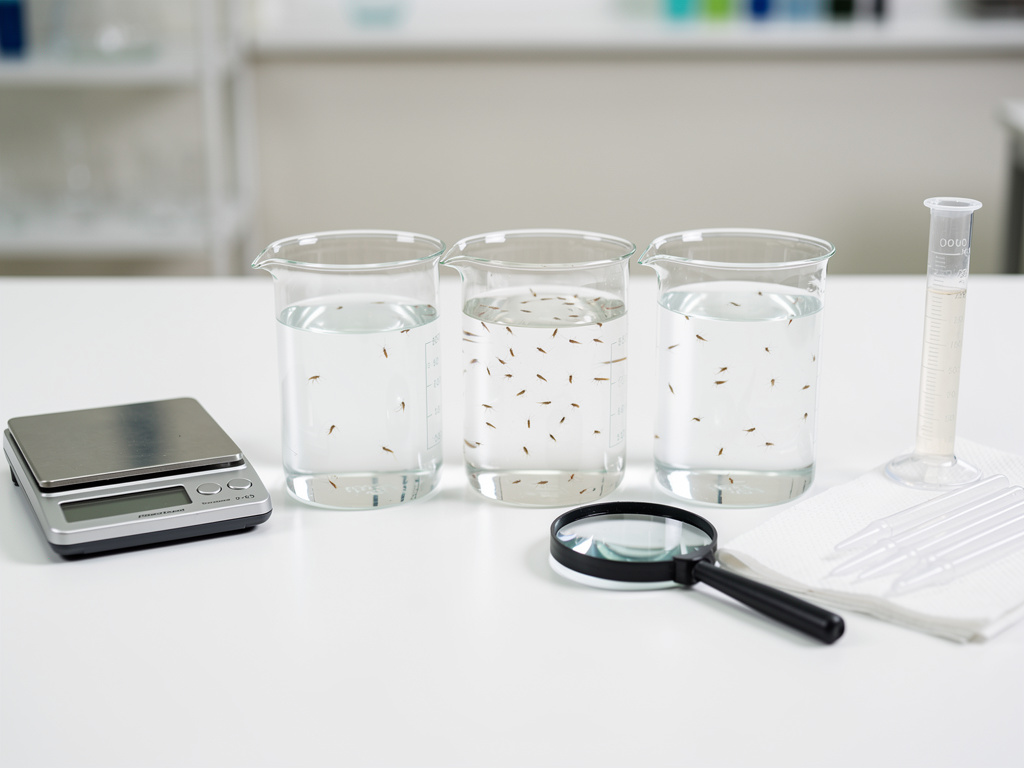
This project examines how varying levels of salinity impact the hatching success of brine shrimp. Students will prepare solutions of different salt concentrations and count the number of successfully hatched brine shrimp.

If brine shrimp cysts are hatched in varying salt concentrations, then a moderate concentration will yield the highest hatching rate.
As an Amazon Associate, this site earns from qualifying purchases.
Prepare five saltwater solutions with different salinities (e.g., 0%, 1%, 2%, 3%, 4%).
Label each beaker or jar with its corresponding salt concentration.
Add an equal number of brine shrimp cysts to each solution.
Place the containers in a warm, well-lit area.
Observe the containers daily, checking for hatched brine shrimp.
Use a magnifying glass to count the number of hatched shrimp in each solution.
Record the number of successful hatches in a notebook.
Continue observations for one week or until hatching activity ceases.
Analyze the data to identify the optimal salinity for brine shrimp hatching.
Moderate salinity levels, such as 2-3%, are expected to result in the highest hatching rates, as these conditions closely mimic their natural habitat.
Salt concentration
Number of hatched brine shrimp
Number of cysts, Temperature, Light exposure
Handle salt solutions carefully to avoid spills and ensure proper disposal after the experiment.
Create a graph showing hatching rates at different salinities.
Include photos of the hatching process.
Explain the importance of salinity in aquatic ecosystems.
Brine shrimp are easy to hatch and are sensitive to changes in salinity, making them ideal for this experiment.
Ensure cysts are viable and check that environmental conditions are suitable for hatching.
Yes, but use consistent types across all tests for accurate results.