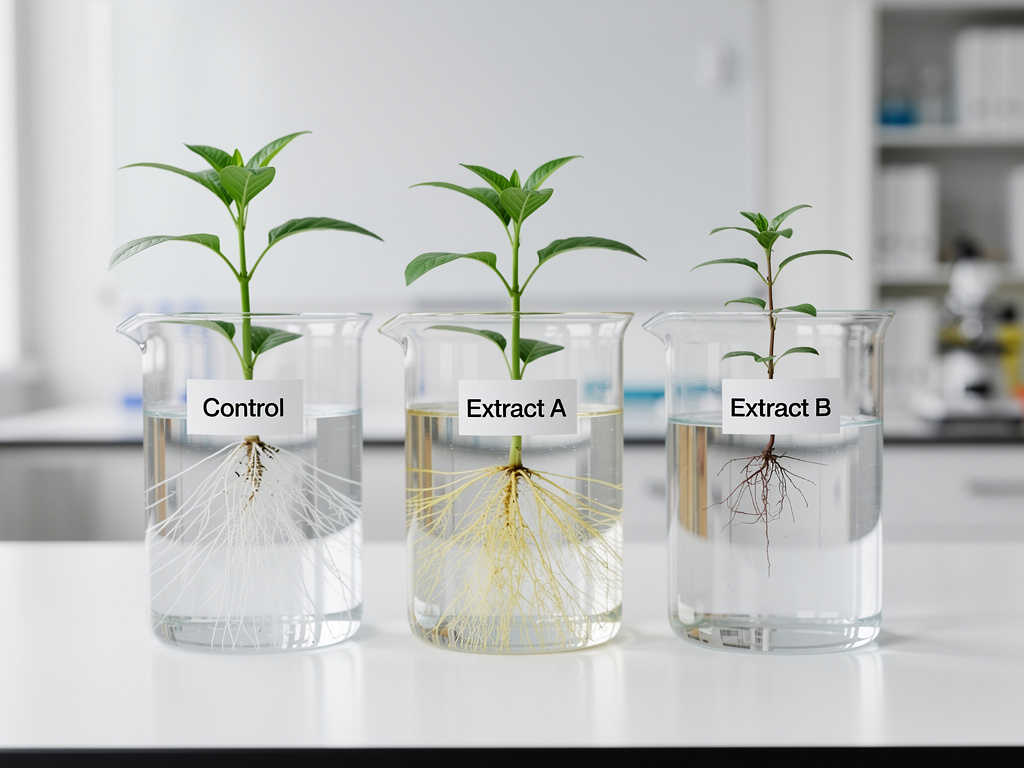
Allelopathy: Do Some Plants Inhibit Growth of Others Science Project
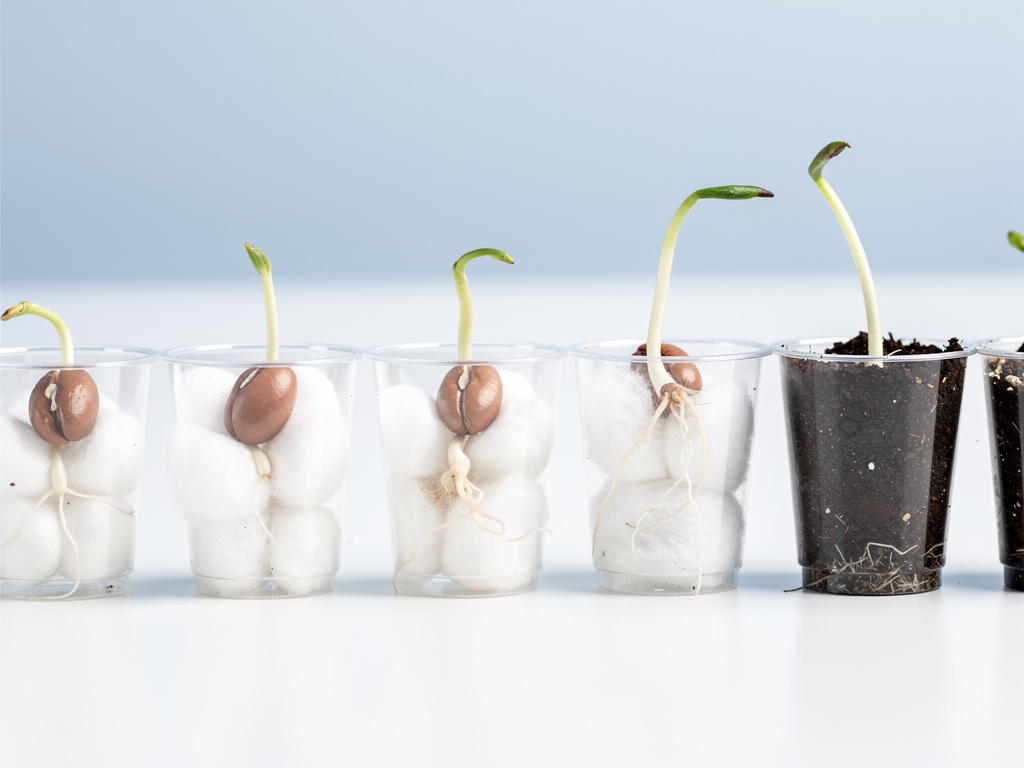
Investigate the allelopathic effects of certain plants on the growth of others. Conduct experiments to observe the relationships between different species!
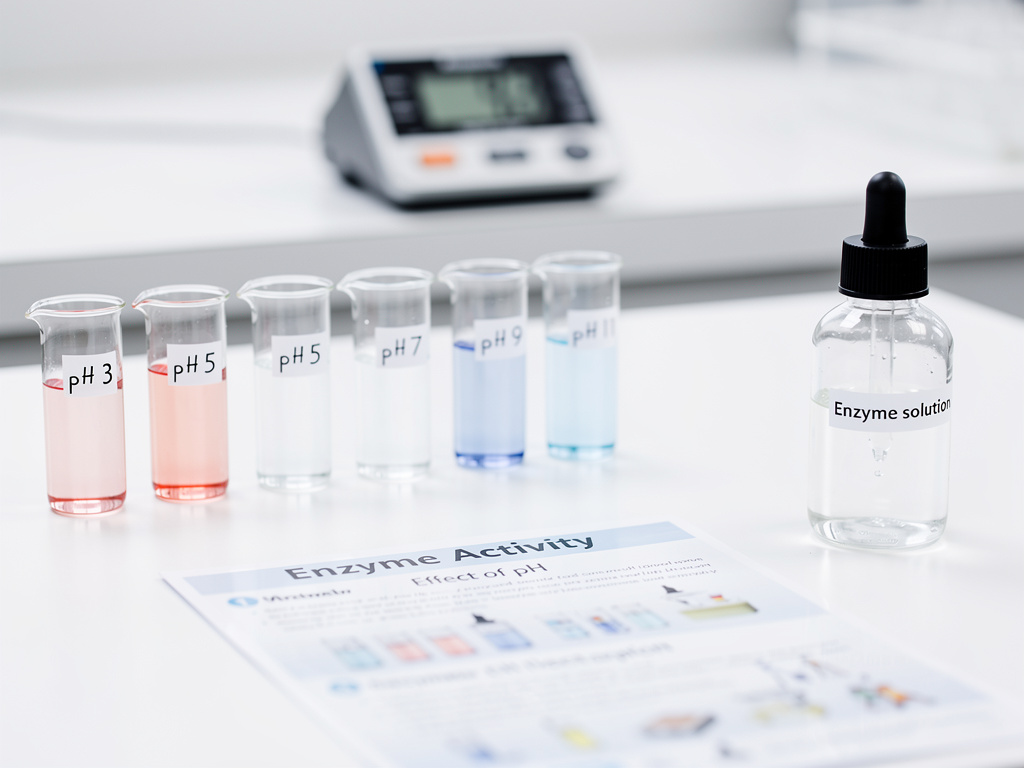
Explore the influence of pH levels on enzyme activity. Conduct experiments to observe changes in reaction rates and learn about enzyme functionality!

If the pH level is optimal for the enzyme, then enzyme activity will be maximized, while deviations from this pH will reduce activity.
As an Amazon Associate, this site earns from qualifying purchases.
Prepare different pH solutions (e.g., pH 5, 7, 9).
Add equal amounts of hydrogen peroxide to each test tube.
Introduce catalase source to each test tube.
Record the time taken for bubbles to form.
Measure and compare the height of bubbles produced.
Repeat the experiment for accuracy.
Analyze the effect of pH on enzyme activity.
Draw conclusions based on your data.
It is expected that the enzyme will perform best at its optimal pH, showing maximum activity. Lower or higher pH levels will likely show decreased activity.
pH level
rate of enzyme activity
amount of hydrogen peroxide, volume of enzyme source, temperature
Handle hydrogen peroxide with care, as it can be harmful in large quantities.
Use charts to summarize your findings.
Include visual aids to demonstrate enzyme reactions.
Discuss the importance of pH in biological systems.
Prepare to explain your methodology clearly.
Engage the audience with questions about enzyme activity.
Enzymes are proteins that function best at specific pH levels due to their structural configurations.
Extreme pH levels can denature enzymes, causing them to lose their functional shapes.
Yes, different enzymes have different optimal pH levels.