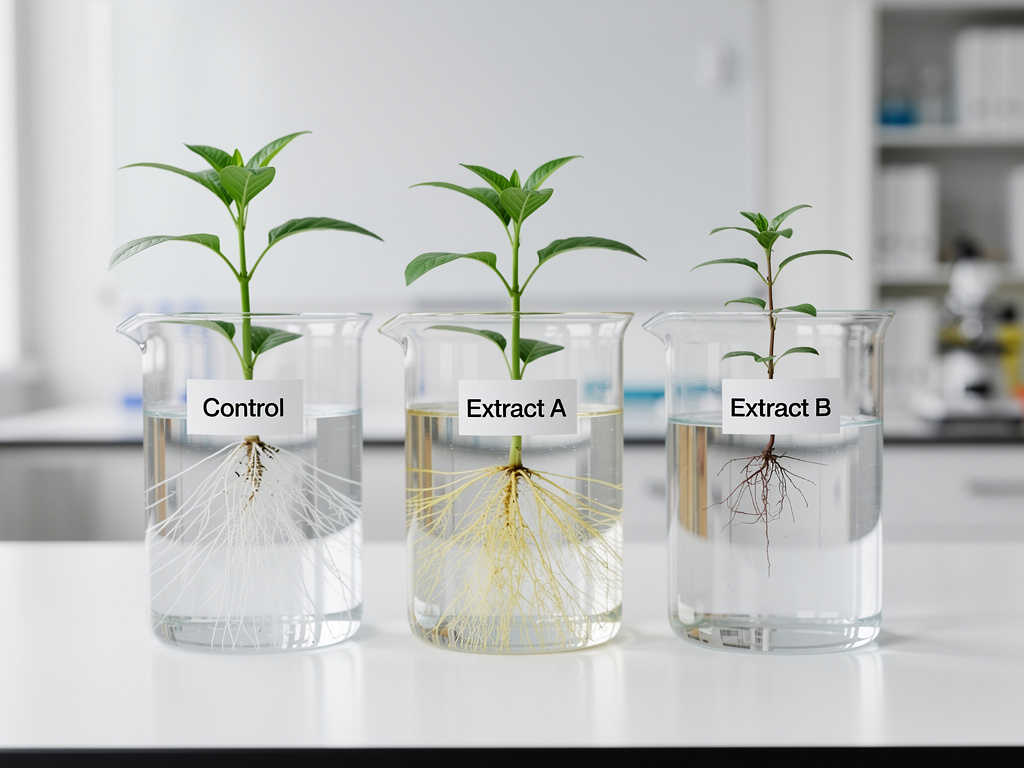
Allelopathy: Do Some Plants Inhibit Growth of Others Science Project
Investigate the allelopathic effects of certain plants on the growth of others. Conduct experiments to observe the relationships between different species!
This experiment investigates circadian rhythms in plants by monitoring leaf movements under constant light and darkness. Students will record and analyze leaf angle changes.

If plants have an internal circadian clock, then leaf movements will persist under constant light and darkness.
As an Amazon Associate, this site earns from qualifying purchases.
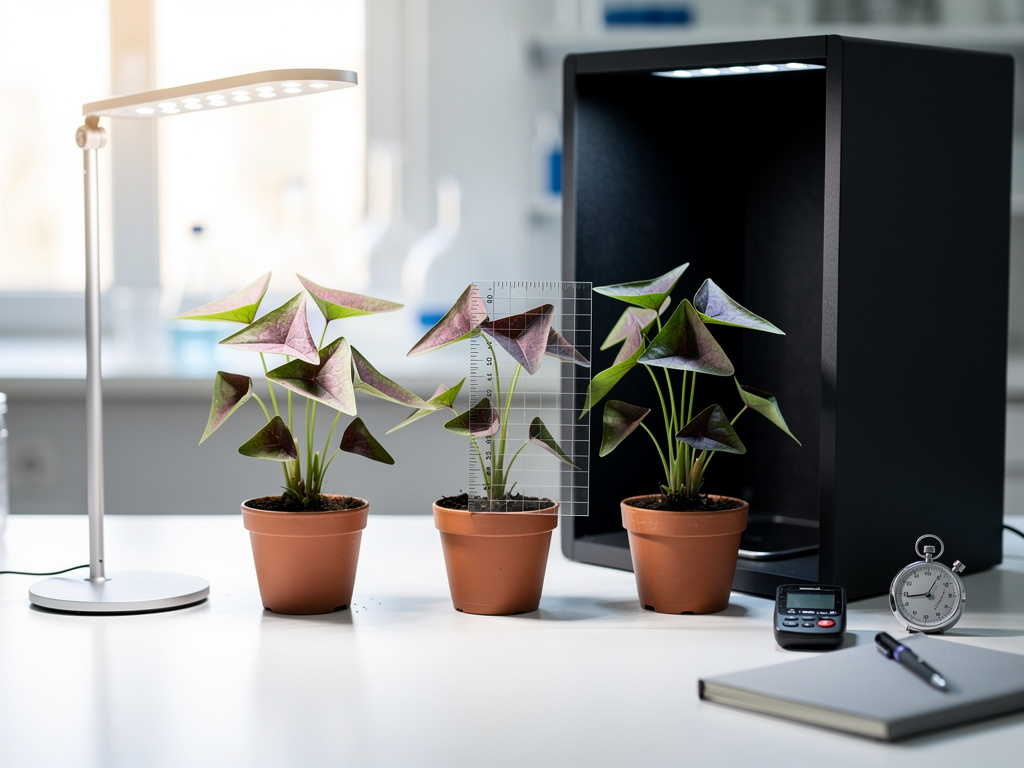
Select healthy potted plants of the same species.
Place plants in a controlled environment with constant light.
Measure initial leaf angles using a protractor.
Record leaf angles every 2 hours for 48 hours.
Move plants to a dark room after 48 hours.
Continue recording leaf angles every 2 hours for another 48 hours.
Use a camera to document leaf positions at each interval.
Plot leaf angle data on graph paper to visualize changes over time.
Analyze patterns to identify circadian rhythms.
Compare results under light and dark conditions.
Discuss the biological significance of circadian rhythms.
Prepare a report and presentation.
Leaf movements are expected to display a rhythmic pattern that persists even in constant light or darkness, indicating an inherent circadian rhythm in plants.
Light condition
Leaf angle
Plant species, Temperature, Measurement interval, Plant age
Ensure proper handling of light sources and avoid prolonged exposure to high-intensity light.
Use time-lapse photography to showcase leaf movements.
Explain the concept of circadian rhythms and their role in plant biology.
Discuss potential applications in agriculture and horticulture.
Circadian rhythms are internal biological clocks that regulate physiological processes on a roughly 24-hour cycle.
Constant conditions help determine if leaf movements are driven by internal clocks rather than environmental cues.
Yes, circadian rhythms can vary between species based on genetic and environmental factors.