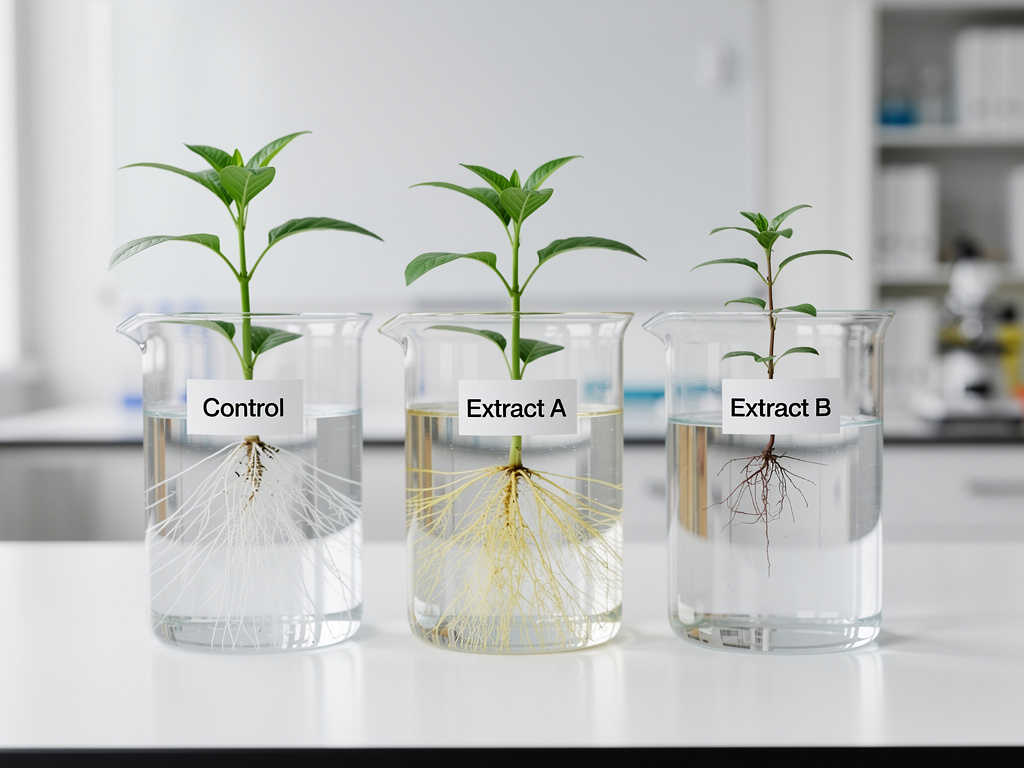
Allelopathy: Do Some Plants Inhibit Growth of Others Science Project
Investigate the allelopathic effects of certain plants on the growth of others. Conduct experiments to observe the relationships between different species!
This project uses CRISPR-Cas9 gene editing to investigate the roles of specific genes in butterfly development. Students will target genes associated with wing pattern formation to observe phenotypic changes.

If CRISPR-Cas9 can successfully edit genes associated with wing patterns in butterflies, then observable changes in wing coloration and patterns will occur.
As an Amazon Associate, this site earns from qualifying purchases.
Prepare CRISPR-Cas9 guide RNA for the target gene.
Inject CRISPR complex into butterfly larvae using a sterile needle.
Place larvae in an incubator and maintain optimal conditions.
Monitor development and document any changes in wing patterns.
Use a microscope to observe detailed wing structures.
Compare edited butterflies to a control group.
Record phenotypic differences and analyze data.
Repeat the experiment for consistency.
Document any unexpected results or mutations.
Review ethical implications of gene editing in insects.
Edited butterflies are expected to exhibit altered wing patterns, demonstrating the role of specific genes in morphological traits.
Target gene for editing
Wing pattern and coloration
Incubation temperature, Nutrient supply, Injection technique, Developmental stage at injection
Handle CRISPR materials with care and follow ethical guidelines for genetic manipulation.
Include before-and-after images of butterfly wings.
Discuss potential applications and risks of CRISPR technology.
Explain the genetic targets and biological pathways involved.
To understand how specific genes influence physical traits through targeted gene editing.
Butterflies offer visible phenotypic changes and are a model for studying genetic development.
Ensuring that gene manipulation does not negatively impact natural ecosystems.