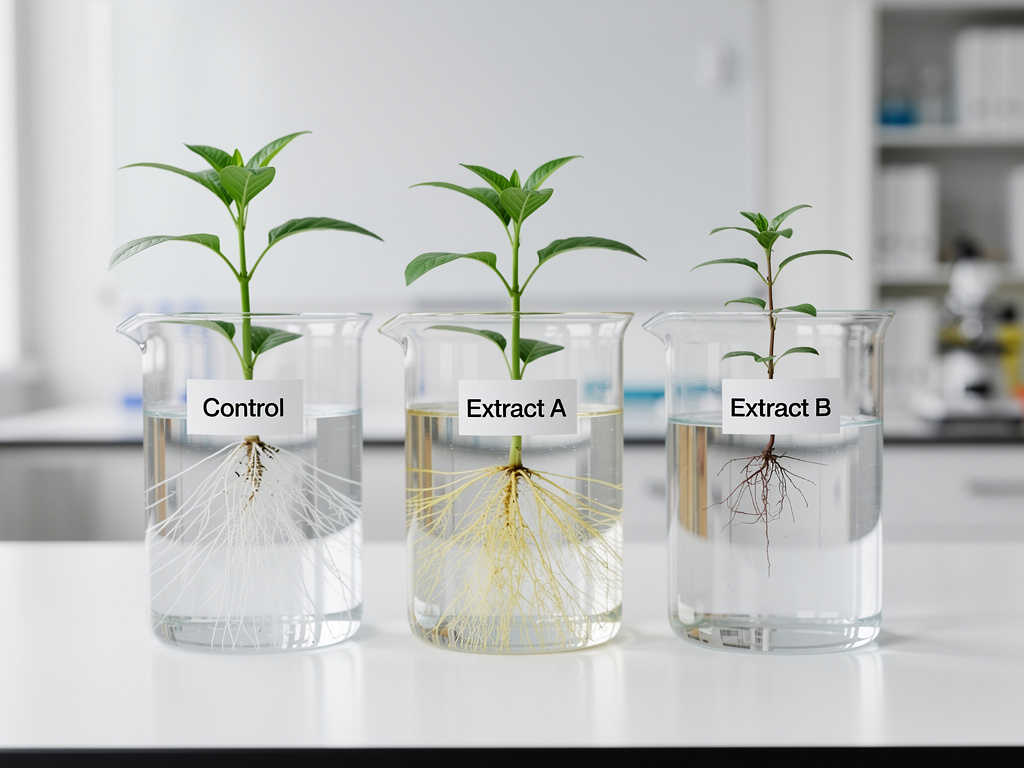
Allelopathy: Do Some Plants Inhibit Growth of Others Science Project
Investigate the allelopathic effects of certain plants on the growth of others. Conduct experiments to observe the relationships between different species!
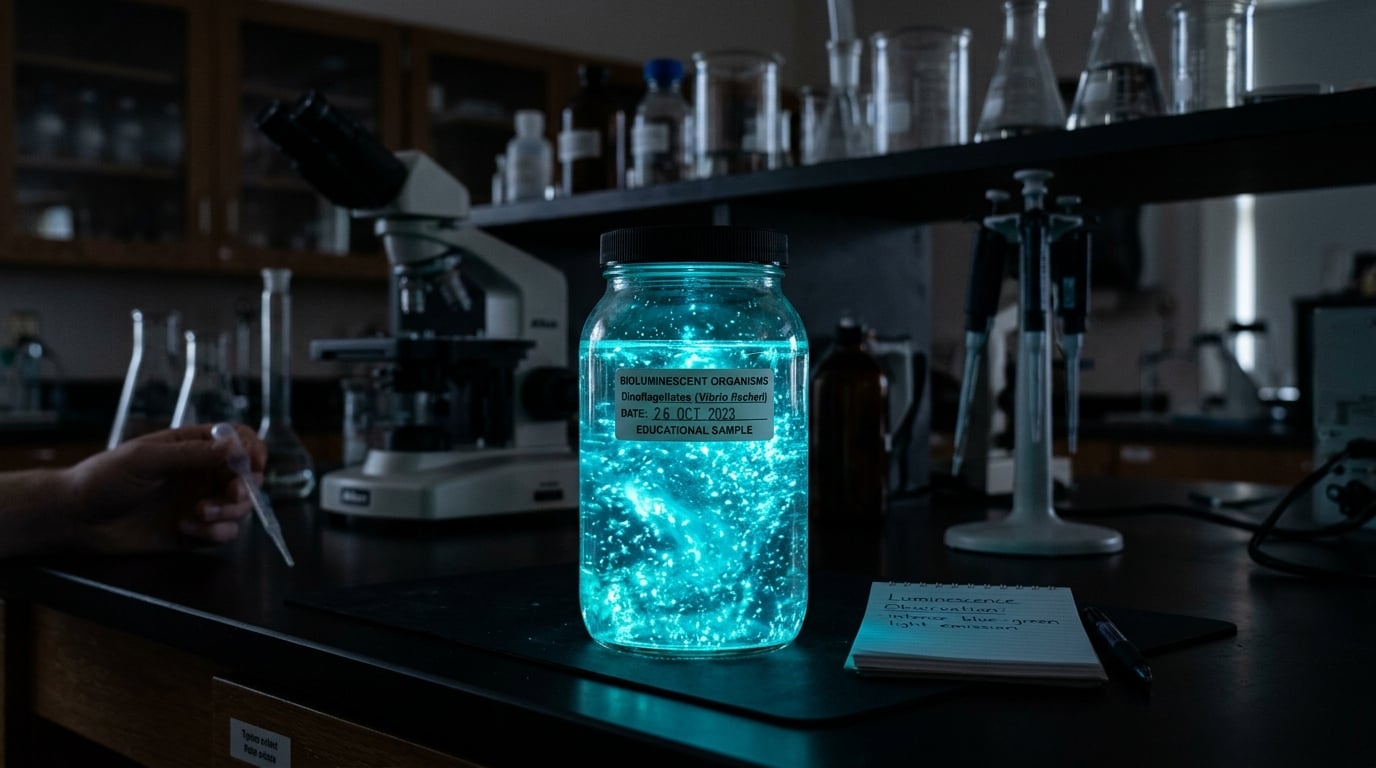
This project investigates the fascinating phenomenon of bioluminescence in various organisms. Students will learn about the chemical processes that enable creatures like fireflies and jellyfish to emit light.

If bioluminescent organisms are placed in a dark environment, then they will emit light due to chemical reactions in their bodies.
As an Amazon Associate, this site earns from qualifying purchases.
Research different bioluminescent organisms and their habitats.
Collect or obtain images of bioluminescent organisms.
Set up a dark room to simulate the natural environment.
Observe the bioluminescent properties in the dark room.
Record observations in the notebook.
Take photographs for visual documentation.
Compare the bioluminescence in different organisms.
Analyze how the light emission process occurs chemically.
Present findings with visual aids and explanations.
Conclude the project by discussing applications of bioluminescence.
The expected outcome is a better understanding of how and why certain organisms can produce light. Students should be able to explain the biochemical reactions leading to bioluminescence.
Type of organism
Intensity of light emitted
Environment, Observation time, Method of documentation
Ensure that any live specimens are handled humanely and returned to their natural environment after observation.
Use vivid images to demonstrate bioluminescence.
Explain the practical applications of bioluminescence in research.
Include a demonstration or video of a bioluminescent organism in action.
Organisms glow to attract mates, deter predators, or lure prey.
No, bioluminescence is a chemical reaction, whereas fluorescence requires external light sources.
Humans can see most bioluminescent light, but it varies depending on the organism.