Science Fair Projects
earth sciencemedium middle 2 days

DIY Water Filter: From Dirty to Clean

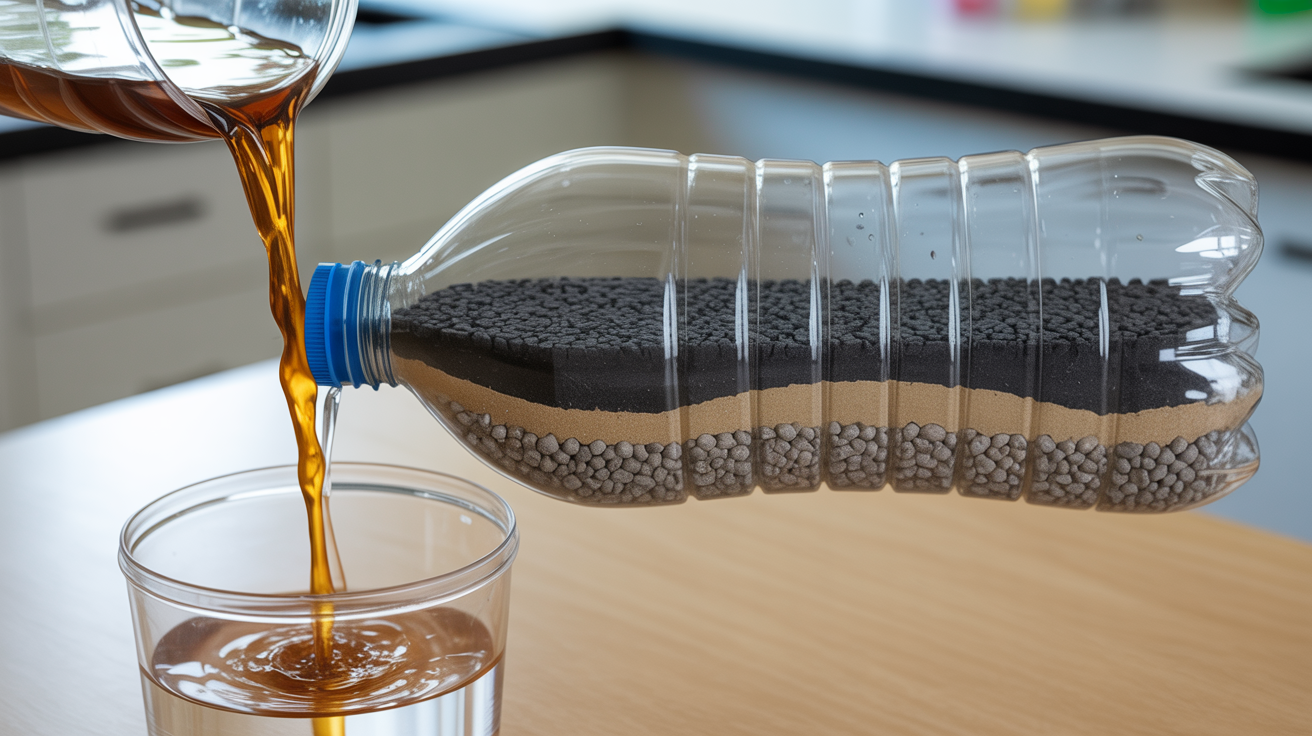
In this project, you will construct a multi-layer water filter using materials like sand, gravel, and charcoal to purify muddy water. It's a practical demonstration of how natural filtration processes work to clean our water sources.

DIY Water Filter: From Dirty to Clean

Hypothesis

If a water filter is constructed with layers of gravel, sand, and activated charcoal, then it will effectively remove sediment and impurities from dirty water, making it visibly clearer.

Materials Needed

Plastic bottle (2-liter)1Buy
Gravel1 cupBuy
Coarse sand1 cupBuy
Fine sand1 cupBuy
Activated charcoal1/2 cupBuy
Cotton balls or coffee filtera handfulBuy
Dirty water (mix soil and water)1 quartBuy
Clear cups or jars2Buy

As an Amazon Associate, this site earns from qualifying purchases.

Step-by-Step Procedure

  1. 1

    Cut the bottom off the 2-liter plastic bottle.

  2. 2

    Place the bottle upside down into a clear cup or jar.

  3. 3

    Place a layer of cotton balls or a coffee filter at the bottom of the bottle (near the cap).

  4. 4

    Add a 2-inch layer of gravel on top of the cotton.

  5. 5

    Add a 2-inch layer of coarse sand on top of the gravel.

  6. 6

    Add a 1-inch layer of activated charcoal on top of the sand.

  7. 7

    Add another 2-inch layer of fine sand on top of the charcoal.

  8. 8

    Slowly pour your prepared dirty water into the top of the filter.

  9. 9

    Observe the water that drips out of the bottom of the filter into the cup.

  10. 10

    Compare the filtered water to a sample of the original dirty water.

Expected Results

The filtered water should be significantly clearer than the original dirty water. The different layers of the filter work together to remove particles of different sizes. The gravel and sand remove larger sediments, while the activated charcoal adsorbs smaller impurities and helps to improve the water's taste and odor.

Variables

Independent Variable

The layers of filtering materials (gravel, sand, charcoal).

Dependent Variable

The clarity of the water after filtration.

Controlled Variables

The amount of dirty water used, the type of bottle, and the method of pouring the water.

Safety Notes

The filtered water is not safe to drink. This experiment is for demonstration purposes only. Wash your hands after handling the dirty water and filter materials.

Presentation Tips

  • Display your water filter alongside samples of the 'before' and 'after' water.

  • Create a diagram showing a cross-section of your filter and explaining the function of each layer.

  • Discuss the importance of clean water and how filtration is used in real-world water treatment plants.

Frequently Asked Questions

Like this project? Get more ideas!