Analyzing the Role of Vegetation in Urban Heat Islands
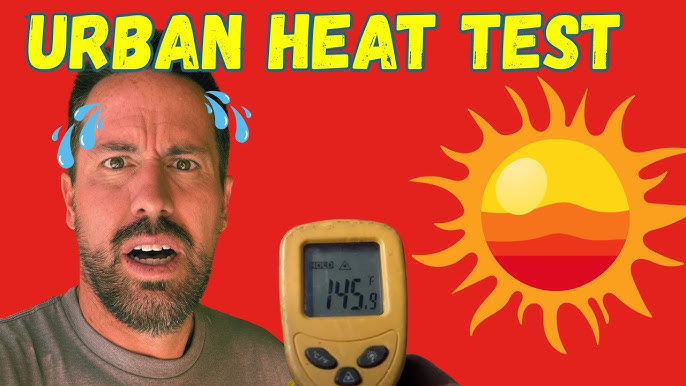
This project investigates how vegetation influences temperature in urban heat islands. By comparing areas with varying plant cover, students can assess the cooling effects of vegetation.
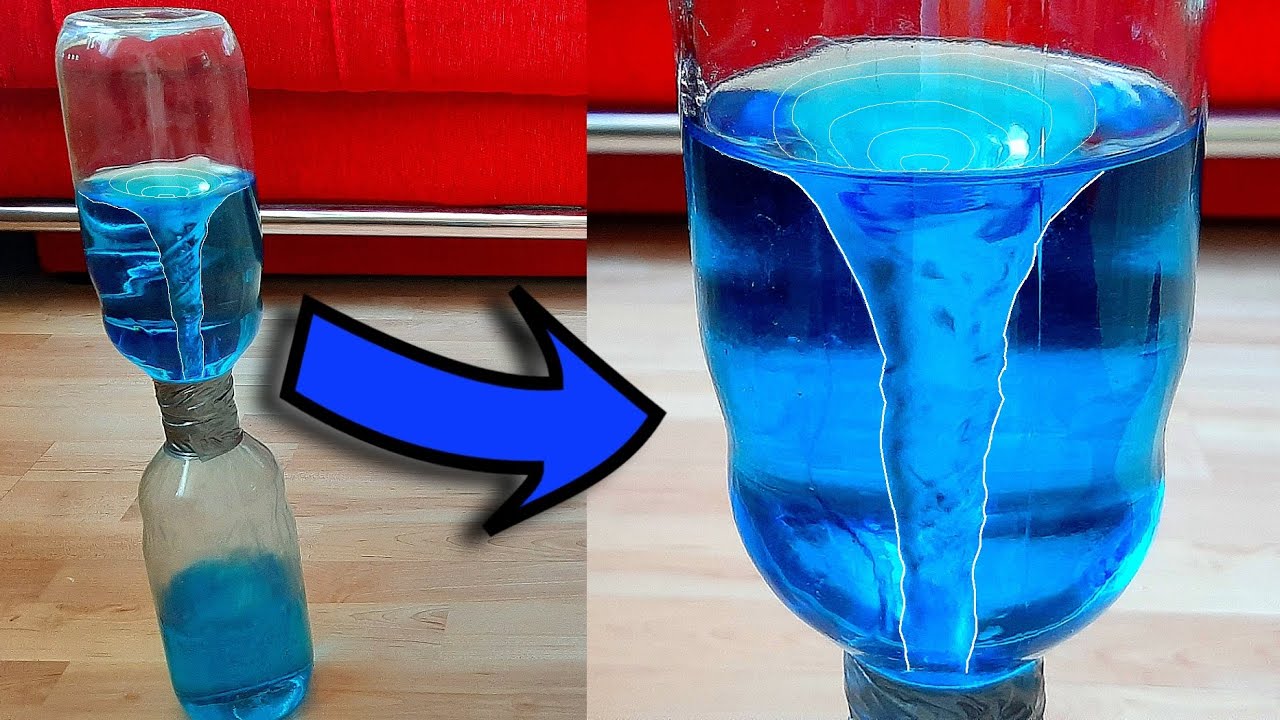
This experiment demonstrates how a vortex, similar to a tornado, is formed when water drains from one bottle to another. By swirling the bottle, you create a whirlpool that allows air and water to flow past each other, creating a mini-tornado.

If water in a bottle is given a circular motion before being allowed to drain, then it will form a vortex because the centripetal force will create a low-pressure core, allowing air to flow upwards as the water flows downwards.
As an Amazon Associate, this site earns from qualifying purchases.
Fill one of the bottles about two-thirds full of water.
If desired, add a pinch of glitter or small beads to the water to make the vortex easier to see.
Attach the second, empty bottle to the top of the first bottle using the tornado tube connector or by securely taping the mouths of the bottles together.
Make sure the connection is tight and does not leak.
Quickly flip the bottles over so the full bottle is on top.
Observe what happens. The water will gurgle and drain slowly.
Now, flip the bottles back over. This time, as you flip them, give the top bottle a strong circular swirl for a few seconds.
Set the bottles down and observe the swirling vortex that forms as the water drains into the bottom bottle.
When the bottles are simply flipped, the water drains slowly because air pressure prevents it from flowing freely. When the bottle is swirled, the water begins to rotate, creating a vortex. This vortex has a hole in the center (a low-pressure core) that allows air to travel up from the bottom bottle as the water spirals down, allowing the water to drain much more quickly.
The swirling motion given to the water.
The formation of a vortex and the speed at which the water drains.
The amount of water, the size of the bottles, and the size of the opening between them.
Make sure the bottle caps are screwed on tightly or the tape is secure to prevent leaks. This experiment can be messy, so it's best to do it over a sink or outdoors.
Perform the experiment live for the judges, first without the swirl and then with it, to show the dramatic difference.
Use glitter in the water to make the vortex more visible and impressive.
Explain how the vortex in the bottle is similar to the formation of real tornadoes, which involve rotating columns of air.
A vortex is a spinning, often turbulent, flow of a fluid (like water or air). Examples of vortices in nature include tornadoes, hurricanes, and whirlpools.
The vortex creates a stable, open channel through the center of the water. This allows air from the bottom bottle to easily flow up into the top bottle, which in turn allows the water to flow down without being blocked by air pressure. It's like having a separate 'up' and 'down' lane for the air and water.
Both the water vortex and a real tornado are rotating columns of fluid. In a tornado, the fluid is air, and it rotates at very high speeds around a low-pressure center. While the forces that create them are different, the tornado in a bottle is a great visual model of the shape and motion of a real tornado.