Allelopathy: Do Some Plants Inhibit Growth of Others Science Project
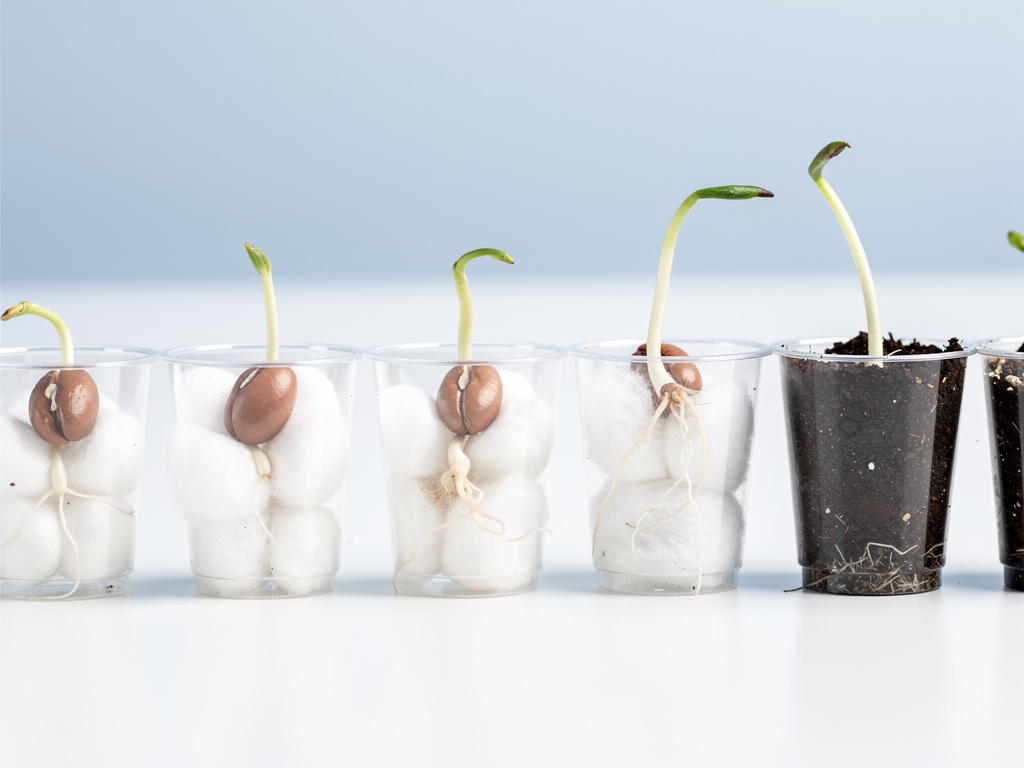
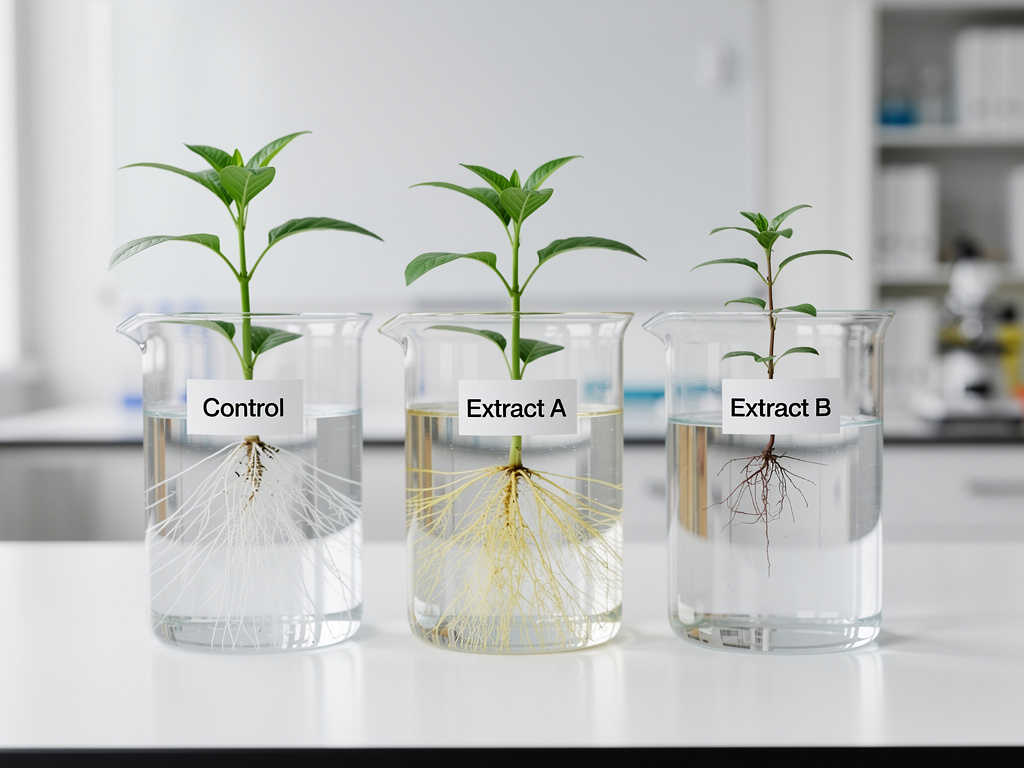
Investigate the allelopathic effects of certain plants on the growth of others. Conduct experiments to observe the relationships between different species!
This experiment provides a step-by-step guide to isolating and viewing the DNA of a strawberry. Using simple materials like soap, salt, and rubbing alcohol, you can precipitate the DNA and see the stringy, white substance that makes up the genetic code.

If a strawberry is mashed and treated with a solution of soap and salt, then its DNA can be extracted and precipitated out of the solution using cold rubbing alcohol.
As an Amazon Associate, this site earns from qualifying purchases.
Chill the rubbing alcohol in the freezer for at least 30 minutes.
In a small bowl, mix the dish soap, salt, and water to create the extraction buffer.
Place the strawberries in the Ziploc bag, seal it, and mash them thoroughly for about 2 minutes.
Add the extraction buffer to the bag, reseal it, and gently mix for another minute.
Place the cheesecloth or coffee filter over the top of the clear glass and secure it with a rubber band.
Pour the strawberry mixture into the filter and let the liquid drip into the glass.
Gently squeeze the filter to get as much liquid out as possible.
Discard the filter and the remaining pulp.
Tilt the glass and slowly pour the chilled rubbing alcohol down the side of the glass so that it forms a layer on top of the strawberry liquid.
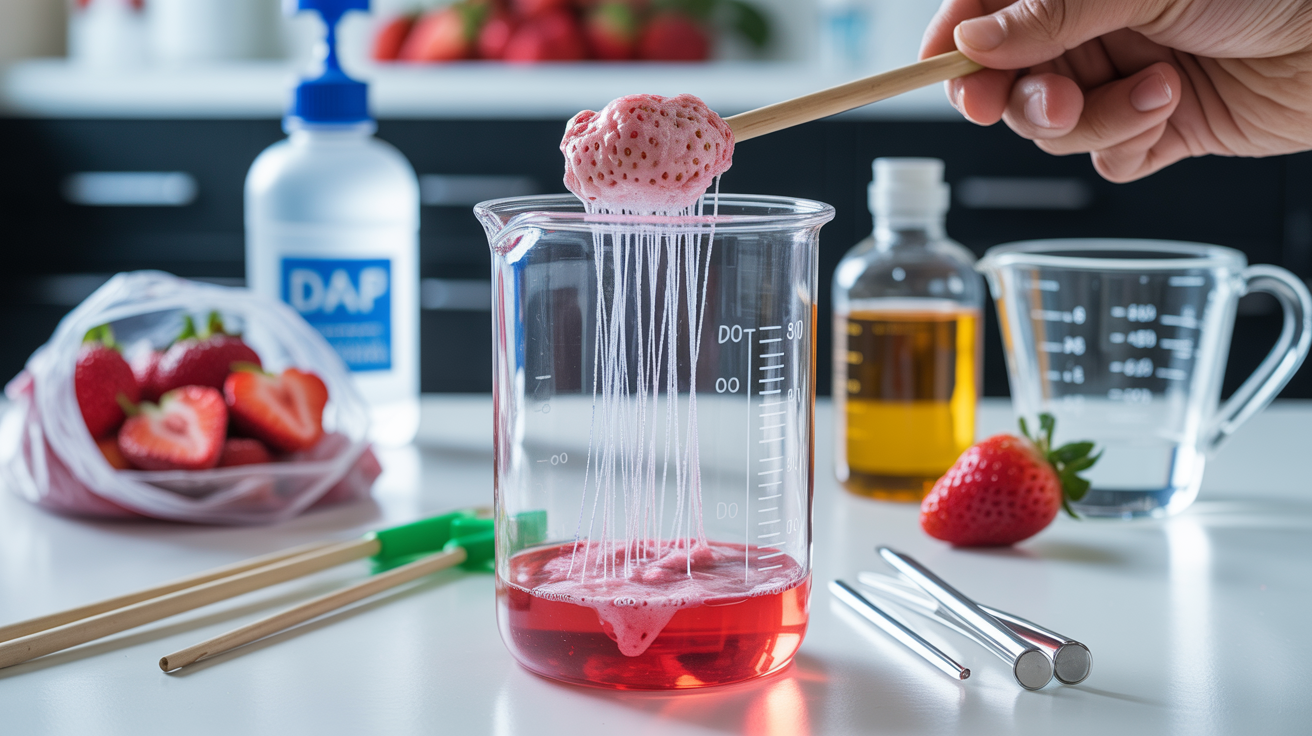
Watch for the formation of a white, stringy substance at the interface between the two layers. This is the DNA!
Use the wooden skewer to gently spool the DNA and lift it out of the solution.
A white, gooey, and stringy substance will precipitate at the boundary between the strawberry extract and the cold alcohol. This substance is the DNA from the strawberry cells. Strawberries are used because they are octoploid, meaning they have eight copies of each chromosome, which results in a large amount of DNA that is easy to see.
The addition of the extraction buffer and cold alcohol to the mashed strawberries.
The precipitation of visible DNA.
The type of fruit used, the temperature of the alcohol, and the amounts of each ingredient.
Rubbing alcohol is flammable and should be handled with care. Do not consume any part of this experiment. Adult supervision is recommended.
Perform the DNA extraction as a live demonstration for the judges.
Have a sample of the extracted DNA on display in a small vial.
Create a large, colorful diagram of a plant cell and a DNA molecule to help explain the science behind the extraction.
The soap helps to break down the cell membranes and nuclear membranes to release the DNA. The salt helps to neutralize the negative charge of the DNA, which allows it to clump together.
DNA is soluble in water but not in alcohol. When the cold alcohol is added, it causes the DNA to precipitate out of the solution, making it visible to the naked eye.
Yes, you can extract DNA from many other living things, including bananas, onions, and even your own cheek cells! Different sources may yield different amounts of DNA.