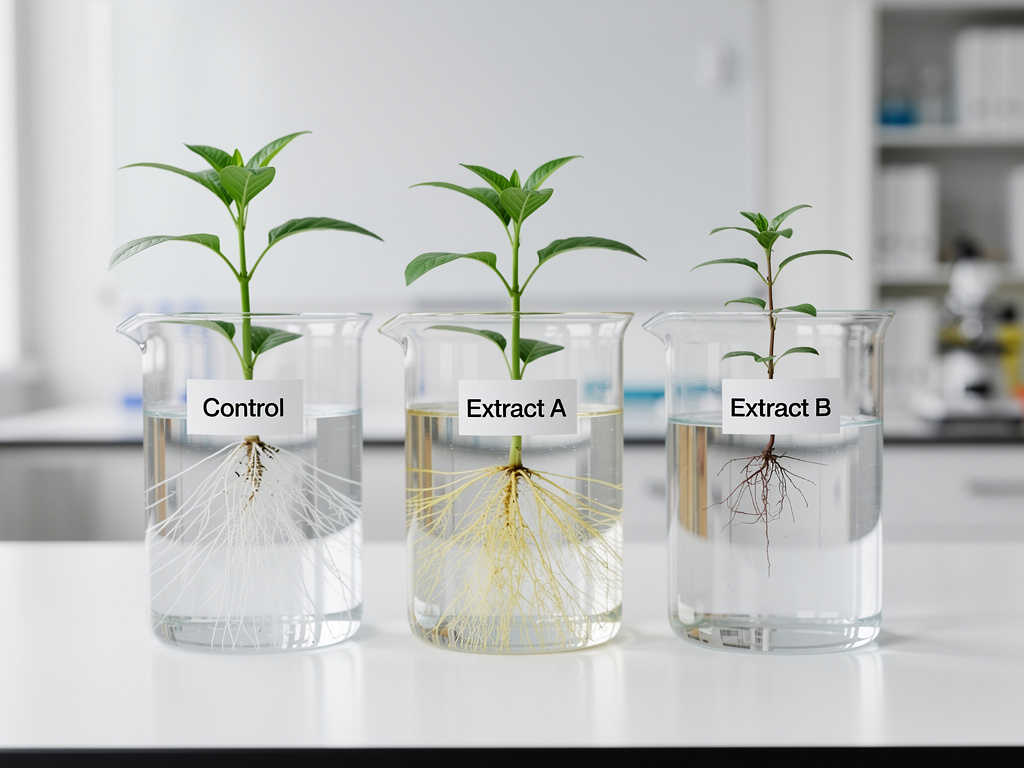
Allelopathy: Do Some Plants Inhibit Growth of Others Science Project
Investigate the allelopathic effects of certain plants on the growth of others. Conduct experiments to observe the relationships between different species!
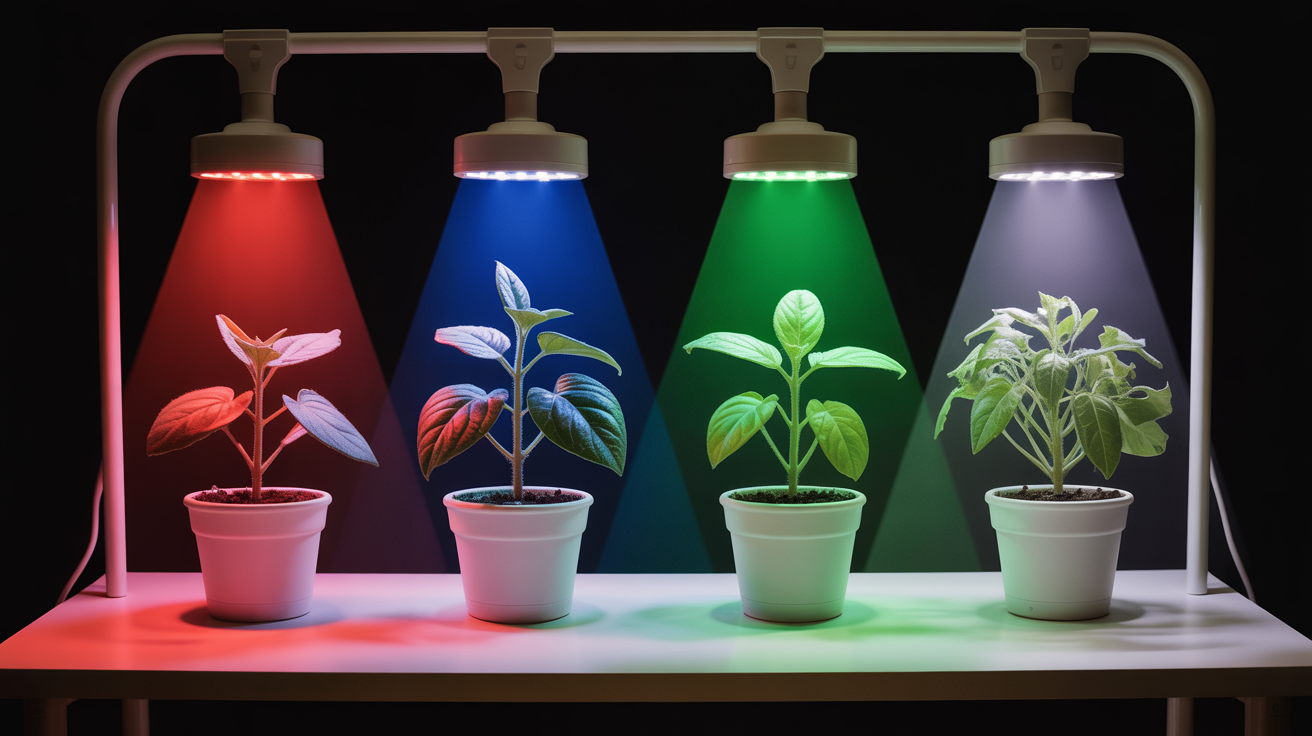
This experiment investigates how different colors of light (red, blue, green, and white) impact the growth of bean plants. It's a great visual project to understand the basics of photosynthesis and light absorption.

If bean plants are grown under different colors of light, then the plants grown under blue and red light will grow taller than those under green or white light because chlorophyll absorbs blue and red light most effectively for photosynthesis.
As an Amazon Associate, this site earns from qualifying purchases.
Fill the four pots with potting soil and plant three bean seeds in each pot.
Water the seeds and place each pot inside a separate cardboard box.
Cut a window in the top of each box.
Cover the window of one box with red cellophane, one with blue, one with green, and leave one clear (the control).
Place the boxes in a sunny location.
Water the plants every other day, ensuring each receives the same amount of water.
After two weeks, measure and record the height of each plant.
Calculate the average height for each light color.
Compare the results and draw a conclusion.
Plants under blue and red light are expected to grow the tallest, as these wavelengths are most readily absorbed by chlorophyll for photosynthesis. The plant under green light will likely be the shortest, as green light is mostly reflected. The control plant (clear cellophane) will show normal growth.
Color of light the plants are exposed to.
Height of the plants.
Type of plant, amount of water, soil type, pot size, and ambient temperature.
Be careful when cutting the cardboard boxes. Adult supervision is recommended for younger children.
Display your four boxes with the plants to visually show the results.
Create a colorful bar chart comparing the average plant height for each light color.
Include photos taken daily to show the growth progression of each plant.
Plants need light for a process called photosynthesis, where they convert light energy into chemical energy to fuel their growth and activities.
Chlorophyll is the green pigment in plants that absorbs sunlight for photosynthesis. It primarily absorbs blue and red light and reflects green light, which is why most plants appear green.
Yes, you can use other fast-growing plants like radishes or lettuce, but be sure to use the same type of plant for all groups in your experiment to ensure a fair test.