Science Fair Projects
earth sciencemedium middle 10 days

Stalactite and Stalagmite Formation Science Project

This science project allows students to explore mineral formation by creating stalactites and stalagmites using Epsom salt. Watch as crystals grow over time, illustrating geological processes in an accessible and hands-on way.

Stalactite and Stalagmite Formation Science Project

Hypothesis

If Epsom salt is dissolved in water and allowed to evaporate, then stalactites and stalagmites will form as the crystals deposit.

Materials Needed

Epsom salt200 gramsBuy
water500 mLBuy
clear plastic containers2Buy
string1 meterBuy
stick or pencil2Buy
measuring cup1Buy
tea light candles2Buy
timer1Buy

As an Amazon Associate, this site earns from qualifying purchases.

Step-by-Step Procedure

  1. 1

    Dissolve 200 grams of Epsom salt in 500 mL of warm water.

  2. 2

    Pour the solution into two clear plastic containers.

  3. 3

    Suspend a piece of string from a stick laid across the top of one container, ensuring it's submerged.

  4. 4

    Place a tea light candle underneath the second container to heat the solution.

  5. 5

    Allow the containers to sit undisturbed for 1-2 weeks.

  6. 6

    Observe the formation of crystals on the string and the bottom of the containers.

  7. 7

    Measure the size of the stalactites and stalagmites formed.

  8. 8

    Record daily observations of crystal growth.

Expected Results

Students should observe crystals forming on both the string and the bottom of the containers, demonstrating stalactite and stalagmite formation. The heated container may produce larger crystals more quickly than the cooler one.

Variables

Independent Variable

Temperature of the solution

Dependent Variable

Size and rate of crystal growth

Controlled Variables

Amount of Epsom salt, Volume of water, Evaporation conditions

Safety Notes

Handle hot water with care and avoid direct contact with the candle flame.

Presentation Tips

  • Create a visual timeline of crystal growth.

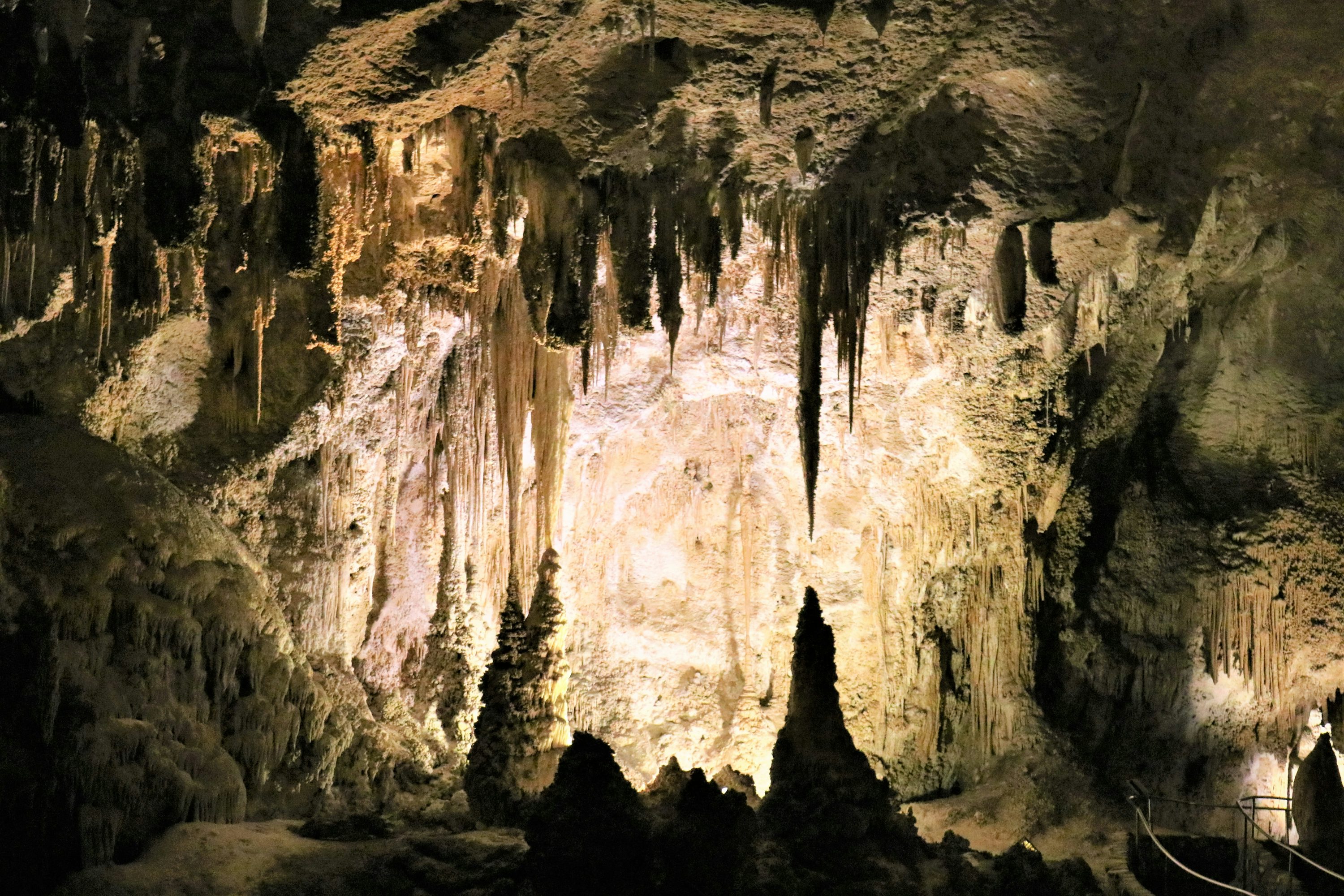
  • Use clear images of stalactites and stalagmites in your display.

  • Prepare a video of the experiment process.

  • Include a section on real-world applications of mineral formation.

  • Engage the audience with questions about geological processes.

Frequently Asked Questions

Like this project? Get more ideas!