Science Fair Projects
physicsmedium high 10 days

RC Circuit Experiment: Charging and Discharging Capacitors in a Science Project

This project delves into the workings of RC circuits by analyzing how capacitors charge and discharge. Students will build their own RC circuit and measure voltage changes over time, providing a practical understanding of circuit theory and electronics.

RC Circuit Experiment: Charging and Discharging Capacitors in a Science Project

Hypothesis

If I measure the voltage across a capacitor over time, then I can observe the exponential charge and discharge behavior of the RC circuit.

Materials Needed

resistor (e.g., 1kΩ)1Buy
capacitor (e.g., 100μF)1Buy
battery (e.g., 9V)1Buy
breadboard1Buy
multimeter1Buy
jumper wires5Buy
stopwatch1Buy
notebook1Buy

As an Amazon Associate, this site earns from qualifying purchases.

Step-by-Step Procedure

  1. 1

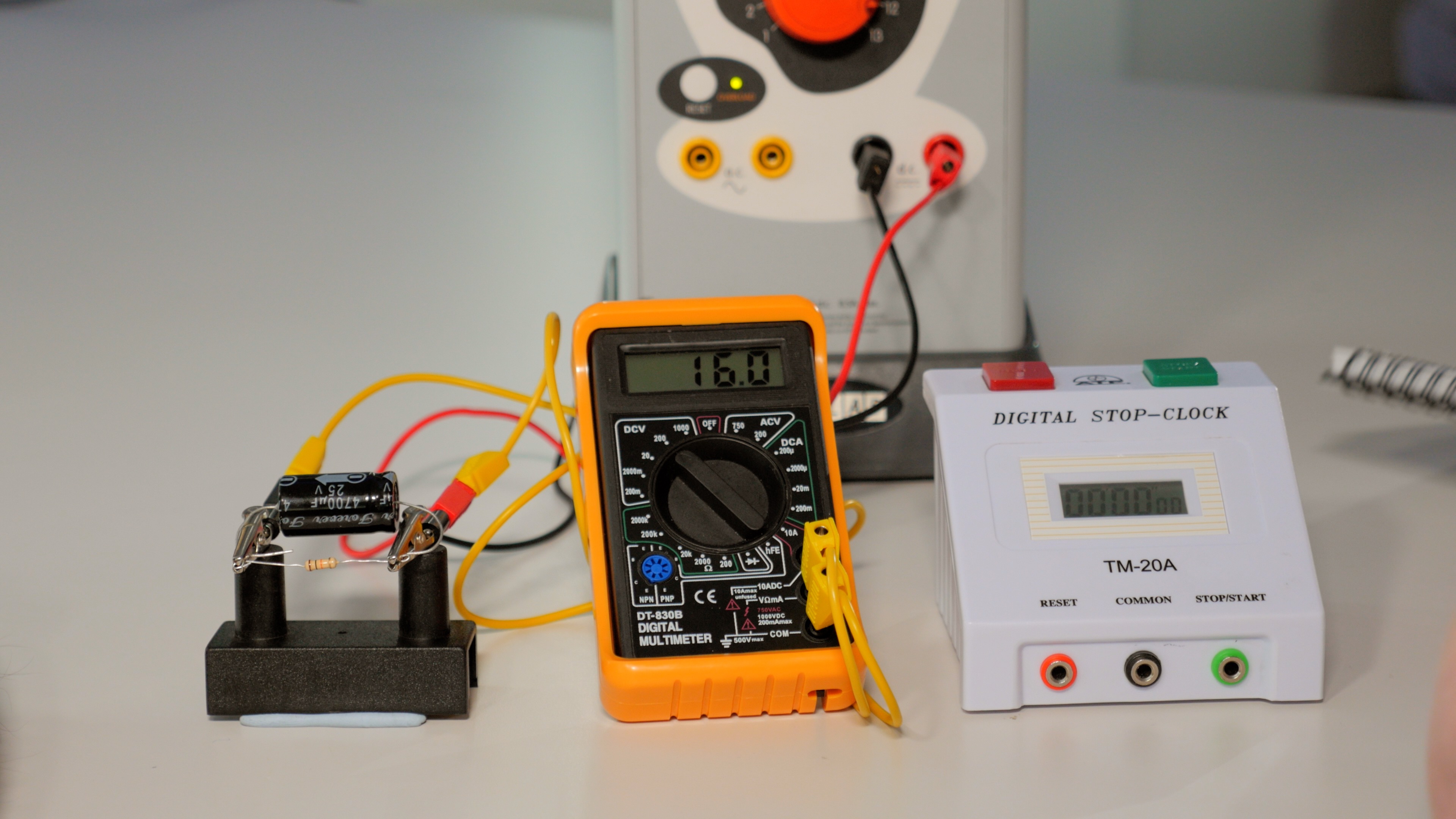
    Set up the RC circuit on the breadboard following the schematic diagram.

  2. 2

    Connect the resistor and capacitor in series.

  3. 3

    Attach the battery to power the circuit.

  4. 4

    Use the multimeter to measure the voltage across the capacitor at regular intervals.

  5. 5

    Record the voltage values over time as the capacitor charges.

  6. 6

    Discharge the capacitor and measure voltage again.

  7. 7

    Analyze the results to observe the charging and discharging curves.

  8. 8

    Present findings in a clear and organized manner.

Expected Results

As the capacitor charges, voltage readings should increase exponentially, and similarly, discharge readings should show a rapid fall in voltage, illustrating the behavior of RC circuits.

Variables

Independent Variable

resistor value

Dependent Variable

voltage across the capacitor

Controlled Variables

capacitor value, battery voltage, environmental conditions

Safety Notes

Ensure the capacitor is fully discharged before handling; avoid short-circuiting the battery.

Presentation Tips

  • Include graphs of voltage changes over time.

  • Explain the concept of time constant in RC circuits.

  • Demonstrate the circuit setup live.

  • Discuss practical applications of capacitors in electronics.

  • Engage the audience with questions about circuit theory.

Frequently Asked Questions

Like this project? Get more ideas!