Science Fair Projects
physicsmedium middle 7 days

Archimedes' Principle: Testing Buoyancy with Different Objects

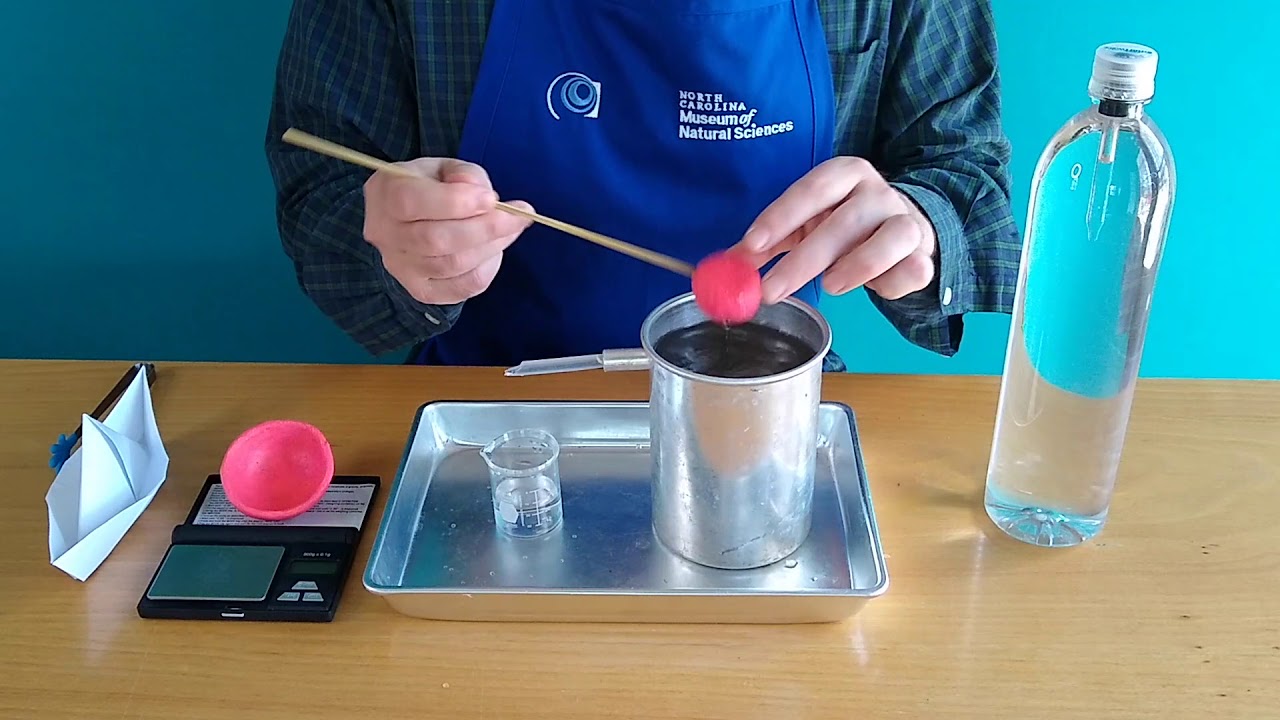
This project allows students to test various objects for buoyancy, demonstrating Archimedes' principle. It engages students in hands-on learning about density and displacement.

Archimedes' Principle: Testing Buoyancy with Different Objects

Hypothesis

If different objects are placed in water, then objects with lower density will float while those with higher density will sink.

Materials Needed

Various objects (e.g., plastic, metal, wood)5Buy
Large container filled with water1Buy
Measuring cup1Buy
Scale1Buy
Notebook for recording results1Buy

As an Amazon Associate, this site earns from qualifying purchases.

Step-by-Step Procedure

  1. 1

    Fill a large container with water to a marked level.

  2. 2

    Weigh each object before submerging it in water.

  3. 3

    Carefully place each object in the water one by one.

  4. 4

    Observe whether the object sinks or floats.

  5. 5

    Record the results in your notebook.

  6. 6

    Measure and note the displacement of water for submerged objects.

  7. 7

    Analyze the relationship between weight and buoyancy.

  8. 8

    Discuss how this relates to Archimedes' principle.

Expected Results

The experiment will demonstrate that less dense objects float while denser objects sink, illustrating Archimedes' principle of buoyancy.

Variables

Independent Variable

Type of object used

Dependent Variable

Buoyancy outcome (sink or float)

Controlled Variables

Volume of water, Temperature of water, Environment conditions

Safety Notes

Be cautious with heavy objects to prevent spills and accidents.

Presentation Tips

  • Use visual aids to explain Archimedes' principle.

  • Create a chart showing which objects float and sink.

  • Involve the audience by asking them to predict outcomes.

  • Display photographs of the experiment.

Frequently Asked Questions

Like this project? Get more ideas!