Allelopathy: Do Some Plants Inhibit Growth of Others Science Project
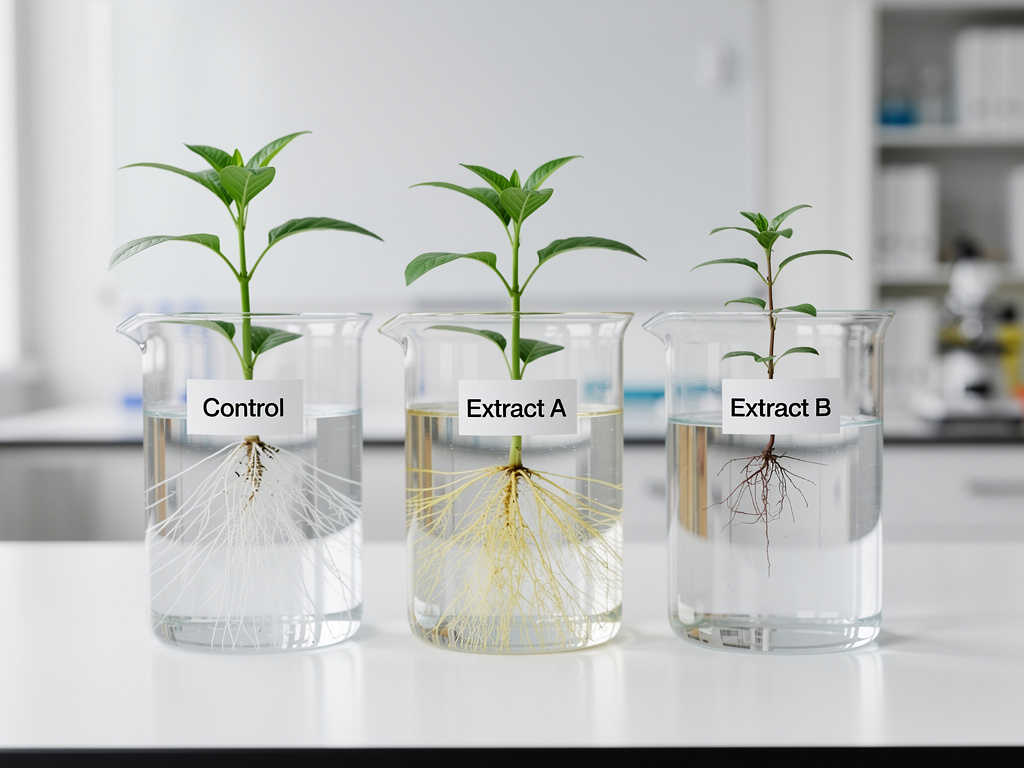
Investigate the allelopathic effects of certain plants on the growth of others. Conduct experiments to observe the relationships between different species!
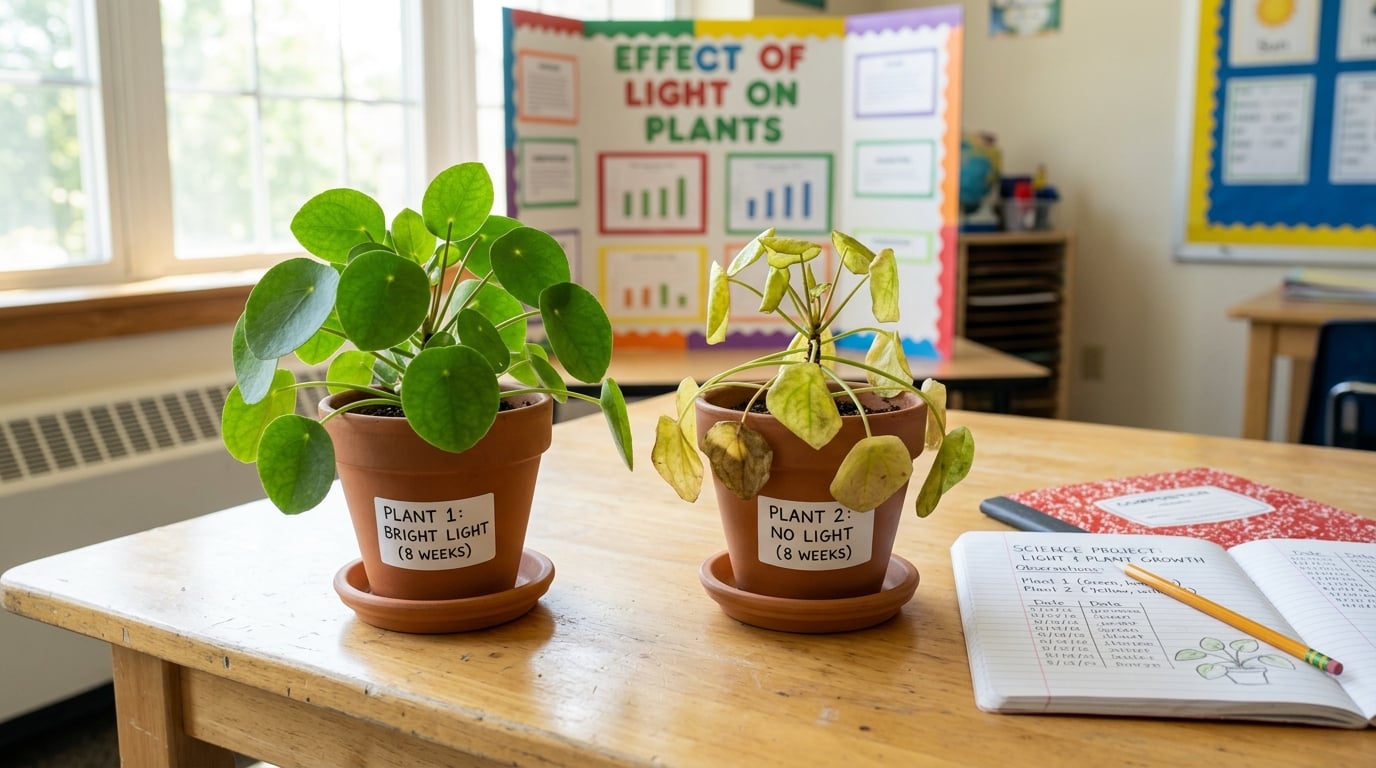
Explore how light affects leaf coloration by keeping plants in the dark. Determine whether lack of light triggers color changes in leaves.

If a plant is kept in the dark, then its leaves will change color due to reduced chlorophyll production.
As an Amazon Associate, this site earns from qualifying purchases.
Place one potted plant in a cardboard box to block light.
Keep another plant in a well-lit area as a control.
Measure initial leaf color using a color chart or photographs.
Record the starting conditions in a notebook.
Check plants daily for changes in leaf color.
Document any changes with photographs.
Measure and record changes in leaf size and color.
Compare changes between the two plants.
Record daily light levels using the light meter.
After two weeks, analyze the collected data.
Draw conclusions about the effect of light on leaf color.
Leaves in the dark may turn yellow or pale due to chlorophyll breakdown and reduced photosynthesis. The control plant should maintain its color.
Presence of light
Leaf color change
Type of plant, Amount of water, Room temperature
Ensure plants are not disturbed and receive adequate water.
Use before-and-after photos to show color changes.
Explain the role of chlorophyll in leaf coloration.
Discuss the importance of light for plant health.
Without light, chlorophyll breaks down, leading to color changes.
Yes, but results may vary with plant species.
Two weeks is generally sufficient to observe changes.