Analyzing the Role of Vegetation in Urban Heat Islands
This project investigates how vegetation influences temperature in urban heat islands. By comparing areas with varying plant cover, students can assess the cooling effects of vegetation.
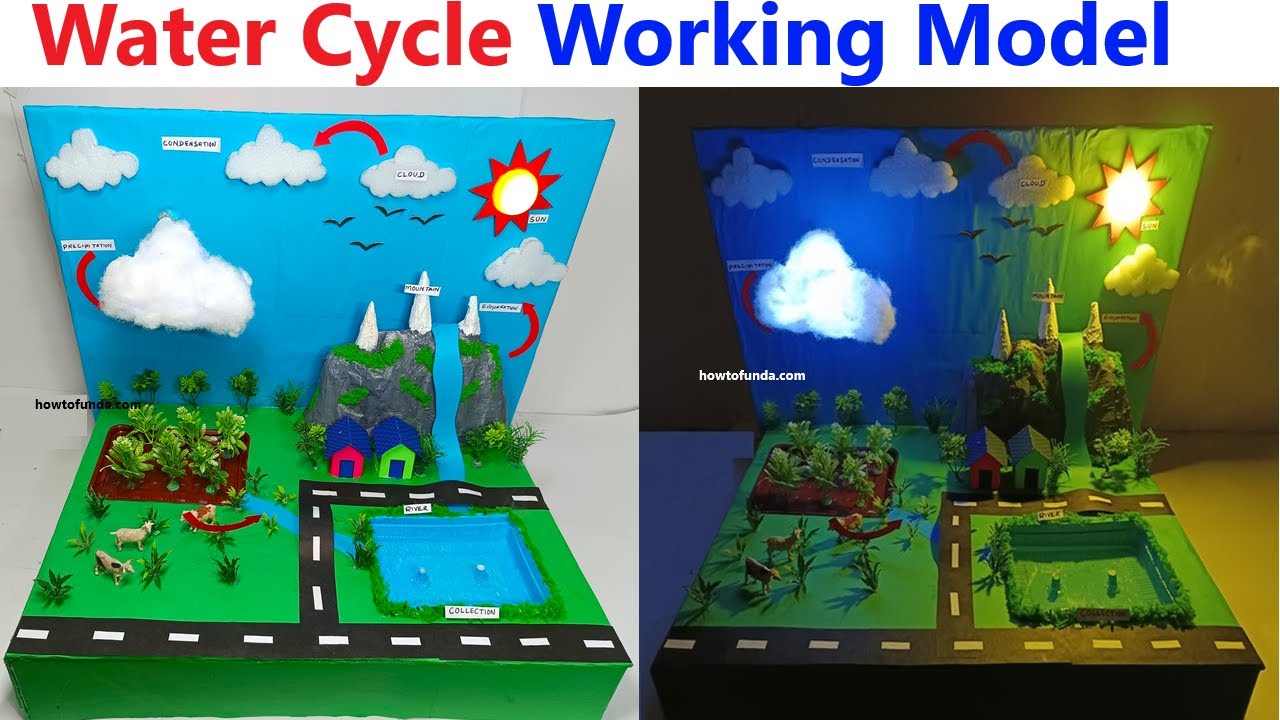
This project demonstrates the water cycle on a small scale by creating clouds in a jar. Students will observe evaporation, condensation, and precipitation processes using common household materials.

If water in a jar is heated, then clouds will form inside the jar due to the evaporation and condensation processes.
As an Amazon Associate, this site earns from qualifying purchases.
Step 1: Gather all materials and fill the jar with about two inches of hot water.
Step 2: Quickly cover the jar with the metal tray.
Step 3: Place ice cubes on top of the metal tray.
Step 4: Spray a small amount of aerosol into the jar.
Step 5: Watch as clouds begin to form inside the jar.
Step 6: Use a thermometer to measure the temperature change in the jar.
Step 7: Record observations about the cloud formation process.
Step 8: Remove the metal tray and let the clouds dissipate.
Step 9: Clean up by emptying the jar and wiping it dry.
Step 10: Discuss the water cycle stages demonstrated in the experiment.
Clouds will form inside the jar as water vapor from the hot water condenses on the tray cooled by the ice. The aerosol helps by providing condensation nuclei.
Temperature of water
Amount and visibility of clouds
Jar size, Number of ice cubes, Amount of water
Handle hot water with care to avoid burns, and ensure the jar is stable during the experiment.
Include diagrams of the water cycle stages.
Explain the science behind each step of the experiment.
Use a video to show cloud formation in real-time.
Aerosol provides particles for water vapor to condense on, forming clouds.
Clouds form when water vapor cools and condenses on particles in the air.
No, this setup doesn't simulate rainfall, but it shows evaporation and condensation.