Science Fair Projects
earth scienceeasy elementary 60 days

Making a Cloud in a Jar - Weather Experiment for Kids

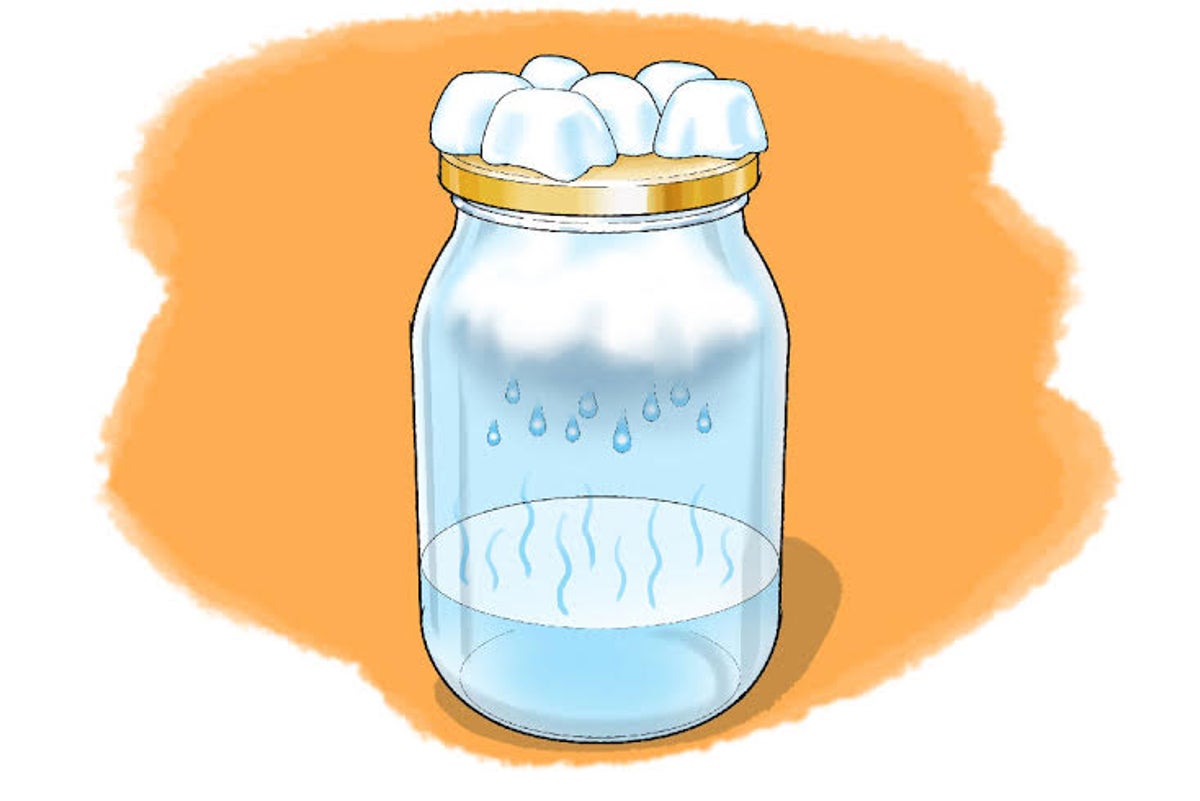
This simple experiment demonstrates how clouds form in the atmosphere. By creating a cloud in a jar, students can visualize the process of condensation and learn about weather systems. It's a hands-on approach to understanding meteorology!

Making a Cloud in a Jar - Weather Experiment for Kids

Hypothesis

If warm air rises and cools, then water vapor will condense to form a cloud in the jar.

Materials Needed

Glass jar1Buy
Hot water1 cupBuy
Ice cubes5Buy
Spray bottle with water1Buy
Plate1Buy

As an Amazon Associate, this site earns from qualifying purchases.

Step-by-Step Procedure

  1. 1

    Pour hot water into the glass jar to about one-third full.

  2. 2

    Cover the jar with the plate upside down.

  3. 3

    Place ice cubes on top of the plate.

  4. 4

    Wait a few minutes for the steam to rise.

  5. 5

    Use the spray bottle to add a few squirts of water into the jar.

  6. 6

    Observe the cloud formation as the warm air rises and cools.

  7. 7

    Remove the plate to see the cloud dissipate.

  8. 8

    Discuss what happened and why clouds form in the atmosphere.

  9. 9

    Take photos of the cloud for your presentation.

  10. 10

    Clean up the materials after the experiment.

Expected Results

A visible cloud should form inside the jar as the warm air rises and cools, demonstrating the condensation process.

Variables

Independent Variable

Temperature of water

Dependent Variable

Cloud formation

Controlled Variables

Amount of water, Size of jar, Amount of ice

Safety Notes

Be careful with the hot water to avoid burns.

Presentation Tips

  • Use a clear jar for better visibility of the cloud.

  • Prepare a diagram of cloud formation to explain the process.

  • Engage your audience with questions about different types of clouds.

  • Include a video of the experiment if possible.

  • Discuss the importance of clouds in weather patterns.

Frequently Asked Questions

Like this project? Get more ideas!