Analyzing the Role of Vegetation in Urban Heat Islands
This project investigates how vegetation influences temperature in urban heat islands. By comparing areas with varying plant cover, students can assess the cooling effects of vegetation.
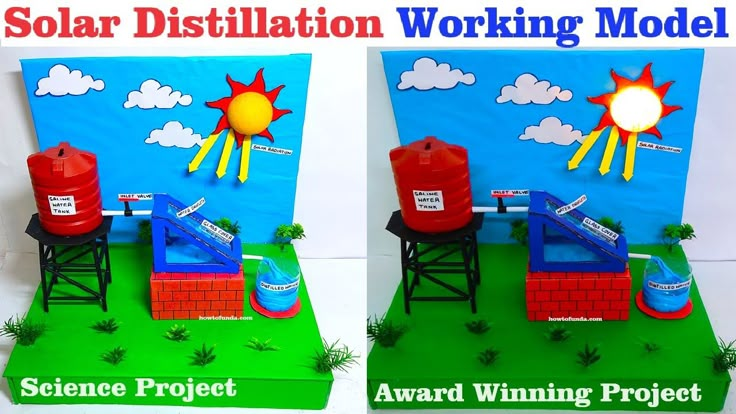
In this project, you'll build a solar still to purify water using the sun's energy. This demonstrates essential principles of evaporation and condensation.

If I create a solar still, then it will effectively purify dirty water through evaporation and condensation.
As an Amazon Associate, this site earns from qualifying purchases.
Fill the small cup with dirty water and place it in the center of the larger container.
Cover the larger container with plastic wrap, ensuring it's sealed tightly.
Place a small rock in the center of the plastic wrap to create a low point.
Set the solar still in a sunny location.
Wait for several hours, observing the sun’s effect on the system.
Check for condensation on the underside of the plastic wrap.
Collect the purified water if condensation is present.
Record the amount of purified water collected.
The solar still should produce clean water through condensation, demonstrating the purification process effectively.
Time exposed to sunlight
Amount of purified water collected
Size of the container, Volume of dirty water, Weather conditions
Ensure the dirty water used is not contaminated with harmful substances.
Demonstrate the purification process with a live example if possible.
Use diagrams to explain evaporation and condensation.
Discuss the importance of water purification in survival situations.
Prepare to answer questions about efficiency and limitations.
A solar still uses the sun's heat to evaporate water, which then condenses on the cooler surface and is collected.
Yes, it can effectively purify saline water through the same evaporation and condensation process.
Purification time can vary but generally takes several hours of direct sunlight.