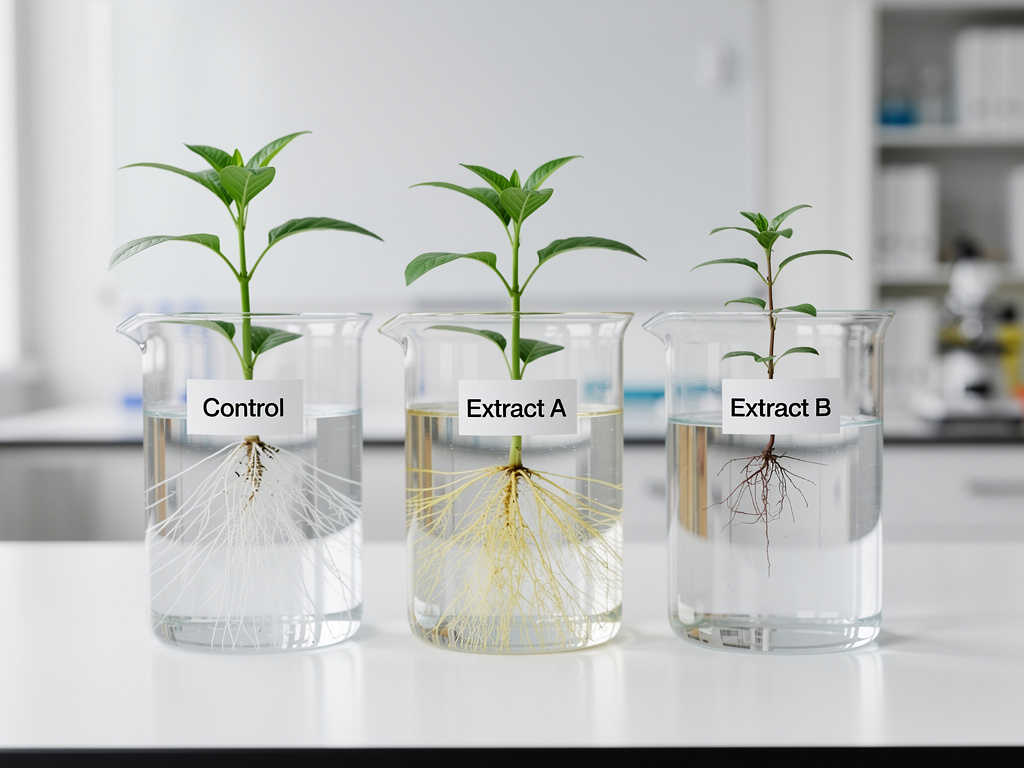
Allelopathy: Do Some Plants Inhibit Growth of Others Science Project
Investigate the allelopathic effects of certain plants on the growth of others. Conduct experiments to observe the relationships between different species!
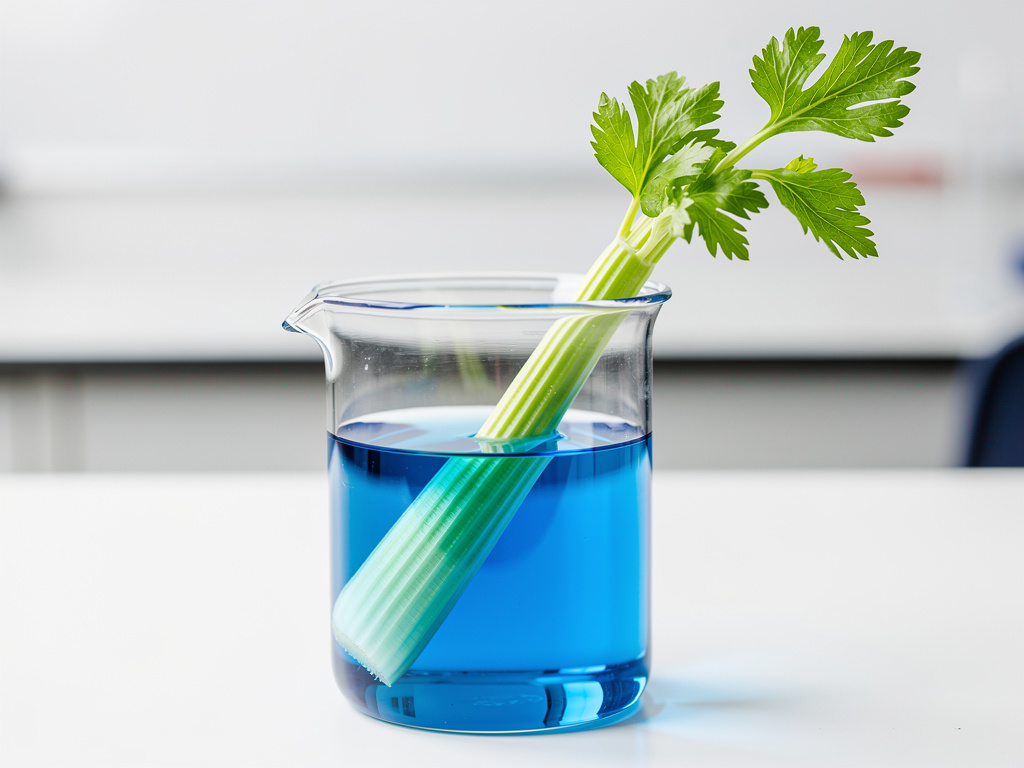
This colorful celery experiment is a great way to visualize how plants absorb water. By using food coloring, you can see how water travels through the celery stalks, demonstrating the process of water transport in plants!

If celery stalks are placed in colored water, then the color will travel up the stalks, demonstrating how plants absorb water.
As an Amazon Associate, this site earns from qualifying purchases.
Fill each clear cup with water and add a few drops of different food coloring to each.
Cut the bottoms of the celery stalks at an angle.
Place one celery stalk in each colored water cup.
Set a timer for 1-2 hours.
Observe the celery stalks for color change and document your observations.
After the time is up, take the celery out and observe any color change.
Cut the celery stalks to see how far up the color has traveled.
Record your findings in your notebook.
The colored water should ascend through the celery stalks, visibly showing how plants absorb and transport water from their roots.
color of the water
color change in celery
type of celery, amount of water, environment conditions
Food coloring may stain clothing, so use caution when handling.
Create a visual chart showing the color absorption progress.
Demonstrate the experiment live or with a video.
Explain the importance of water transport in plants.
Use colorful photos in your presentation.
Engage the audience with questions about plant biology.
Capillary action is the process by which water moves through a plant's xylem.
Yes, other vegetables like white flowers or even carrots can work!
Yes, it's a safe and fun project, but adult supervision is recommended with scissors.