Analyzing the Role of Vegetation in Urban Heat Islands
This project investigates how vegetation influences temperature in urban heat islands. By comparing areas with varying plant cover, students can assess the cooling effects of vegetation.
In this fun project, you'll learn to identify different types of clouds and use them to predict weather conditions. You'll observe the sky and record your findings, enhancing your understanding of meteorology. Perfect for elementary science fairs!

If I can identify clouds accurately, then I will be able to predict the weather conditions associated with them.
As an Amazon Associate, this site earns from qualifying purchases.
Observe the sky daily for a week.
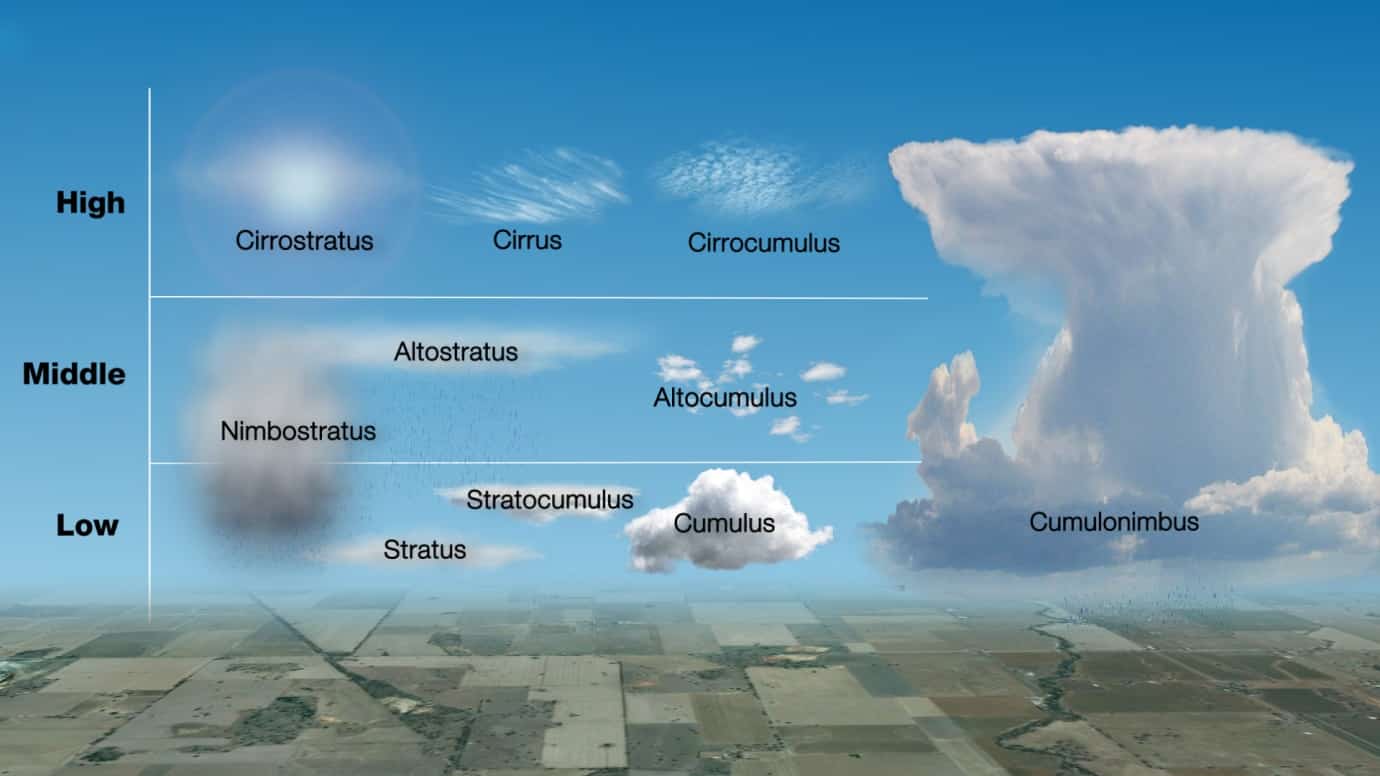
Use the cloud identification chart to classify clouds.
Record your observations and weather predictions in your notebook.
Take photographs of different cloud types.
Discuss how each cloud type relates to weather conditions.
Create a presentation summarizing your findings.
Share your project with classmates or family.
Demonstrate cloud identification in a fun quiz.
You should be able to accurately identify cloud types and successfully predict weather conditions based on your observations.
Types of clouds observed
Accuracy of weather predictions
Observation times, Location of observations, Weather conditions
Ensure safety when outside observing the sky, especially in extreme weather conditions.
Incorporate photos of clouds in your display.
Include a fun quiz for your audience on cloud types.
Explain how clouds affect weather patterns.
Engage your audience with questions about their weather experiences.
Cirrus, cumulus, stratus, and nimbus are the primary cloud types.
Different cloud types indicate various weather conditions, such as rain or sunshine.
Yes, but try to observe and predict without relying solely on technology!