Science Fair Projects
biologyhard high 7 days

The 5-Second Rule: Fact or Fiction?

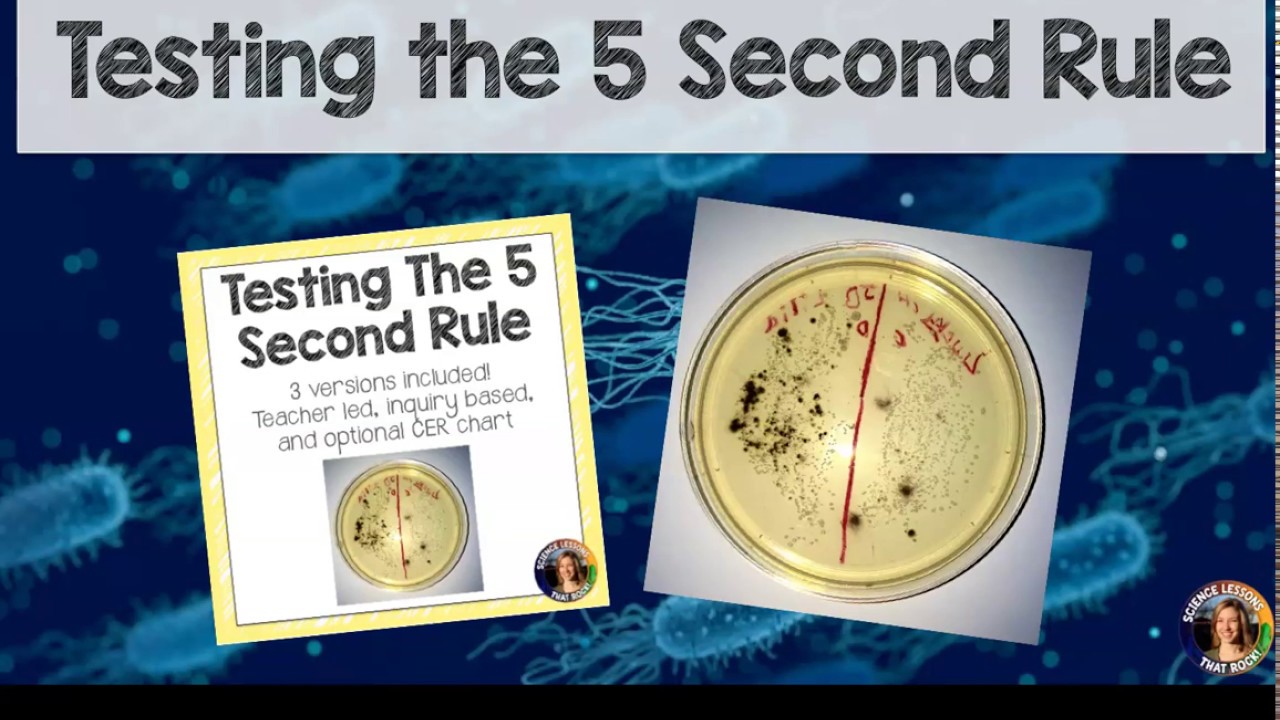
This experiment scientifically tests the validity of the '5-second rule.' By dropping food onto a surface for different lengths of time and then culturing the bacteria transferred to the food, you can visually determine if time makes a difference in contamination.

The 5-Second Rule: Fact or Fiction?

Hypothesis

If food is dropped on the floor, then it will be contaminated with bacteria almost instantly, and the amount of bacteria transferred will increase the longer the food remains in contact with the floor. The 5-second rule is not a valid measure of food safety.

Materials Needed

Sterile petri dishes with nutrient agar5-6Buy
Moist food item (e.g., a slice of bologna or a gummy candy)1Buy
Sterile cotton swabs5-6Buy
Stopwatch1Buy
Permanent marker1Buy
Incubator (or a warm, dark place)1Buy

As an Amazon Associate, this site earns from qualifying purchases.

Step-by-Step Procedure

  1. 1

    Choose a floor surface to test. Divide it into sections for each test.

  2. 2

    Label your petri dishes: 'Control (Unused Food)', '0 seconds', '5 seconds', '30 seconds', '60 seconds'.

  3. 3

    For the control, gently press a fresh, undropped piece of the food onto the agar in the first petri dish.

  4. 4

    For the '0 seconds' test, drop the food onto the floor and pick it up immediately (as fast as possible). Press it onto the agar in the corresponding petri dish.

  5. 5

    Repeat the process, leaving the food on the floor for 5 seconds, 30 seconds, and 60 seconds, using a fresh surface area of the food and a new petri dish each time.

  6. 6

    Seal all the petri dishes with tape.

  7. 7

    Place the dishes upside down in an incubator (or a warm, dark place) for 3-5 days.

  8. 8

    Observe the dishes each day without opening them. Count and record the number of bacterial colonies that grow in each dish.

  9. 9

    Take photos to document your results.

Expected Results

The control dish should have very few, if any, bacterial colonies. All other dishes will likely show bacterial growth. It is expected that bacteria will be transferred to the food almost instantly ('0 seconds' dish). The dishes corresponding to longer contact times (5, 30, and 60 seconds) will likely show a progressively larger number of bacterial colonies, proving that the longer the food is on the floor, the more contaminated it becomes.

Variables

Independent Variable

The amount of time the food is in contact with the floor.

Dependent Variable

The number of bacterial colonies that grow in the petri dish.

Controlled Variables

The type of food, the floor surface, the type of agar, and the incubation temperature and time.

Safety Notes

Bacteria can be harmful. Do not open the petri dishes after incubation. Wear gloves when handling the dishes. When the experiment is complete, the sealed dishes should be disposed of properly, preferably by sterilizing them with bleach before placing them in the trash. Adult supervision is required.

Presentation Tips

  • Display clear, well-lit photos of your petri dishes, as you cannot bring the actual cultures to the science fair.

  • Create a bar graph showing the number of bacterial colonies for each time interval.

  • Discuss the implications of your findings for food safety and why the 5-second rule is a myth.

Frequently Asked Questions

Like this project? Get more ideas!