
Science Fair Projects
physicshard high 10 days

The Physics of a Trebuchet: Launching for Distance

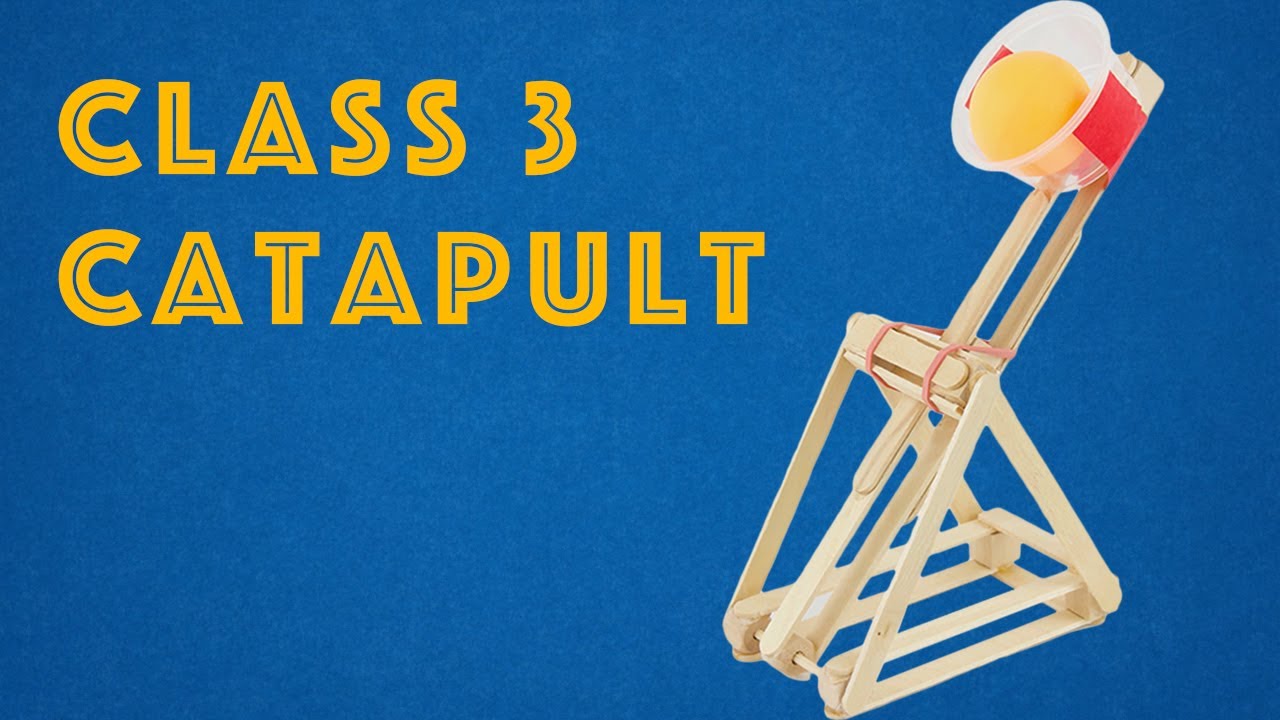
This project involves constructing a small-scale trebuchet, a type of medieval siege engine. You will then experiment with variables like the counterweight mass and projectile mass to see how they affect the launch distance of a projectile, exploring concepts of potential and kinetic energy.

The Physics of a Trebuchet: Launching for Distance

Hypothesis

If the mass of the counterweight on a trebuchet is increased, then the launch distance of the projectile will also increase, because a heavier counterweight provides more gravitational potential energy to be converted into the kinetic energy of the projectile.

Materials Needed

Wood for the frame (e.g., popsicle sticks, dowels, or 1x2 lumber)variousBuy
Wooden dowel for the axle1Buy
String1 rollBuy
Small pouch for the projectile (e.g., a piece of cloth)1Buy
Weights for the counterweight (e.g., washers, fishing sinkers)variousBuy
Small projectiles (e.g., clay balls, marbles)severalBuy
Wood glue and/or screwsas neededBuy
Measuring tape1Buy

As an Amazon Associate, this site earns from qualifying purchases.

Step-by-Step Procedure

  1. 1

    Research trebuchet designs and create a plan for your model.

  2. 2

    Construct the frame of the trebuchet, ensuring it is stable.

  3. 3

    Build the throwing arm with the axle, pouch, and a place to attach the counterweight.

  4. 4

    Assemble the trebuchet.

  5. 5

    Choose a projectile with a constant mass for your first set of experiments.

  6. 6

    Attach a small counterweight to the arm and launch the projectile. Measure and record the distance it travels.

  7. 7

    Repeat the launch 3-5 times to get an average distance for that counterweight.

  8. 8

    Increase the mass of the counterweight and repeat the launch tests, recording the average distance for each new mass.

  9. 9

    Graph the launch distance as a function of the counterweight mass.

  10. 10

    (Optional) Conduct a second experiment where you keep the counterweight constant and vary the mass of the projectile.

Expected Results

As the counterweight mass increases, the launch distance of the projectile should also increase, up to a certain point. This is because the potential energy of the counterweight (PE = mgh) is converted into the kinetic energy of the projectile (KE = 1/2mv²). A larger counterweight mass means more potential energy is available for the launch. However, there may be an optimal ratio of counterweight mass to projectile mass for maximum distance.

Variables

Independent Variable

The mass of the counterweight (and optionally, the mass of the projectile).

Dependent Variable

The launch distance of the projectile.

Controlled Variables

The design of the trebuchet, the length of the throwing arm, the length of the sling, and the projectile mass (when testing the counterweight).

Safety Notes

Be very careful when building and operating the trebuchet. Never stand in front of it during a launch. Wear safety glasses. Use soft projectiles and launch in a large, open area away from people and fragile objects.

Presentation Tips

  • Bring your trebuchet to the science fair (if allowed) for a demonstration (without launching).

  • Use diagrams to explain the energy transformations from potential energy to kinetic energy.

  • Present your data in a clear graph and discuss the relationship you found between the variables.

Frequently Asked Questions

Like this project? Get more ideas!