Science Fair Projects
chemistryhard high 2 days

The Effect of Temperature on Liquid Viscosity

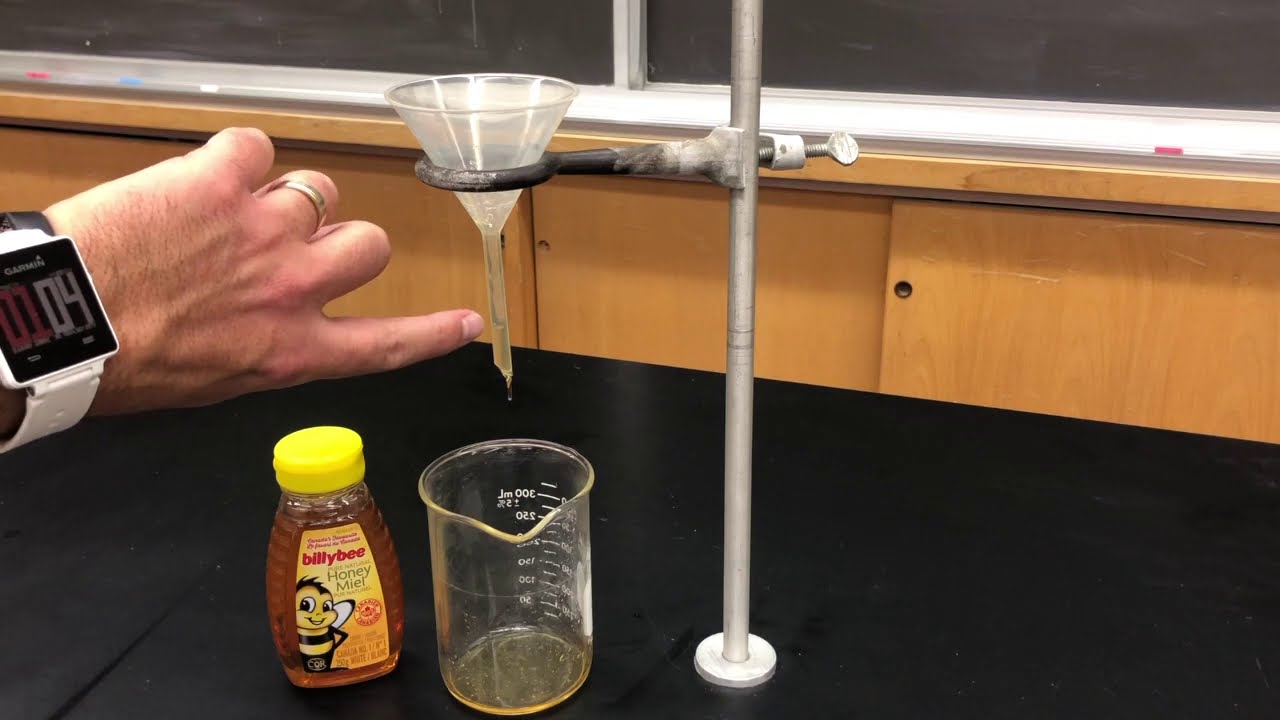
This experiment measures how quickly a marble falls through different liquids at various temperatures. By timing the marble's descent, you can calculate a relative measure of viscosity and determine how it changes when the liquids are heated or cooled.

The Effect of Temperature on Liquid Viscosity

Hypothesis

If the temperature of a liquid is increased, then its viscosity will decrease, causing a marble to fall through it more quickly. This is because the increased thermal energy allows the liquid's molecules to move past each other more easily.

Materials Needed

Tall, clear cylinders or jars (at least 3)1 setBuy
Various thick liquids (e.g., honey, corn syrup, vegetable oil, dish soap)enough to fill cylindersBuy
Small, identical marbles or ball bearingsseveralBuy
Stopwatch1Buy
Ruler1Buy
Hot water bath and ice bath1 eachBuy
Thermometer1Buy

As an Amazon Associate, this site earns from qualifying purchases.

Step-by-Step Procedure

  1. 1

    Fill each cylinder with a different liquid to the same height.

  2. 2

    Mark a 'start' line near the top of the liquid and a 'finish' line near the bottom.

  3. 3

    Measure the viscosity at room temperature first. Drop a marble into the first liquid and start the stopwatch as it passes the start line.

  4. 4

    Stop the timer when the marble reaches the finish line. Record the time.

  5. 5

    Repeat this 2-3 times for each liquid to get an average time.

  6. 6

    Now, test the effect of cold. Place the cylinders in an ice bath for 15-20 minutes until the liquid is cold. Record the temperature.

  7. 7

    Repeat the marble drop test for each cold liquid and record the times.

  8. 8

    Finally, test the effect of heat. Place the cylinders in a hot water bath until the liquid is warm. Record the temperature.

  9. 9

    Repeat the marble drop test for each warm liquid and record the times.

  10. 10

    Compare the times for each liquid at the three different temperatures.

Expected Results

For all liquids, the time it takes for the marble to fall will be longest when the liquid is cold (highest viscosity) and shortest when the liquid is warm (lowest viscosity). The room temperature times will be in the middle. This demonstrates an inverse relationship between temperature and viscosity for liquids.

Variables

Independent Variable

The temperature of the liquid.

Dependent Variable

The viscosity of the liquid (measured by the time it takes for the marble to fall).

Controlled Variables

The type of liquid, the size and mass of the marble, and the distance the marble falls.

Safety Notes

Be careful when working with the hot water bath. An adult should supervise this part of the experiment. Do not heat the liquids directly on a stove.

Presentation Tips

  • Create a bar graph comparing the fall times for each liquid at the different temperatures.

  • Use a diagram to explain viscosity on a molecular level, showing how molecules flow past each other.

  • Discuss real-world applications of viscosity, such as motor oil (which needs to work at a wide range of temperatures) and candy making.

Frequently Asked Questions

Like this project? Get more ideas!