Science Fair Projects
chemistryeasy elementary 7 days

Growing Sparkling Salt Crystals

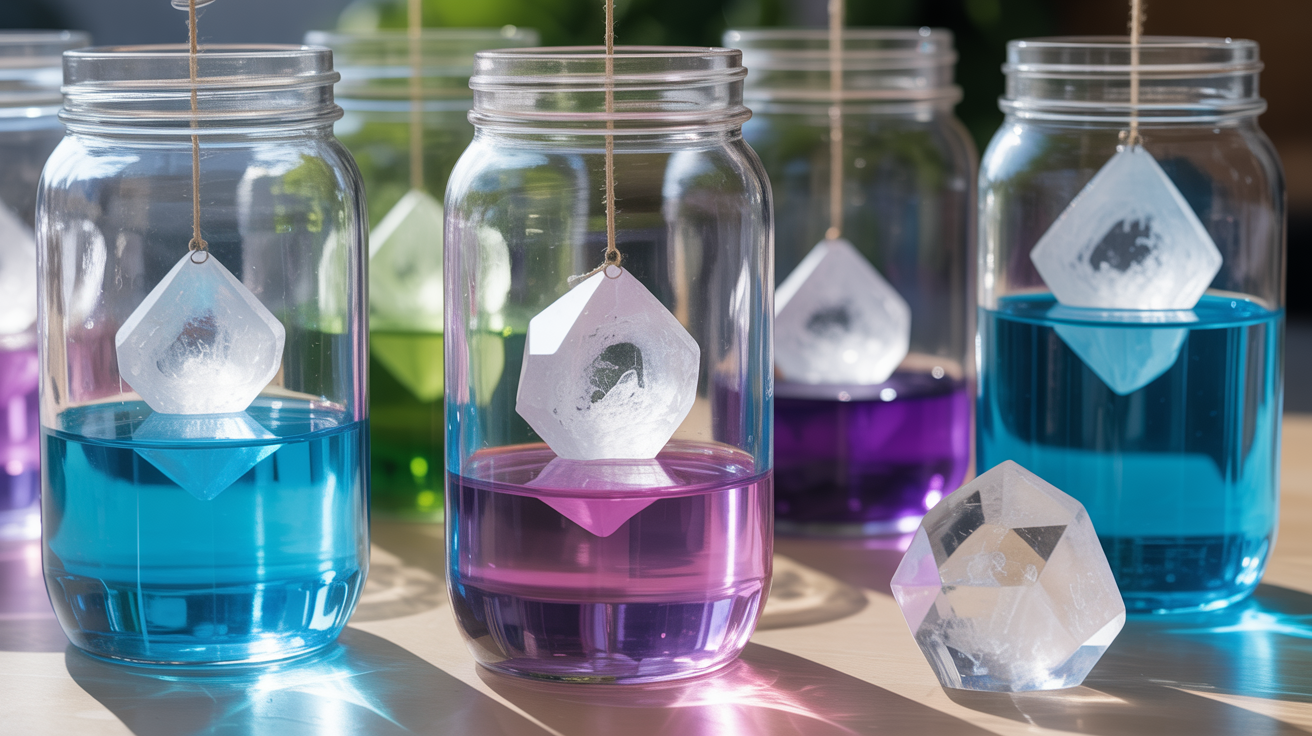
This project guides you through the process of growing salt crystals from a supersaturated salt solution. It's a visually rewarding experiment that demonstrates how molecules arrange themselves into ordered, repeating patterns.

Growing Sparkling Salt Crystals

Hypothesis

If a supersaturated salt solution is allowed to cool and evaporate slowly, then salt crystals will form as the water evaporates and the salt molecules arrange themselves into a crystal lattice structure.

Materials Needed

Table salt (sodium chloride) — 1/2 cupBuy
Water — 1 cupBuy
Glass jar or beaker — 1Buy
Pencil or popsicle stick — 1Buy
String or yarn — 6 inchesBuy
Paper clip or small washer — 1Buy
Saucepan — 1Buy
Spoon — 1Buy

As an Amazon Associate, this site earns from qualifying purchases.

Step-by-Step Procedure

  1. 1

    Tie one end of the string to the middle of the pencil and the other end to the paper clip.

  2. 2

    Rest the pencil across the top of the jar so that the paper clip hangs down into the middle of the jar without touching the sides or bottom.

  3. 3

    With adult help, heat the water in the saucepan until it is boiling.

  4. 4

    Turn off the heat and slowly stir in the salt, a little at a time, until no more salt will dissolve. This creates a supersaturated solution.

  5. 5

    Carefully pour the hot salt solution into the jar.

  6. 6

    Place the jar in a location where it will not be disturbed.

  7. 7

    Observe the jar every day and record the growth of the crystals on the string.

  8. 8

    After a week, carefully remove the string from the jar and examine your salt crystals.

Expected Results

As the water in the solution slowly evaporates, the salt concentration will increase, and salt crystals will begin to form on the string and the sides of the jar. The crystals will grow larger over time, forming cubic shapes characteristic of sodium chloride.

Variables

Independent Variable

The slow evaporation of water from a supersaturated salt solution.

Dependent Variable

The formation and growth of salt crystals.

Controlled Variables

The type of salt used, the amount of water, and the temperature of the environment.

Safety Notes

An adult should handle the boiling water. Be careful when pouring the hot solution. Do not eat the crystals.

Presentation Tips

  • Display your best crystal formation, perhaps in a small jewelry box.

  • Use a magnifying glass to allow judges to see the cubic shape of the crystals up close.

  • Create a time-lapse video or a series of photos showing the crystals growing over the week.

Frequently Asked Questions

Why does the water need to be hot to dissolve more salt?

Hot water has more energy than cold water, which allows the water molecules to move faster and create more space between them. This extra space allows more salt to dissolve, creating a supersaturated solution.

What is a supersaturated solution?

A supersaturated solution is a solution that contains more dissolved solute (in this case, salt) than it would normally be able to hold at a given temperature. These solutions are unstable, and the excess solute will readily crystallize out of the solution.

Can I grow crystals from other substances like sugar or Epsom salt?

Yes, you can grow crystals from many different substances, including sugar and Epsom salt. Each substance will form crystals with a unique shape. This could be a great extension for your project!

Related Projects

Acid Rain Alarm: The Impact of pH on Building Materials
chemistrymedium

Acid Rain Alarm: The Impact of pH on Building Materials

Students will simulate acid rain effects by applying solutions of varying pH levels to samples of common building materials. The project focuses on understanding how acid rain can damage infrastructure.

10 days·middle
Acid vs. Base: Which Is Stronger?
chemistrymedium

Acid vs. Base: Which Is Stronger?

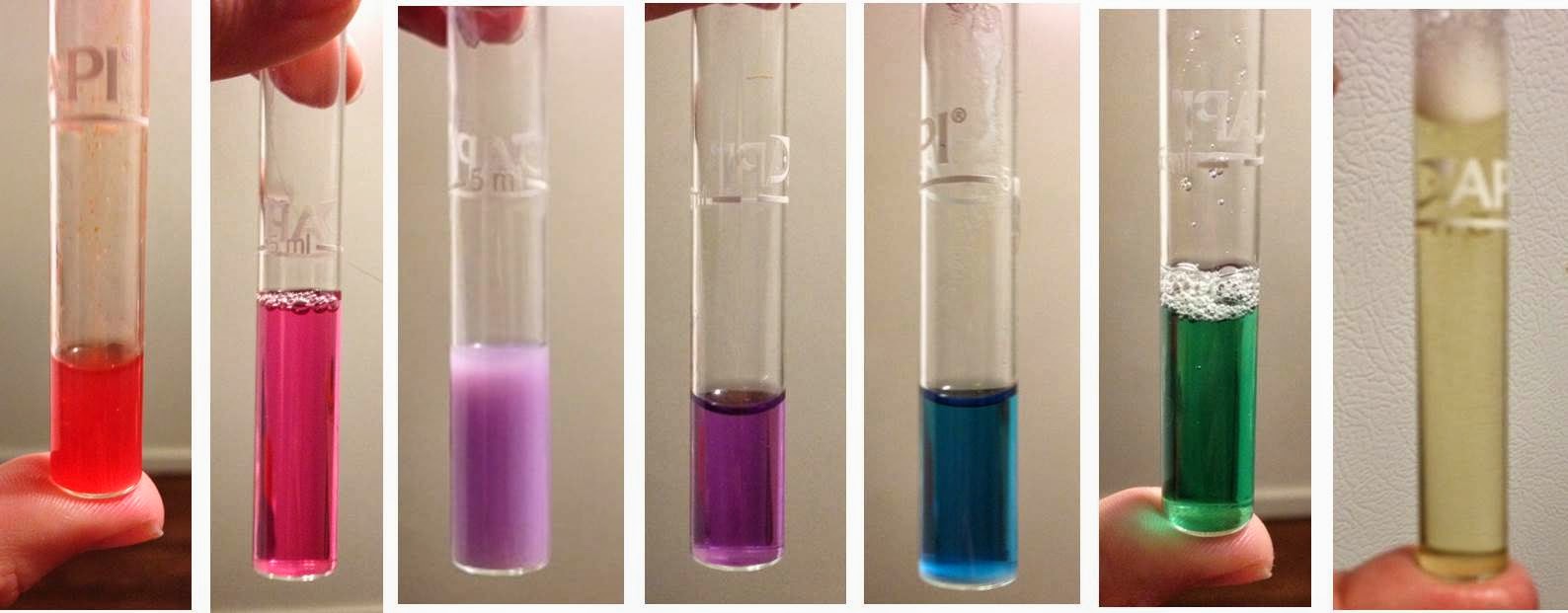
Students will investigate the comparative strength of different acids and bases by measuring their pH levels and observing their reactions with various indicators. This project will help elucidate the nature of acidic and basic solutions.

14 days·middle
Baking Soda and Vinegar Balloon Inflation Experiment
chemistryeasy

Baking Soda and Vinegar Balloon Inflation Experiment

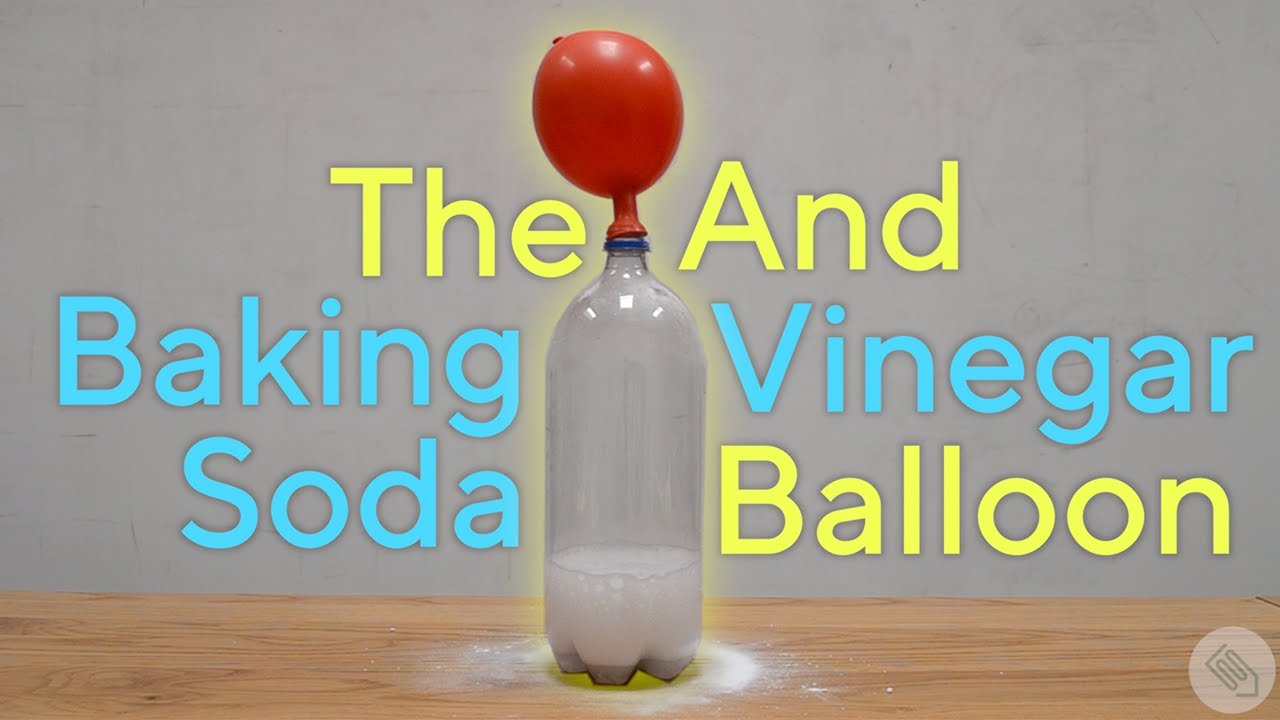
This exciting experiment demonstrates a chemical reaction between baking soda and vinegar that produces carbon dioxide gas, which inflates a balloon. It provides a hands-on approach to understanding reactions, gas expansion, and pressure in a controlled setting, making it ideal for middle school students interested in chemistry.

30 days·middle
Baking Soda and Vinegar Balloon Inflation Experiment Science Fair Project
chemistryeasy

Baking Soda and Vinegar Balloon Inflation Experiment Science Fair Project

This project demonstrates a fun and safe chemical reaction between baking soda and vinegar that produces carbon dioxide gas. Students will inflate a balloon using the gas produced, illustrating basic chemical principles.

1 days·elementary
Balloon Blow-Up: The Power of Yeast and Sugar
chemistryeasy

Balloon Blow-Up: The Power of Yeast and Sugar

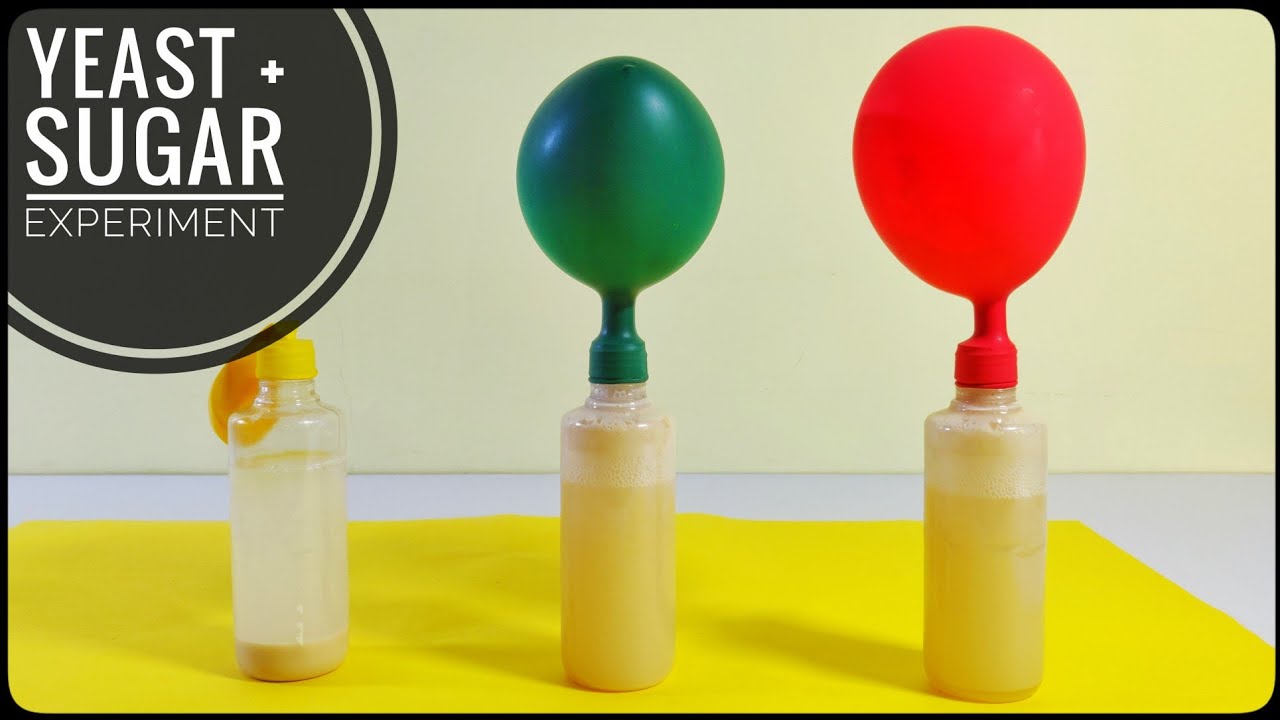
Students will observe the chemical reaction between yeast and sugar, which produces carbon dioxide gas that inflates a balloon. This project teaches about fermentation and gas production.

2 days·elementary
Biodegradable Plastics Science Project: Polymer Science
chemistryhard

Biodegradable Plastics Science Project: Polymer Science

This project focuses on creating biodegradable plastics using natural materials like starch and vinegar. Students will test the durability and decomposition rate, learning about sustainable alternatives to traditional plastics.

10 days·high

Like this project? Get more ideas!