Science Fair Projects
chemistryhard high 10 days

Synthesizing Aspirin in the Lab - Science Project

This project involves synthesizing aspirin through esterification. By using salicylic acid and acetic anhydride, discover the practical application of organic chemistry in creating a common medication.

Synthesizing Aspirin in the Lab - Science Project

Hypothesis

Aspirin can be successfully synthesized using salicylic acid and acetic anhydride through an esterification reaction.

Materials Needed

Salicylic acid5 gramsBuy
Acetic anhydride7 mlBuy
Sulfuric acid (catalyst)1 dropBuy
Beaker1Buy
Heating plate1Buy
Stirring rod1Buy
Ice bath setup1Buy
Filtration setup1Buy
Safety goggles1Buy
Gloves1 pairBuy

As an Amazon Associate, this site earns from qualifying purchases.

Step-by-Step Procedure

  1. 1

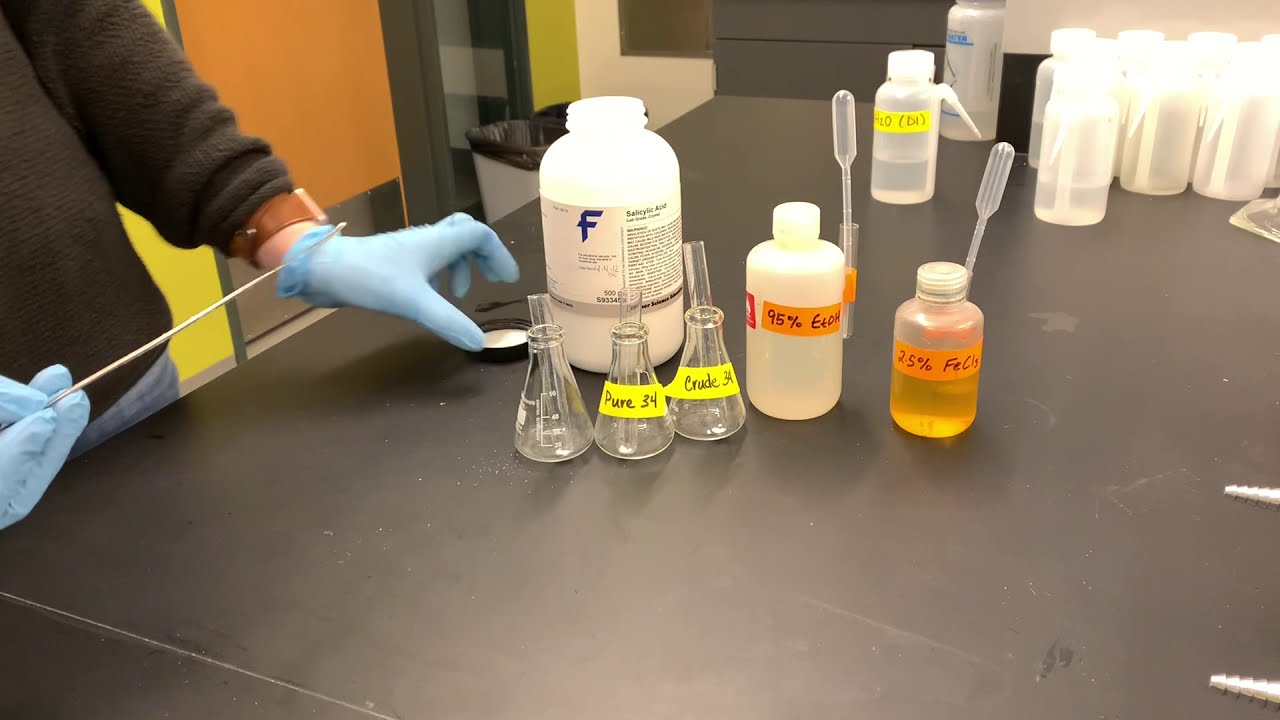
    Gather materials and wear safety gear.

  2. 2

    In a beaker, combine salicylic acid and acetic anhydride.

  3. 3

    Add a drop of sulfuric acid as a catalyst.

  4. 4

    Heat the mixture gently while stirring for 10-15 minutes.

  5. 5

    Allow the mixture to cool, then pour it into an ice bath.

  6. 6

    Filter the precipitate to collect aspirin crystals.

  7. 7

    Dry the crystals and record the yield.

  8. 8

    Analyze the purity and characteristics of the synthesized aspirin.

Expected Results

It is expected that aspirin will be successfully synthesized, demonstrating the esterification process and yielding a product that can be analyzed for purity.

Variables

Independent Variable

Amount of salicylic acid used

Dependent Variable

Yield of aspirin produced

Controlled Variables

Concentration of acetic anhydride, Heating time, Type of catalyst

Safety Notes

Handle all chemicals carefully, especially acetic anhydride and sulfuric acid, in a well-ventilated area. Always wear protective equipment.

Presentation Tips

  • Show before and after images of the synthesis process.

  • Include diagrams of the chemical reaction.

  • Explain the significance of aspirin in medicine.

  • Be prepared to discuss safety precautions taken.

  • Engage your audience by asking questions about organic chemistry.

Frequently Asked Questions

Like this project? Get more ideas!