Science Fair Projects
chemistryeasy elementary 1 days

How to Make Invisible Ink - Secret Messages Science Project

This project demonstrates how to create invisible ink using common household materials. Students will learn about chemical reactions and how certain substances can be used to write secret messages that can only be revealed under specific conditions.

How to Make Invisible Ink - Secret Messages Science Project

Hypothesis

If lemon juice is used as ink, then heating the paper will reveal the hidden message due to oxidation.

Materials Needed

Lemon juice2 tablespoonsBuy
Cotton swabs5Buy
White paper2 sheetsBuy
Heat source (e.g., lamp or iron)1Buy
Small bowl for juice1Buy
Notebook for recording results1Buy
Paintbrush (optional)1Buy
Safety gloves1 pairBuy
Safety goggles1 pairBuy
Pencil for notes1Buy

As an Amazon Associate, this site earns from qualifying purchases.

Step-by-Step Procedure

  1. 1

    Squeeze lemon juice into a small bowl.

  2. 2

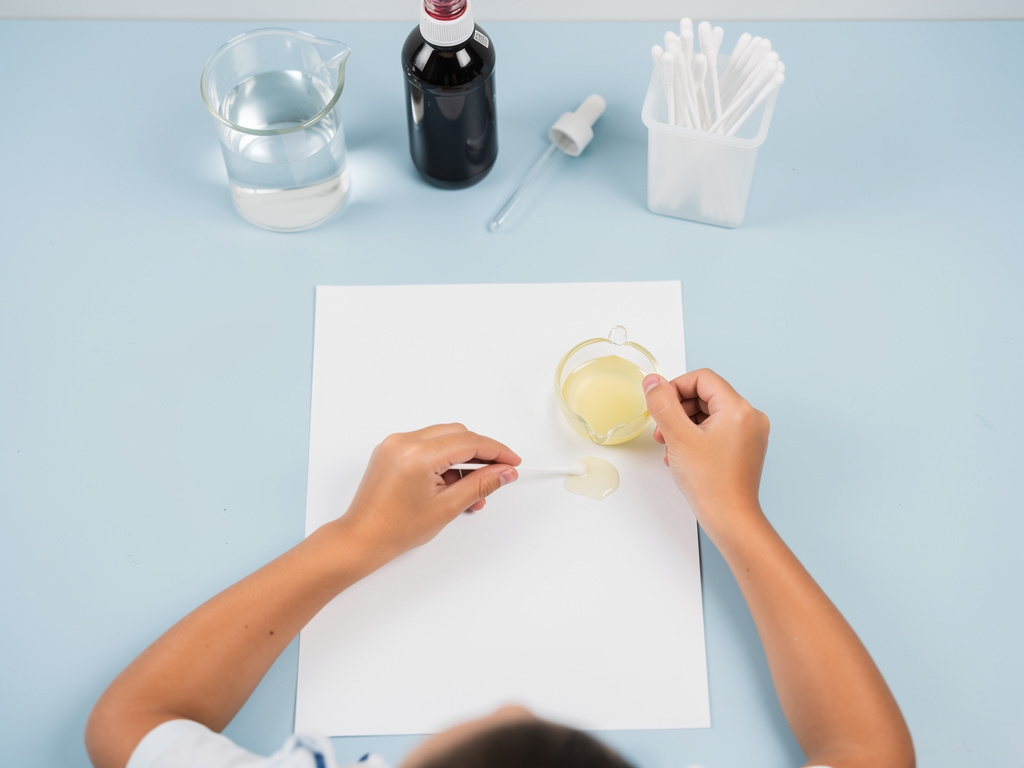
    Use a cotton swab to dip into the lemon juice and write a message on a sheet of white paper.

  3. 3

    Allow the message to dry completely.

  4. 4

    Once dry, hold the paper close to a heat source (without burning it) to reveal the message.

  5. 5

    Observe the color change as the message appears.

  6. 6

    Record the results and discuss what happens during the reaction.

  7. 7

    Experiment with other substances like milk or vinegar as invisible ink.

  8. 8

    Present the findings and demonstrate the method.

  9. 9

    Discuss the science behind the chemical reactions.

  10. 10

    Engage the audience with questions about secret messaging.

Expected Results

The heat will cause the lemon juice to oxidize, revealing the hidden message as a brown color. This illustrates the chemical reaction that makes invisible ink visible.

Variables

Independent Variable

Type of invisible ink used

Dependent Variable

Visibility of the hidden message

Controlled Variables

Type of paper, Amount of ink used, Heat source distance

Safety Notes

Be cautious when using heat sources to avoid burns. Wear safety goggles and gloves as needed.

Presentation Tips

  • Demonstrate the writing and revealing processes live.

  • Explain the chemical reactions in simple terms.

  • Engage the audience by allowing them to write their own messages.

  • Use visuals to illustrate the process.

  • Practice your presentation to ensure clarity.

Frequently Asked Questions

Like this project? Get more ideas!