Science Fair Projects
chemistrymedium middle 10 days

Exploring Chemical Luminescence: Making Things Glow

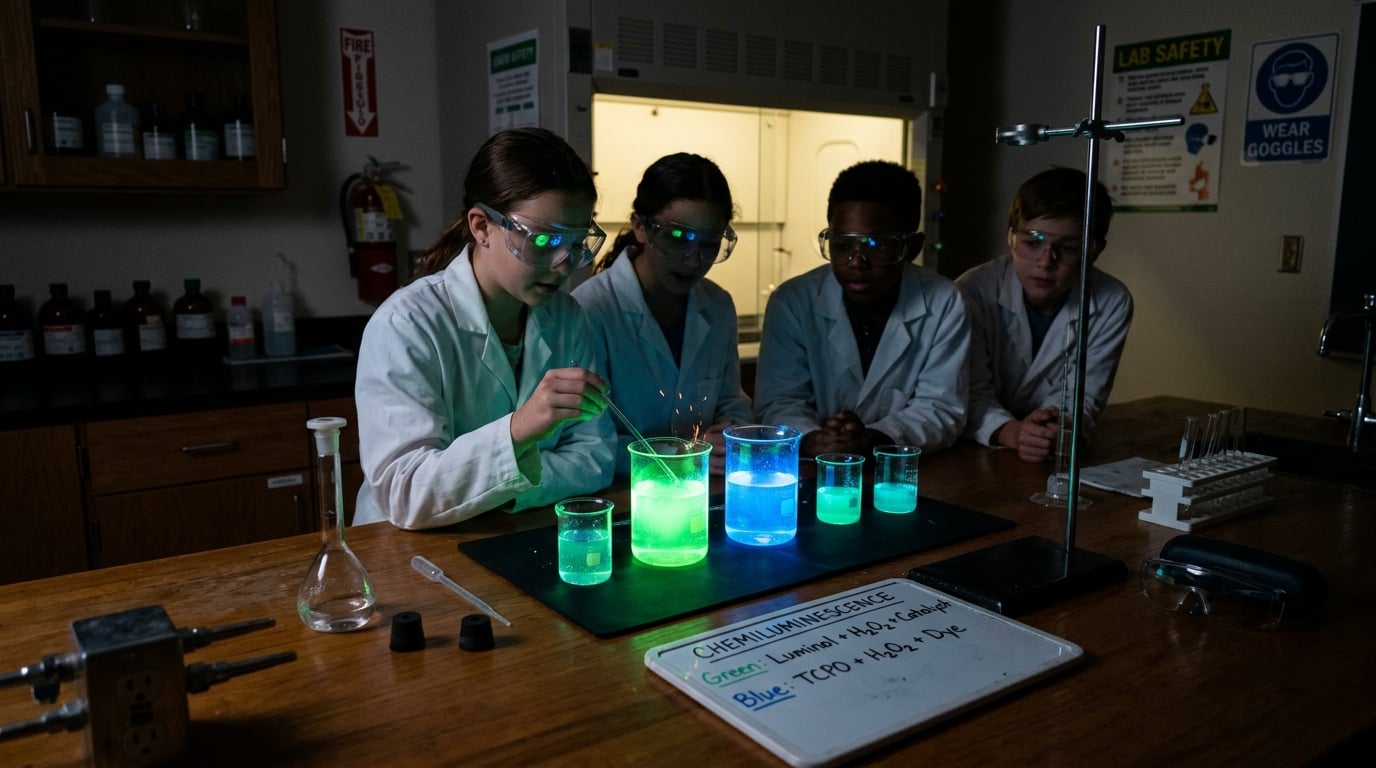
In this project, students will explore the phenomenon of chemical luminescence by creating glowing solutions. They will learn about the chemical principles behind luminescence and how different chemicals interact to produce light.

Exploring Chemical Luminescence: Making Things Glow

Hypothesis

If different chemicals are mixed in specific conditions, then they will produce a luminescent glow.

Materials Needed

Luminol50mlBuy
Hydrogen peroxide100mlBuy
Sodium carbonate50gBuy
Measuring beaker1Buy
Stirring rod1Buy
Protective gloves1 pairBuy
Safety goggles1 pairBuy
Distilled water500mlBuy

As an Amazon Associate, this site earns from qualifying purchases.

Step-by-Step Procedure

  1. 1

    Gather all materials and wear safety gear.

  2. 2

    Measure and pour 100ml of hydrogen peroxide into a beaker.

  3. 3

    Add 50ml of distilled water to the beaker with hydrogen peroxide.

  4. 4

    Slowly add 50g of sodium carbonate to the beaker and stir until dissolved.

  5. 5

    In a separate container, dissolve a small amount of luminol in distilled water.

  6. 6

    Gradually mix the luminol solution with the hydrogen peroxide solution while observing any changes.

  7. 7

    Turn off the room lights to observe the luminescent effect.

  8. 8

    Record observations and repeat with varying luminol concentrations.

Expected Results

The chemical reaction between luminol and hydrogen peroxide will produce a blue luminescent glow. The intensity of the glow may change with different concentrations of luminol.

Variables

Independent Variable

Concentration of luminol

Dependent Variable

Intensity of luminescent glow

Controlled Variables

Amount of hydrogen peroxide, Temperature, Amount of sodium carbonate

Safety Notes

Wear protective gloves and safety goggles. Handle chemicals with care.

Presentation Tips

  • Use photos of the glowing reaction in your display.

  • Explain the chemical processes behind luminescence.

  • Include a short video demonstration if possible.

  • Display the materials and equipment used in the experiment.

Frequently Asked Questions

Like this project? Get more ideas!