Science Fair Projects
chemistrymedium middle 10 days

Electroplating Experiment: Copper Plating Science Project

In this project, you'll learn how electroplating works by using electricity to coat an object with copper. Observe the transformation and understand the science behind electroplating.

Electroplating Experiment: Copper Plating Science Project

Hypothesis

If an object is placed in a copper solution and an electric current is applied, then the object will become coated with copper over time.

Materials Needed

Copper sulfate solution1 literBuy
Plastic container1Buy
Copper wire1 meterBuy
DC power supply1Buy
Metal object (e.g., spoon)1Buy
Electrical leads2Buy
Sandpaper1Buy
Distilled water1 literBuy

As an Amazon Associate, this site earns from qualifying purchases.

Step-by-Step Procedure

  1. 1

    Prepare the metal object by cleaning it with sandpaper.

  2. 2

    Fill the plastic container with the copper sulfate solution.

  3. 3

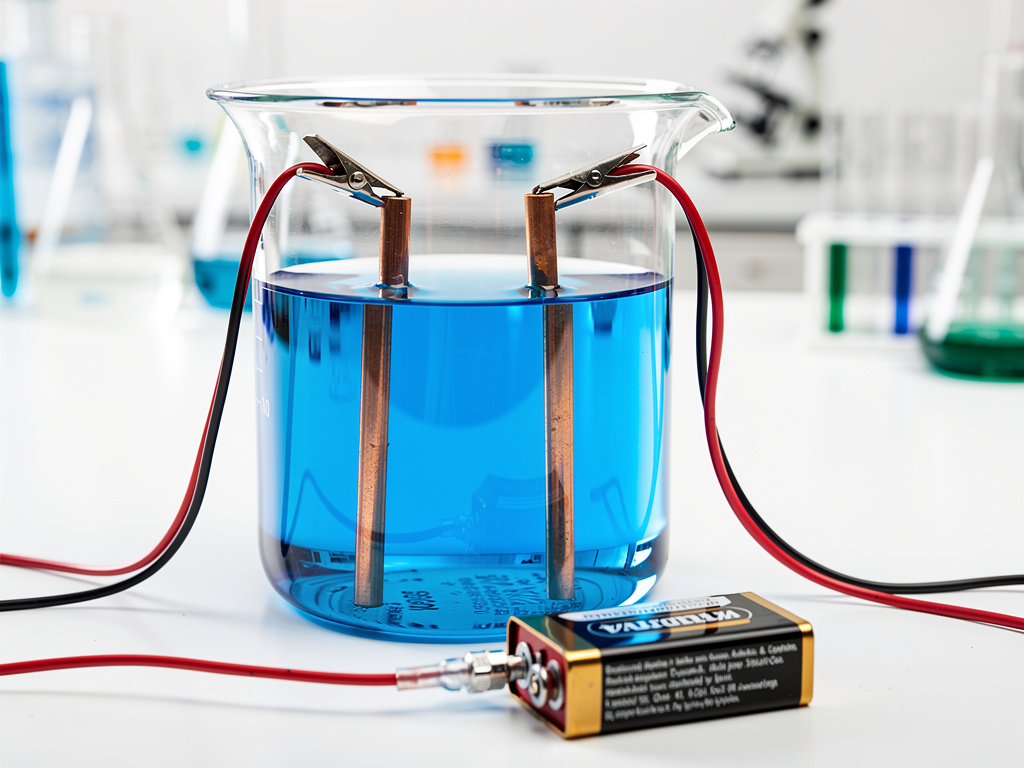
    Connect the copper wire to the positive terminal of the power supply.

  4. 4

    Attach the other end of the copper wire to the metal object.

  5. 5

    Connect another wire to the negative terminal and place it in the solution.

  6. 6

    Turn on the power supply to start the electroplating process.

  7. 7

    Observe the object over time as it becomes coated with copper.

  8. 8

    Turn off the power after a set period and remove the object to inspect.

Expected Results

The metal object should be visibly coated with copper after the experiment. The thickness of the plating may depend on the duration of the electric current.

Variables

Independent Variable

Duration of electrical current

Dependent Variable

Thickness of copper plating

Controlled Variables

Concentration of copper sulfate, Distance between electrodes, Temperature of solution

Safety Notes

Handle electrical equipment carefully, and avoid direct contact with copper sulfate solution.

Presentation Tips

  • Use before-and-after photos of the object.

  • Create a visual timeline of the electroplating process.

  • Include diagrams showing the setup and connections.

  • Discuss real-world applications of electroplating.

Frequently Asked Questions

Like this project? Get more ideas!