
Science Fair Projects
physicsmedium high 10 days

Understanding Mass and Acceleration: Newton's Second Law Experiment

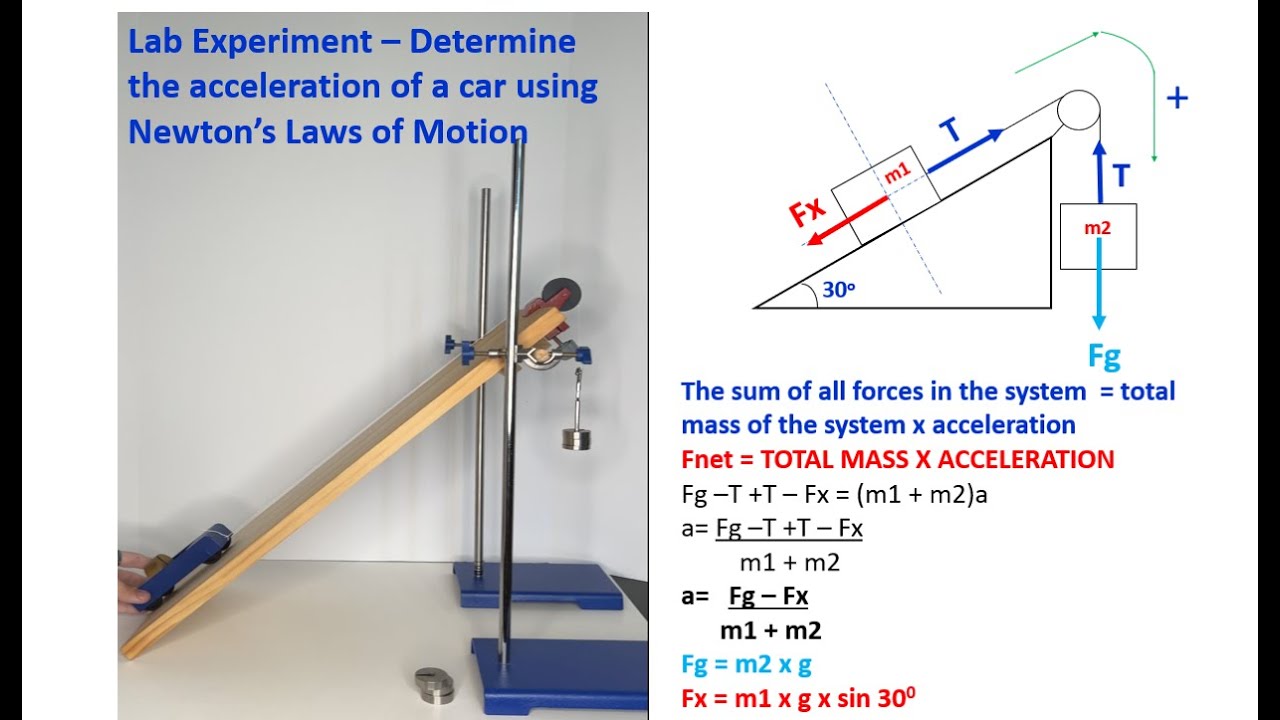
In this project, students will explore how mass affects acceleration, directly demonstrating Newton's second law of motion. It's a hands-on approach to understanding fundamental physics concepts.

Understanding Mass and Acceleration: Newton's Second Law Experiment

Hypothesis

If the mass of an object is increased, then the acceleration of the object will decrease, demonstrating the inverse relationship in Newton's second law.

Materials Needed

Pulley system1Buy
Weights (various masses)5Buy
Stopwatch1Buy
Ruler1Buy
String1Buy
Scale1Buy
Graph paper1Buy

As an Amazon Associate, this site earns from qualifying purchases.

Step-by-Step Procedure

  1. 1

    Set up the pulley system and attach a weight.

  2. 2

    Measure the distance the weight will fall.

  3. 3

    Time how long it takes for the weight to fall that distance.

  4. 4

    Vary the weight and repeat the process.

  5. 5

    Record the acceleration for each weight using the formula a = d/t^2.

  6. 6

    Plot the results on graph paper to see the relationship.

  7. 7

    Analyze how acceleration changes with different masses.

  8. 8

    Discuss the implications of Newton's second law.

Expected Results

The experiment will show that as mass increases, the acceleration decreases, illustrating Newton's second law of motion.

Variables

Independent Variable

Mass of the weights

Dependent Variable

Acceleration of the falling weight

Controlled Variables

Distance fallen, Type of pulley system, Environmental conditions

Safety Notes

Ensure the setup is secure to prevent falling weights from causing injury.

Presentation Tips

  • Use charts to show the relationship between mass and acceleration.

  • Explain Newton's second law clearly.

  • Engage the audience with practical demonstrations.

  • Provide handouts summarizing your findings.

Frequently Asked Questions

Like this project? Get more ideas!