Science Fair Projects
chemistryeasy elementary 1 days

Cleaning Pennies: A Chemical Reaction Experiment

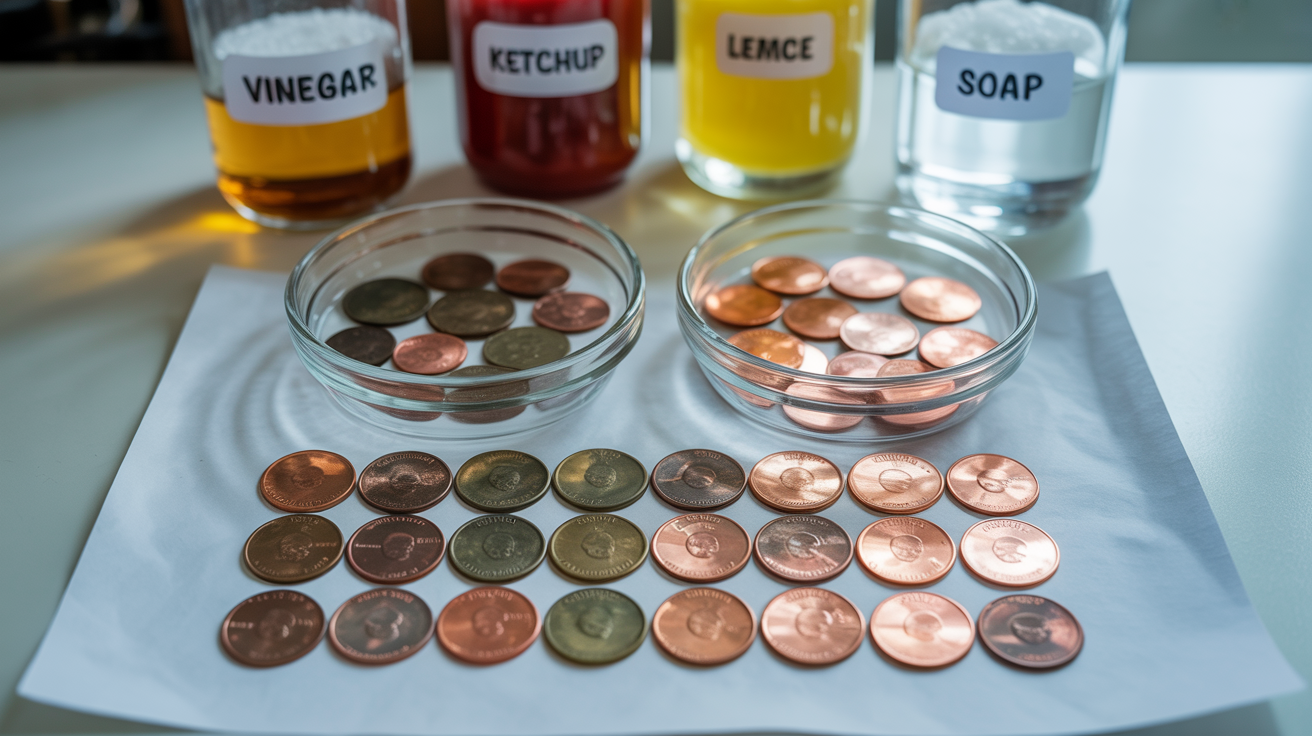
This project tests the effectiveness of different acidic solutions (like lemon juice, vinegar, and ketchup) in cleaning the tarnish off of old pennies. It's a quick and satisfying experiment that demonstrates a real-world chemical reaction.

Cleaning Pennies: A Chemical Reaction Experiment

Hypothesis

If dull pennies are soaked in acidic solutions, then they will become shiny because the acid will dissolve the copper oxide tarnish that has formed on their surface.

Materials Needed

Dull, dirty pennies — 10-15Buy
Small cups or bowls — 5Buy
Vinegar — 1/4 cupBuy
Lemon juice — 1/4 cupBuy
Ketchup — 2 tablespoonsBuy
Soapy water — 1/4 cupBuy
Water — 1/4 cupBuy
Paper towels — severalBuy

As an Amazon Associate, this site earns from qualifying purchases.

Step-by-Step Procedure

  1. 1

    Label your cups: 'Vinegar', 'Lemon Juice', 'Ketchup', 'Soapy Water', and 'Water' (control).

  2. 2

    Pour each liquid into its corresponding cup.

  3. 3

    Place 2-3 dull pennies in each cup, making sure they are completely submerged.

  4. 4

    Let the pennies soak for 10-15 minutes.

  5. 5

    Remove the pennies from the solutions and rinse them with water.

  6. 6

    Place the pennies on a paper towel to dry.

  7. 7

    Compare the shininess of the pennies from each solution to each other and to pennies that were not soaked.

  8. 8

    Record your observations and rank the solutions from most effective to least effective.

Expected Results

The acidic solutions—vinegar, lemon juice, and ketchup (which contains vinegar)—will be the most effective at cleaning the pennies. The pennies in these solutions will become bright and shiny. The soapy water and plain water will have little to no effect. This is because the acid reacts with the dull copper oxide on the penny's surface, dissolving it and revealing the shiny copper underneath.

Variables

Independent Variable

The type of liquid the pennies are soaked in.

Dependent Variable

The shininess of the pennies after soaking.

Controlled Variables

The amount of time the pennies are soaked, the initial condition of the pennies, and the temperature.

Safety Notes

Do not taste any of the liquids. Wash your hands after the experiment. The liquids can be safely poured down the drain.

Presentation Tips

  • Display your 'before' and 'after' pennies for each solution.

  • Create a chart that ranks the cleaning power of each liquid.

  • Explain the chemical reaction: Copper Oxide + Acid -> Copper Salt + Water. The copper salt is washed away, leaving the shiny copper.

Frequently Asked Questions

Why do pennies get dull and dirty?

Pennies are made mostly of copper. The copper on the surface of the penny reacts with oxygen in the air over time to form a new substance called copper oxide. This copper oxide is what makes the pennies look dull and brown or green.

Why does ketchup work to clean pennies?

Ketchup contains vinegar (acetic acid) and tomatoes (which contain citric acid). These acids are what do the cleaning, just like the plain vinegar and lemon juice. The thick consistency of ketchup helps it stick to the penny's surface.

What happens if you don't rinse the pennies after soaking them in vinegar?

If you soak a penny in vinegar (especially with salt added) and then let it dry without rinsing, it might turn green! This is because the acid removes the protective oxide layer, and the copper then reacts with the air and leftover acid to form a green-blue compound called malachite.

Related Projects

Acid Rain Alarm: The Impact of pH on Building Materials
chemistrymedium

Acid Rain Alarm: The Impact of pH on Building Materials

Students will simulate acid rain effects by applying solutions of varying pH levels to samples of common building materials. The project focuses on understanding how acid rain can damage infrastructure.

10 days·middle
Acid vs. Base: Which Is Stronger?
chemistrymedium

Acid vs. Base: Which Is Stronger?

Students will investigate the comparative strength of different acids and bases by measuring their pH levels and observing their reactions with various indicators. This project will help elucidate the nature of acidic and basic solutions.

14 days·middle
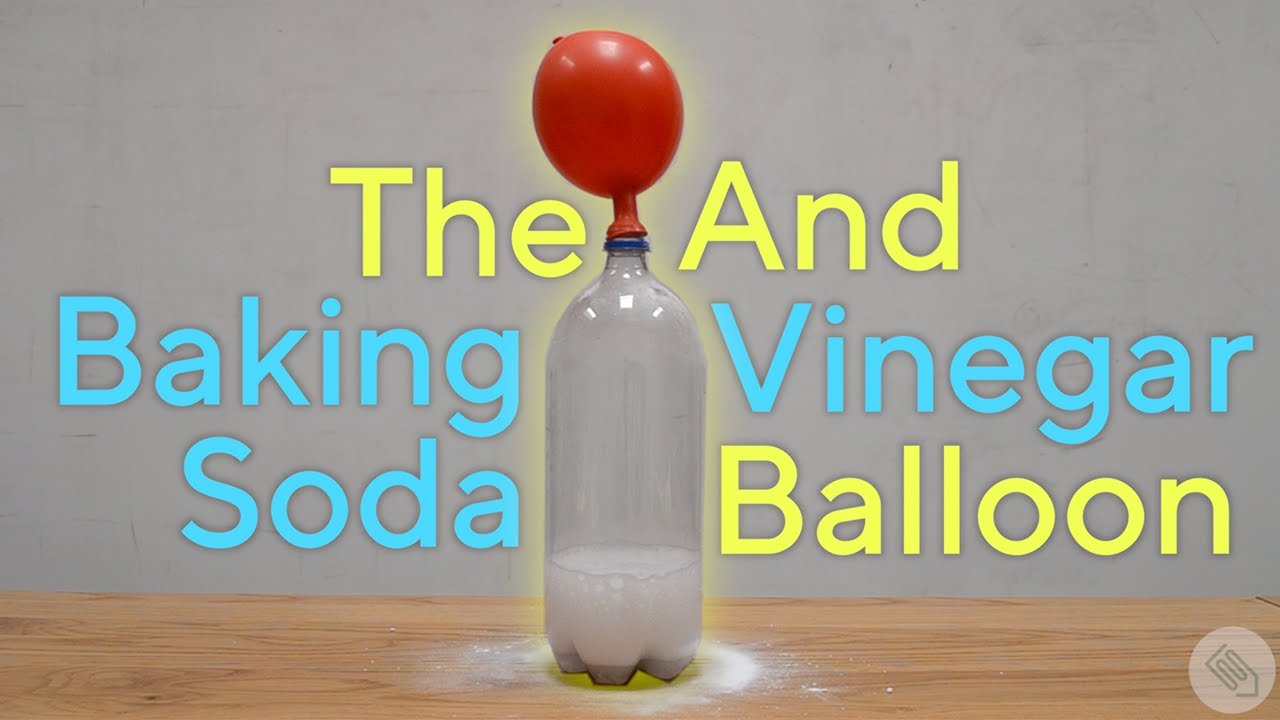
Baking Soda and Vinegar Balloon Inflation Experiment
chemistryeasy

Baking Soda and Vinegar Balloon Inflation Experiment

This exciting experiment demonstrates a chemical reaction between baking soda and vinegar that produces carbon dioxide gas, which inflates a balloon. It provides a hands-on approach to understanding reactions, gas expansion, and pressure in a controlled setting, making it ideal for middle school students interested in chemistry.

30 days·middle
Baking Soda and Vinegar Balloon Inflation Experiment Science Fair Project
chemistryeasy

Baking Soda and Vinegar Balloon Inflation Experiment Science Fair Project

This project demonstrates a fun and safe chemical reaction between baking soda and vinegar that produces carbon dioxide gas. Students will inflate a balloon using the gas produced, illustrating basic chemical principles.

1 days·elementary
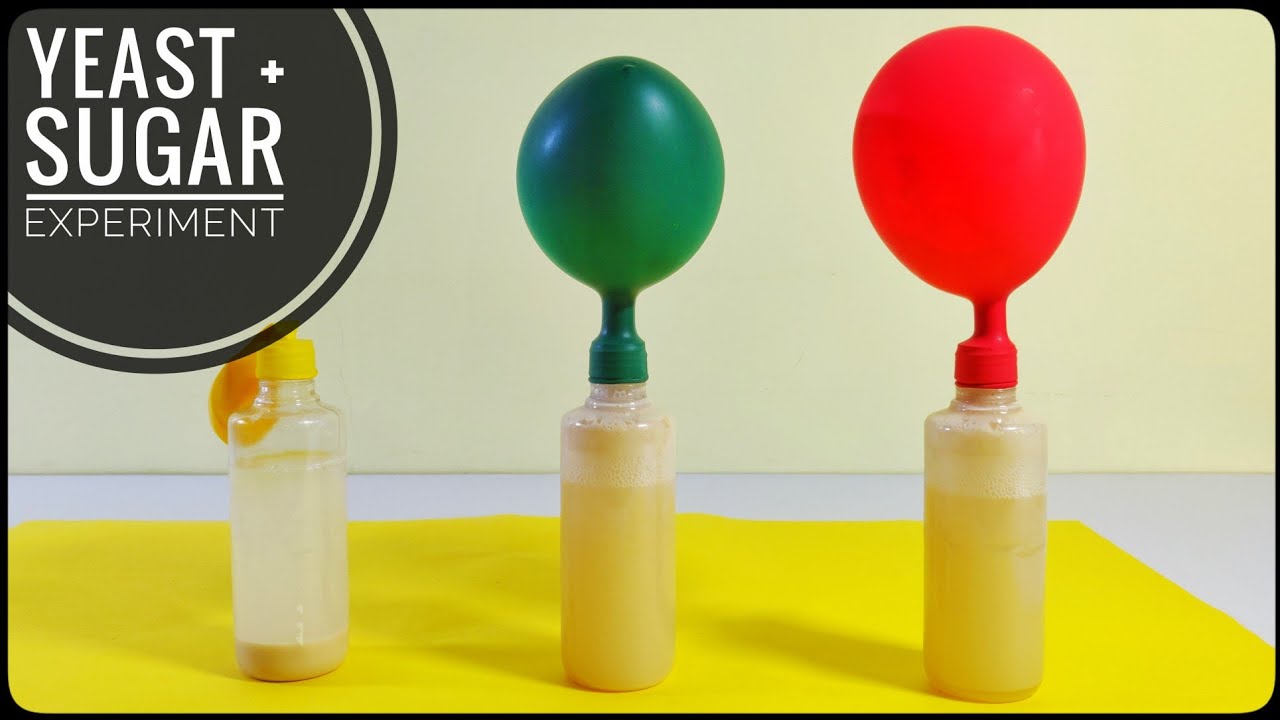
Balloon Blow-Up: The Power of Yeast and Sugar
chemistryeasy

Balloon Blow-Up: The Power of Yeast and Sugar

Students will observe the chemical reaction between yeast and sugar, which produces carbon dioxide gas that inflates a balloon. This project teaches about fermentation and gas production.

2 days·elementary
Biodegradable Plastics Science Project: Polymer Science
chemistryhard

Biodegradable Plastics Science Project: Polymer Science

This project focuses on creating biodegradable plastics using natural materials like starch and vinegar. Students will test the durability and decomposition rate, learning about sustainable alternatives to traditional plastics.

10 days·high

Like this project? Get more ideas!