Science Fair Projects
chemistryeasy elementary 2 days

Colorful Acid-Base Reactions: Exploring pH with Cabbage Juice

Explore acid-base reactions using cabbage juice as a natural indicator. Learn how different solutions change color when mixed with the juice, indicating their pH levels.

Colorful Acid-Base Reactions: Exploring pH with Cabbage Juice

Hypothesis

If cabbage juice is mixed with different solutions, then the color change will indicate whether the solution is acidic or basic.

Materials Needed

Red cabbage1Buy
Distilled water2 cupsBuy
Clear cups5Buy
White vinegar1/2 cupBuy
Baking soda1 tablespoonBuy
Lemon juice1/2 cupBuy
Soap solution1/2 cupBuy
Spoons2Buy

As an Amazon Associate, this site earns from qualifying purchases.

Step-by-Step Procedure

  1. 1

    Chop the red cabbage into small pieces.

  2. 2

    Boil the cabbage in 2 cups of distilled water for 10 minutes.

  3. 3

    Strain the cabbage pieces to collect the purple liquid as cabbage juice.

  4. 4

    Pour equal amounts of cabbage juice into each clear cup.

  5. 5

    Add a small amount of vinegar to one cup and stir.

  6. 6

    Add a small amount of baking soda to another cup and stir.

  7. 7

    Add lemon juice to a third cup and stir.

  8. 8

    Add soap solution to the fourth cup and stir.

  9. 9

    Observe and record any color changes in each cup.

  10. 10

    Compare the colors to determine if each solution is acidic or basic.

Expected Results

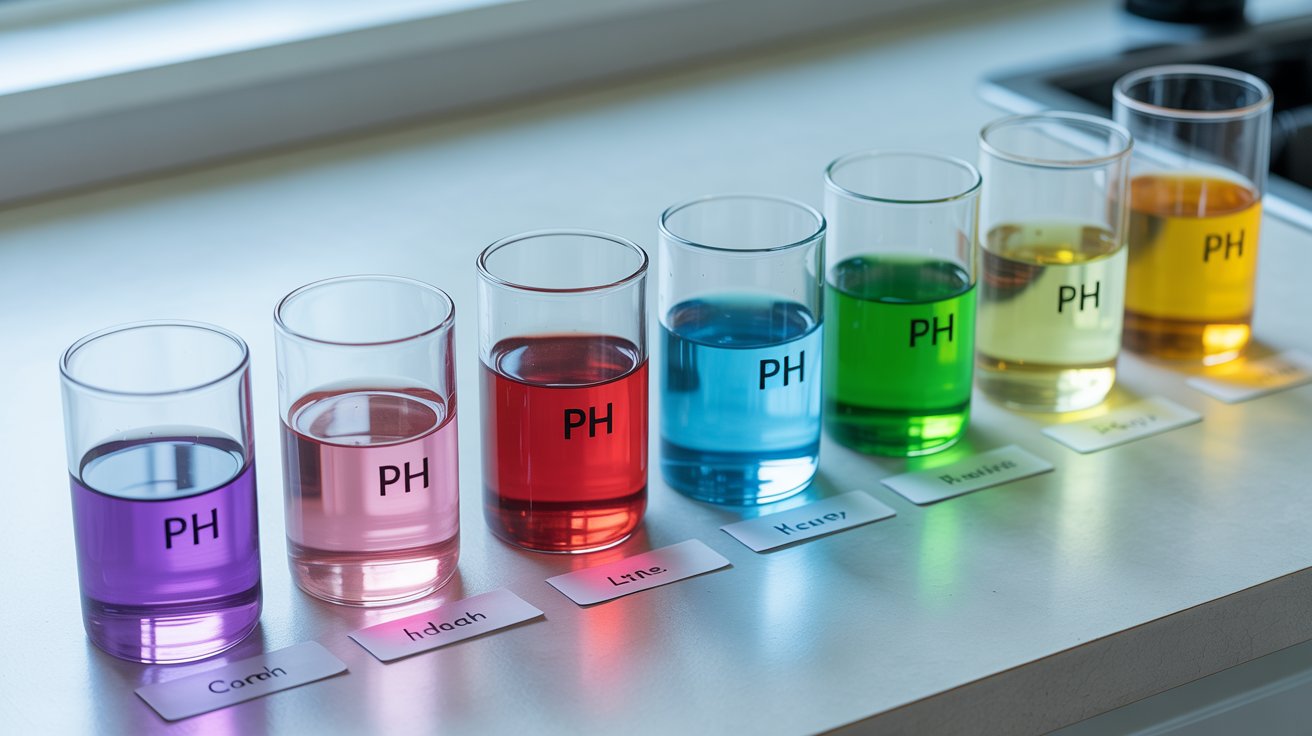
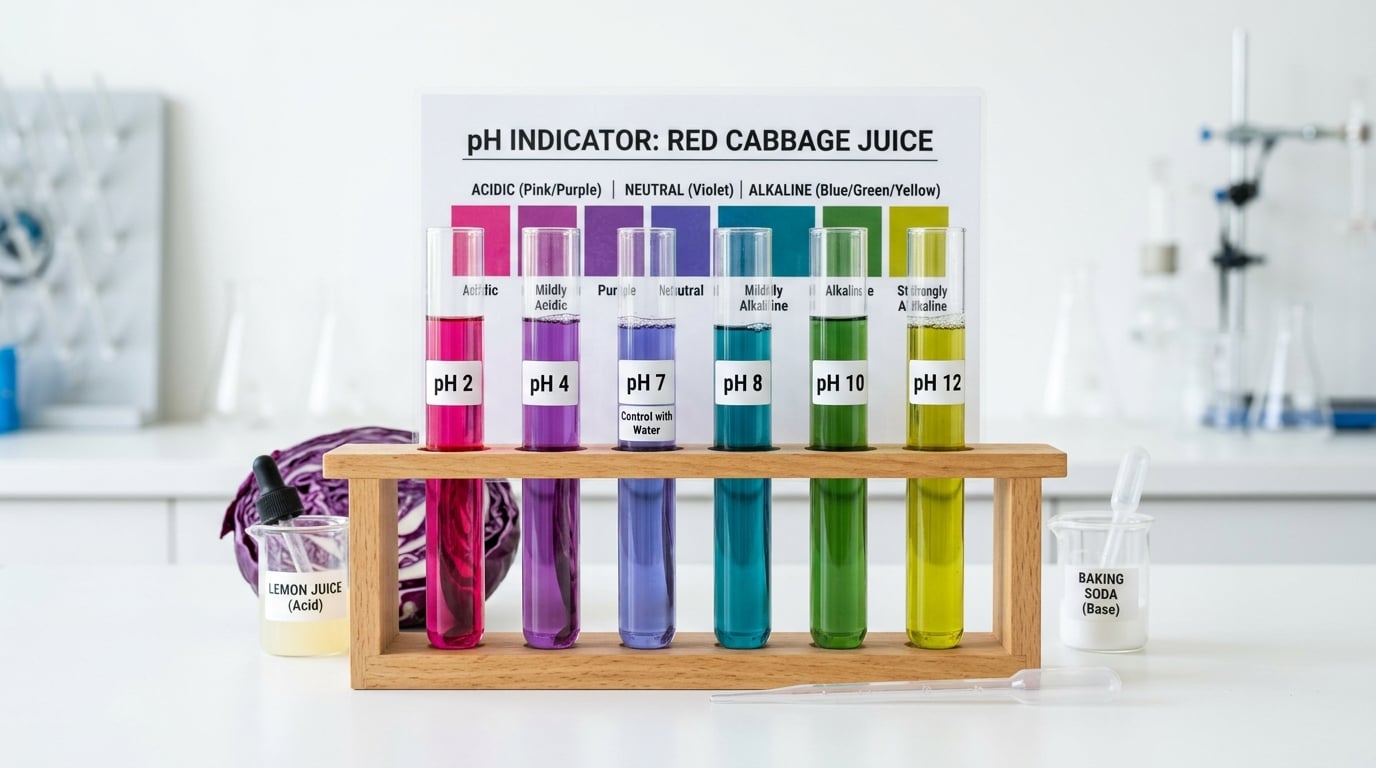
Cabbage juice will change colors based on the pH of each solution, indicating whether they are acidic or basic. Vinegar and lemon juice should turn the solution pink/red (acidic), while baking soda should turn it blue/green (basic).

Variables

Independent Variable

Type of solution added

Dependent Variable

Color change in cabbage juice

Controlled Variables

Amount of cabbage juice, Temperature of solutions, Type of container

Safety Notes

Ensure proper supervision while boiling the cabbage and handling hot liquids. Avoid ingestion of substances.

Presentation Tips

  • Create a color chart to compare the colors of solutions.

  • Include a pH scale to explain acidity and basicity.

  • Use visuals or photos to show the color changes.

Frequently Asked Questions

Like this project? Get more ideas!