Science Fair Projects
chemistryhard high 7 days

Flame Test Experiment: Identifying Metal Ions by Color Science Project

In this project, you will conduct flame tests to identify various metal ions based on the distinctive colors they produce when heated. This helps understand chemical properties.

Flame Test Experiment: Identifying Metal Ions by Color Science Project

Hypothesis

If different metal salts are burned, then they will produce specific flame colors that can be used to identify the metal ions present.

Materials Needed

Metal salts (e.g., sodium, potassium, copper)3-4Buy
Bunsen burner1Buy
Wooden splints or metal wires5Buy
Safety goggles1Buy
Heat-resistant surface1Buy
Notebook for observations1Buy
Water for rinsing1 literBuy
Fire extinguisher1Buy

As an Amazon Associate, this site earns from qualifying purchases.

Step-by-Step Procedure

  1. 1

    Set up the Bunsen burner on a heat-resistant surface.

  2. 2

    Put on safety goggles before starting.

  3. 3

    Dip a wooden splint or wire into the metal salt solution.

  4. 4

    Hold the splint in the flame and observe the color produced.

  5. 5

    Record the flame color for each metal salt tested.

  6. 6

    Repeat the process with different salts.

  7. 7

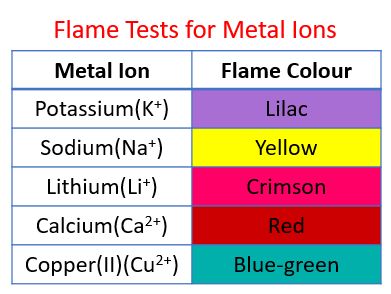
    Compare the colors to standard charts for identification.

  8. 8

    Clean up the workspace after completing the tests.

Expected Results

Each metal ion is expected to produce a unique flame color, allowing for identification of the metal present in the salt.

Variables

Independent Variable

Type of metal salt

Dependent Variable

Color of flame produced

Controlled Variables

Amount of salt used, Type of burner, Distance from flame

Safety Notes

Always wear safety goggles, and follow proper laboratory safety protocols when handling flames.

Presentation Tips

  • Create a color chart of metal ions and their flame colors.

  • Discuss the significance of flame tests in chemistry.

  • Demonstrate the flame tests live for audience engagement.

  • Explain how this method is used in real-world applications.

Frequently Asked Questions

Like this project? Get more ideas!