Science Fair Projects
chemistryeasy elementary 1 days

Baking Soda and Vinegar Balloon Inflation Experiment Science Fair Project

This project demonstrates a fun and safe chemical reaction between baking soda and vinegar that produces carbon dioxide gas. Students will inflate a balloon using the gas produced, illustrating basic chemical principles.

Baking Soda and Vinegar Balloon Inflation Experiment Science Fair Project

Hypothesis

If baking soda and vinegar react, then the balloon will inflate due to the release of carbon dioxide gas.

Materials Needed

Baking soda3 tablespoonsBuy
Vinegar1 cupBuy
Balloon1Buy
Funnel1Buy
Plastic bottle1Buy
Measuring cups1 setBuy
Food coloring (optional)as desiredBuy
Spoon for mixing1Buy
Notebook for observations1Buy
Safety goggles1 pairBuy

As an Amazon Associate, this site earns from qualifying purchases.

Step-by-Step Procedure

  1. 1

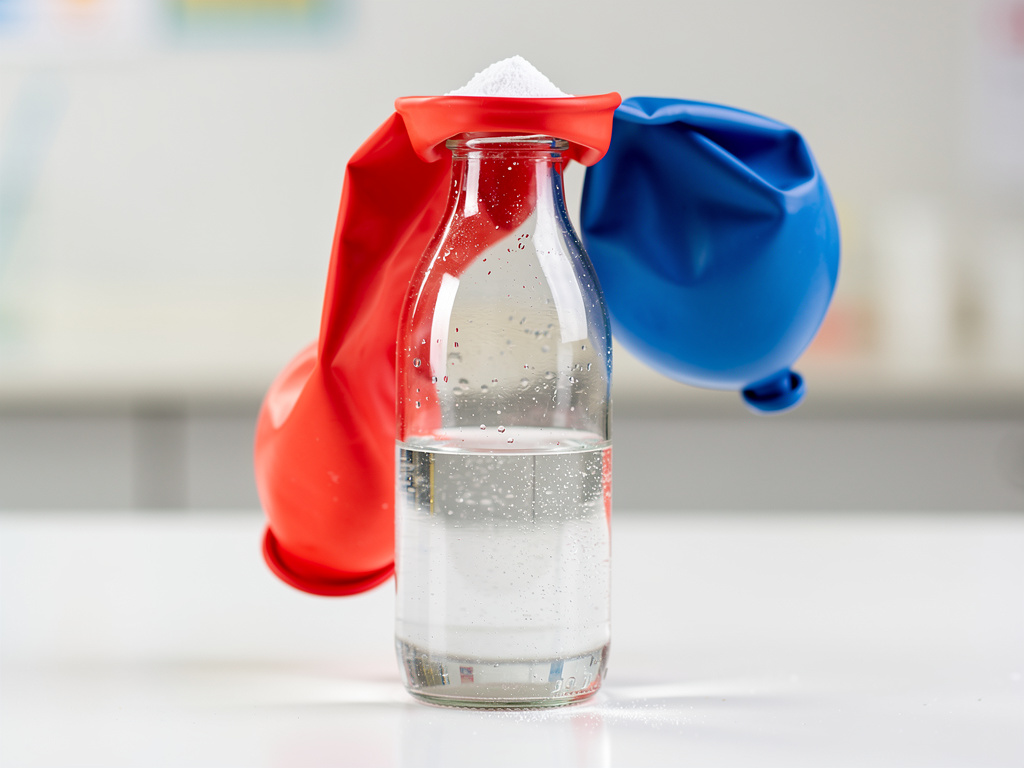
    Use the funnel to add 3 tablespoons of baking soda into the balloon.

  2. 2

    Pour 1 cup of vinegar into the plastic bottle.

  3. 3

    Carefully stretch the balloon opening over the bottle's mouth without spilling the baking soda.

  4. 4

    Lift the balloon to let the baking soda fall into the vinegar.

  5. 5

    Observe the reaction as gas builds up and inflates the balloon.

  6. 6

    Record the observations and measure how much the balloon inflates.

  7. 7

    Experiment with different amounts of baking soda or vinegar.

  8. 8

    Discuss the chemical reaction involved.

  9. 9

    Present the results and demonstrate the experiment.

  10. 10

    Conclude with the scientific principles behind the reaction.

Expected Results

The balloon should inflate as the reaction between baking soda and vinegar releases carbon dioxide gas. This demonstrates how chemical reactions produce gases.

Variables

Independent Variable

Amount of baking soda or vinegar used

Dependent Variable

Size of balloon inflation

Controlled Variables

Type of balloon, Temperature of the reaction, Container size

Safety Notes

Wear safety goggles during the experiment. Avoid contact with eyes and skin from the vinegar.

Presentation Tips

  • Show the inflation process live during the presentation.

  • Explain the chemical reaction in simple terms.

  • Engage the audience with questions about gas production.

  • Use visuals to illustrate the reaction process.

  • Practice your presentation to ensure clarity.

Frequently Asked Questions

Like this project? Get more ideas!